



























“David vs. Goliath”: A $5.5 Billion U.S. Nuclear-Powered Aircraft Carrier Got Destroyed by a $80 Million Sub Running on Diesel

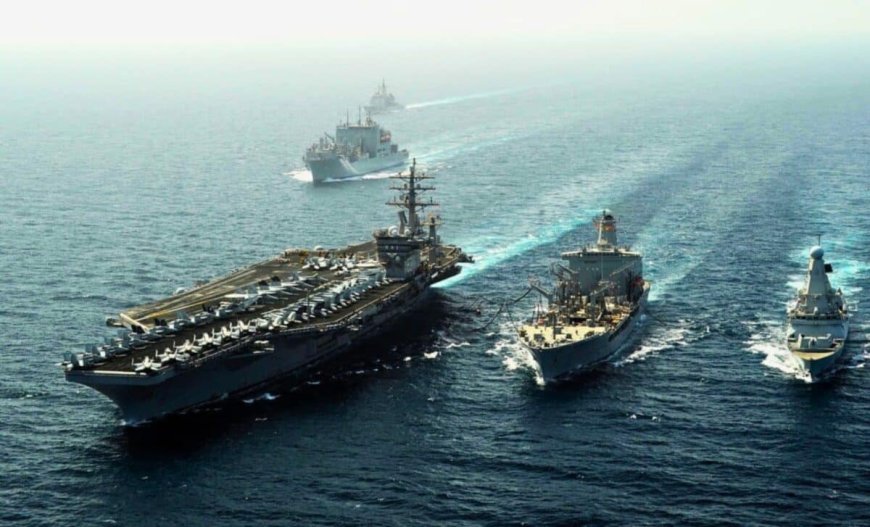
It was a kill shot that should not have been possible. On a cold morning in the North Atlantic during the NATO exercise Ocean Venture, a small, diesel-powered submarine running silently on battery power slipped past a ring of destroyers, helicopters, and surveillance aircraft. Then, it simulated a torpedo strike directly into the heart of a US Navy supercarrier.
The exercise umpire, a US Navy officer tasked with adjudicating the scenario, didn’t hesitate. The $5.5 billion USS Dwight D. Eisenhower was declared sunk.
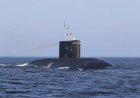
The weapon that landed that simulated blow wasn’t a hypersonic missile or a stealth bomber. It was an $80 million Canadian Oberon-class submarine, either the HMCS Okanagan, Ojibwa, or Onondaga, operating on battery technology that was already decades old when the exercise took place. The 1981 event, detailed by the National Security Journal, has resurfaced as a stark reminder that raw power and high cost do not guarantee victory at sea.
The Battery Powered Ghost That Fooled a Fortress
The USS Dwight D. Eisenhower did not sail alone. A Nimitz class aircraft carrier valued at roughly $5.5 billion, it traveled with a layered defensive network. Guided missile destroyers equipped with radar and anti-submarine warfare capabilities surrounded the carrier. Helicopters and surveillance aircraft patrolled the skies above. Underwater sensors monitored the surrounding ocean for acoustic signatures.
In theory, the formation was nearly impossible to penetrate. Sonar arrays listen for propeller noise, engine vibrations, and mechanical equipment. Early detection allows escort ships to intercept submarines long before they approach weapon range.

But the Canadian submarine shut down its noisy diesel engines. It switched to battery powered electric propulsion, which produces very little mechanical noise. Moving slowly to avoid creating detectable flow noise, the sub exploited gaps in the carrier’s acoustic screen, hiding within the natural background sounds of the ocean, including waves, marine life, and distant ships.
How the Submarine Reached Firing Position
Defense reports describe how the Canadian submarine slowly tracked the carrier group’s movement during the training scenario. By remaining submerged and minimizing noise, the vessel gradually moved closer to the defensive perimeter. Careful maneuvering allowed it to stay hidden.
Naval exercises simulate combat conditions through engagement rules rather than live weapons. Commanders evaluate distances, targeting angles, and weapon ranges to determine whether an attack would be successful. When a submarine reaches a position where weapons could realistically strike a target, the scenario records the result accordingly.

During Ocean Venture, the submarine eventually reached a location where its torpedoes could theoretically target the aircraft carrier. The attack position met the criteria for a successful strike. Within the exercise simulation, the USS Dwight D. Eisenhower was declared destroyed.
“The Canadian submarine had achieved its objective without being detected,” the National Security Journal reported, “effectively demonstrating that even the most powerful warships in the world were vulnerable to stealthy underwater threats.”
Why Diesel Submarines Are Difficult to Detect
One major factor behind the simulated attack involves the acoustic characteristics of diesel-electric propulsion systems. Nuclear submarines generate power continuously through onboard reactors, which produce mechanical noise detectable by sonar. Diesel submarines can shut down their engines and rely entirely on stored battery energy for quiet underwater movement.
When operating on battery power, diesel submarines move slowly but remain extremely quiet. This reduces the acoustic signals that sonar operators depend on to detect underwater threats. Ocean environments contain many background noises, making detection even more challenging.
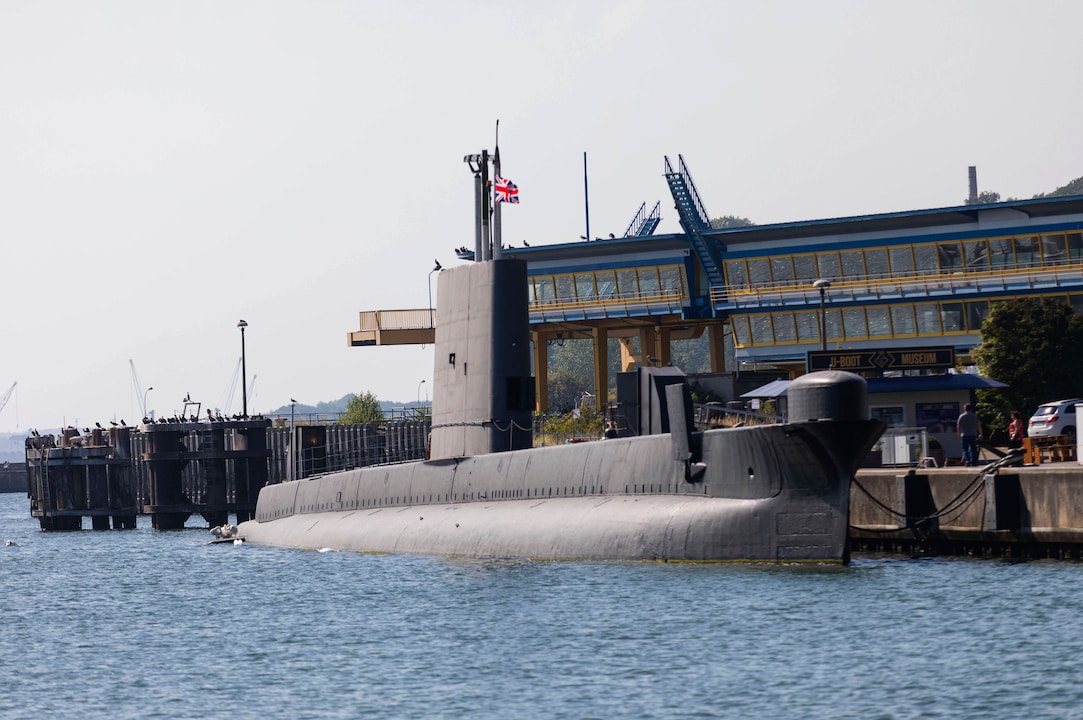
The Royal Canadian Navy had long used diesel-powered submarines for patrol missions and training operations. The Oberon class boats were originally acquired in the 1960s primarily for training purposes. By 1981, they had undergone significant upgrades that enhanced their combat capabilities. Their hulls were fitted with anechoic tiles to reduce sonar detection, and their systems were modernized to improve underwater endurance and stealth.
While these vessels cannot remain submerged as long as nuclear submarines, their stealth characteristics make them valuable during coastal defense missions. In exercises, they often simulate hostile submarines attempting to approach larger fleets.
Not the First Time a Submarine Has ‘Sunk’ a Carrier
The 1981 incident was not unique. According to defense reporting, allied submarines have simulated successful attacks on US carriers in roughly eight known exercises between 1972 and 2005. Dutch and Australian diesel submarines also achieved simulated kills against US carriers in subsequent war games.
Each exercise delivered the same lesson: a skilled crew in a quiet submarine can penetrate a carrier group’s defenses, at least under exercise conditions. The incidents raised uncomfortable questions for the US Navy. How could a relatively underfunded navy with decades old technology defeat a modern carrier group? Were the Navy’s anti-submarine warfare tactics flawed? Were diesel-electric submarines being underestimated in contemporary naval strategy?

Military analysts consistently describe submarines as one of the most persistent threats to aircraft carriers. Submarines operate underwater where radar cannot detect them and rely on stealth over speed. A quiet submarine positioned correctly can approach within weapon range if detection systems fail.
It is important to note that exercises impose rules. Ships may not operate at full speed. Active sonar use may be restricted. Those conditions can create opportunities that might not exist in actual combat. However, the incident prompted a reevaluation of anti-submarine warfare capabilities across NATO.
A 45 Year Old Warning That Still Matters
Submarine technology has advanced dramatically since 1981. Modern non-nuclear submarines equipped with air independent propulsion can travel quietly for weeks, significantly enhancing their stealth characteristics. Anti-submarine warfare has also improved with better radars, sonars, and unmanned underwater vehicles.
But no defense is foolproof. The National Security Journal puts it directly: “While a lot of noise is made about hypersonic missiles, the real threat to carriers has been, and likely always will be, submarines.”
The USS Dwight D. Eisenhower was never in real danger. The 1981 exercise ended, and the carrier continued its service. But the simulation’s result was recorded, analyzed, and never forgotten by naval planners. The incident remains a case study in asymmetric naval warfare, proving that an $80 million submarine with a well trained crew can theoretically neutralize a $5.5 billion carrier.
Enjoyed this article? Subscribe to our free newsletter for engaging stories, exclusive content, and the latest news.
What's Your Reaction?
 Like
0
Like
0
 Dislike
0
Dislike
0
 Love
0
Love
0
 Funny
0
Funny
0
 Angry
0
Angry
0
 Sad
0
Sad
0
 Wow
0
Wow
0