



























China Builds World’s First Flying Power Station Harvesting Wind Energy 6,560 Feet Above Earth

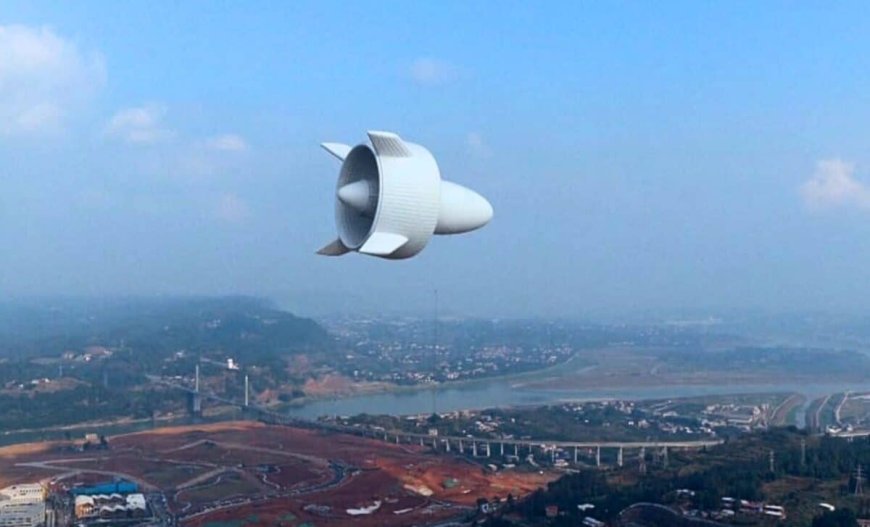
Engineers in Yibin recently watched a large, silver helium-filled craft rise into the sky above the Southwest China landscape. This vehicle did not carry passengers or cargo like a traditional plane. Instead, it stayed connected to the earth by a long, high-strength cable. The S2000 represents a departure from traditional aviation because it is designed to harvest energy from the moving air high above the ground.
The craft stayed aloft for several hours as it reached an altitude of 2,000 meters. At this height, the wind moves with much more consistency and force than it does near the surface of the earth. It used its onboard systems to capture this kinetic energy while hovering in a stationary position. This test aimed to prove that a megawatt-class system could operate safely while tethered to a ground station.
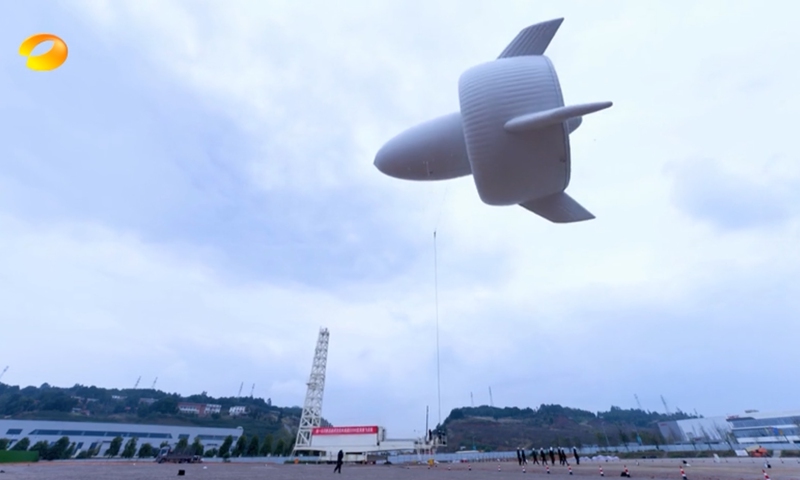
This specific flight reached a height of 6,560 feet. The team from Beijing Linyi Yunchuan Energy Technology monitored the stability of the craft as it encountered different wind speeds. They focused on how the tether handled the tension and how the internal components converted the movement of the air into electrical power. According to Interesting Engineering, the vessel remained stable throughout the duration of the ascent and the hovering phase.
Capturing wind at high altitudes
The airship is the result of work by the private company in partnership with several research institutions. It functions as a flying wind turbine that uses the lift of a helium-filled envelope to stay in the air. Unlike a standard wind turbine on a tower, this device can reach the high-altitude wind where energy density is significantly higher.
Weng Hanke, chief technology officer of the firm, explained that the system uses a specialized lightweight generator. The airship holds multiple power generation units that spin as the wind passes through them. This energy then travels down the high-strength tether to a station on the ground. During the recent test, the platform successfully produced enough electricity to demonstrate its potential for large-scale utility.

Reports from Live Science show that the system generated approximately 385 kilowatt-hours of electricity during its test window. Data from the U.S. Energy Information Administration indicates the average American home uses about 899 units per month. This means the energy produced during its short flight could power a typical household for nearly two weeks. The development team noted that the air at 2,000 meters provides a more reliable source of power than surface breezes.
Technical hurdles for flying turbines
Operating a massive airship comes with significant engineering challenges. The craft must balance the weight of its components with the buoyancy of its helium. If the equipment is too heavy, the craft cannot reach the necessary height to find the strongest currents. The company developed a high-voltage power transmission system to move the electricity down the cable without losing too much energy along the way.
Weather conditions also play a role in how the platform performs. During the test in Sichuan, the turbine had to withstand sudden wind gusts and changes in air pressure. The cable serves two purposes: it keeps the craft from drifting away and acts as the electrical conduit. This line must be incredibly strong to resist the pull of the wind against the large surface area of the envelope.

As reported by the Global Times, Weng Hanke said, “One is for off-grid settings like border outposts, where it can serve as a relatively stable conventional energy source.” The team found that the craft remained controllable even when the wind changed direction. This stability is vital for maintaining a steady flow of electricity to the power grid. Experts continue to study how the system handles long-term exposure to the elements at high elevations.
Future scale of the energy project
The success of the flight suggests that upper-atmosphere air is a viable resource for renewable energy production. By reaching 2,000 meters, the turbine accesses air currents that are not blocked by hills, trees, or buildings. The researchers plan to refine the aerodynamic design to make it even more efficient at capturing energy.
One of the goals for the project is to provide power to remote areas where building traditional infrastructure is difficult. Because the system is mobile, it can be deployed to different locations depending on the season or local needs. The Aerospace Information Research Institute is looking at how multiple units might work together in a single region to increase total output.
The test in Sichuan Province marks the first time a system of this capacity has reached such a high altitude. The data collected from the 2,000-meter flight will inform the next phase of development. Researchers are currently analyzing the wear and tear on the carbon fiber components and the performance of the generators. The flight lasted for approximately 30 minutes and reached a maximum altitude of 2,000 meters above the ground.
Enjoyed this article? Subscribe to our free newsletter for engaging stories, exclusive content, and the latest news.
What's Your Reaction?
 Like
0
Like
0
 Dislike
0
Dislike
0
 Love
0
Love
0
 Funny
0
Funny
0
 Angry
0
Angry
0
 Sad
0
Sad
0
 Wow
0
Wow
0