



























Buried Deep in China, This Weird Ancient Sponge Closes a 160-Million-Year Gap in Evolution

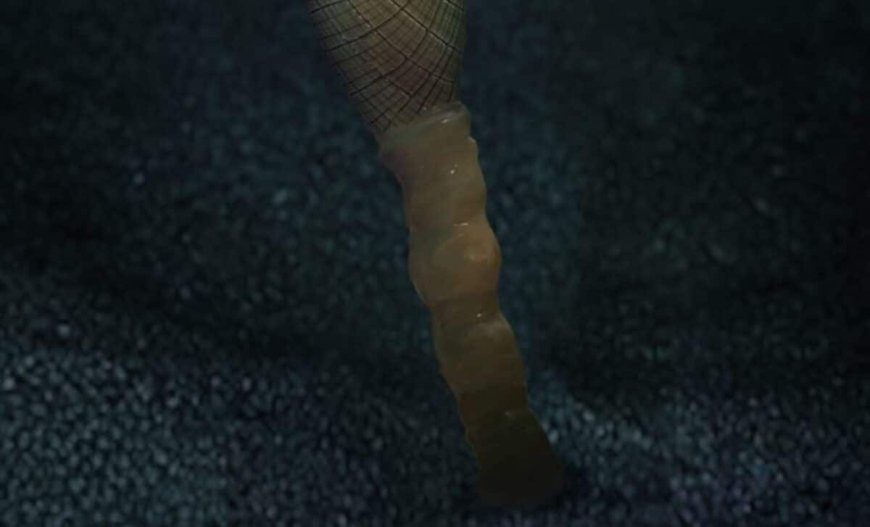
The find, led by Shuhai Xiao of Virginia Tech, suggests that the earliest sponges lacked mineral skeletons, which may explain why older fossils have remained elusive. Sponges are considered among the earliest animals to evolve, with molecular clock estimates placing their origin at around 700 million years ago.
Yet, until now, convincing fossils extended back only to about 540 million years ago, creating a persistent discrepancy between genetic data and physical evidence.
For years, zoologists and paleontologists debated whether the fossil record was incomplete or whether molecular estimates were off. The newly described specimen, recovered from carbonate rocks along the Yangtze River, provides tangible evidence from within those so-called “lost years” and offers a possible explanation for the absence of earlier fossils.
A Fossil Emerging from the “Lost Years”
The paradox surrounding early sponges stems from conflicting timelines. Molecular clock analyses indicate that the species must have evolved roughly 700 million years ago. Yet no widely accepted sponge fossils had been found in rocks of that age.

According to the study published in Nature, the researchers identified a fossil dated to about 550 million years ago, narrowing the 160-million-year gap. The specimen comes from marine carbonate deposits known for preserving soft-bodied organisms from the late Ediacaran period.
Shuhai Xiao recalled first seeing an image of the fossil five years ago when a collaborator texted him a photograph of the excavated specimen.
“I had never seen anything like it before,” he said, explaining that he quickly realized it represented something new.
The team, including researchers from the University of Cambridge and the Nanjing Institute of Geology and Paleontology, systematically ruled out other marine organisms such as sea squirts, corals, and sea anemones before identifying it as a sponge.
Why Earlier Sponges Left Almost No Fossils
A central insight of the research is that the earliest sponges may not have possessed mineralized skeletons. Modern ones typically contain hard, needle-like structures called spicules, which are often mineralized and thus more likely to fossilize.

In an earlier 2019 study, Xiao and colleagues proposed that primitive sponges had not yet developed the ability to produce these mineral components. According to him, as researchers traced the marine invertebrate evolution further back in time, they observed that spicules became increasingly organic and less mineralized.
“If you extrapolate back, then perhaps the first ones were soft-bodied creatures with entirely organic skeletons and no minerals at all,” Xiao explained.
Such organisms would rarely survive fossilization, except under unusual conditions where rapid burial outpaced decay. The newly described fossil appears to have been preserved in precisely that kind of environment.
An Unexpected Form With Telling Features
The fossil itself presents distinctive characteristics. Its surface is covered with a regular pattern of box-like structures, each subdivided into smaller identical units. According to Xiaopeng Wang, a postdoctoral researcher affiliated with the Nanjing Institute and the University of Cambridge, this arrangement suggests that the fossil is most closely related to a lineage of glass sponges.
The specimen also surprised researchers with its size. Measuring about 15 inches long, it displays a relatively complex, conical body plan. Alex Liu of the University of Cambridge noted that he had expected early sponge fossils to be much smaller.
Beyond filling part of the fossil gap, the find reshapes how paleontologists search for early animal life. As Xiao stated, the discovery indicates that the first sponges were “spongey but not glassy,” meaning they lacked mineral skeletons even if they shared structural traits with later forms. That distinction may guide future efforts to identify similarly preserved specimens in older rock formations.
Enjoyed this article? Subscribe to our free newsletter for engaging stories, exclusive content, and the latest news.
What's Your Reaction?
 Like
0
Like
0
 Dislike
0
Dislike
0
 Love
0
Love
0
 Funny
0
Funny
0
 Angry
0
Angry
0
 Sad
0
Sad
0
 Wow
0
Wow
0