




























Are Brown Dwarfs Just Super-Sized Planets? Researchers Have More Questions Than Answers

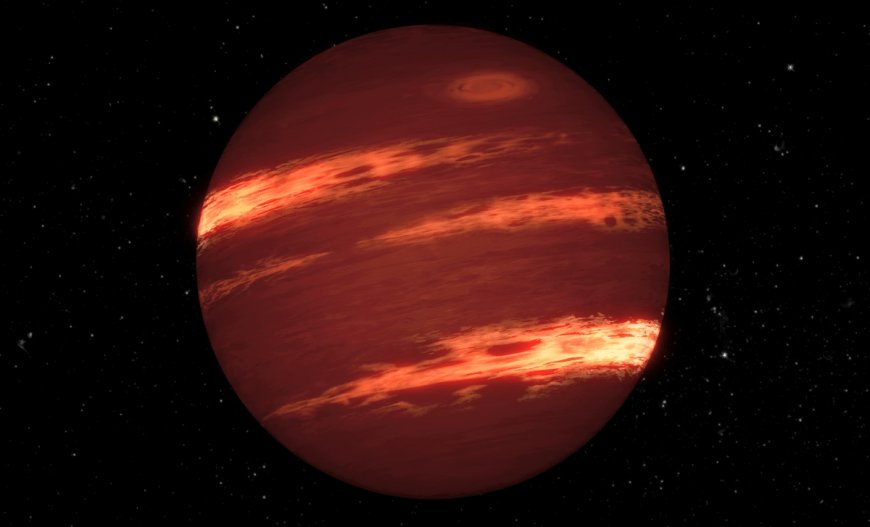
In the vast expanse of the universe, there are strange and mysterious objects that refuse to fit neatly into our understanding of space. These peculiar objects, often hovering between the size of stars and planets, blur the lines of what we thought we knew about the cosmos. Brown dwarfs, for example, are too massive to be called planets but too small to be true stars. Their existence challenges astronomers, who have long grappled with classifying these enigmatic bodies. The debate over their origins and their place in the universe has led to new revelations that might just change how we view the formation of celestial objects. What exactly are these objects? Are they failed stars, overgrown planets, or something entirely different? This question continues to puzzle scientists and deepen the mystery of our ever-complex universe.
The Challenge of Classifying Celestial Objects
One of the fundamental issues in classifying objects in space is understanding their mass and how they form. Stars, by definition, must have a mass at least 80 times that of Jupiter, enough to ignite fusion processes that produce light and heat. On the other hand, planets like Jupiter form through a very different process, by accreting matter in a surrounding disk around a young star. Objects that fall between these two categories, such as brown dwarfs, present a significant challenge because they are too small to form like a star but too massive to be considered mere planets.
The recent study led by Steven Giacalone and his colleagues sought to examine objects in the 13 to 80 Jupiter-mass range. These are considered to be on the borderline between stellar and planetary formation processes. The researchers hoped that by studying these objects’ orbital eccentricity, the chemical makeup of their host stars, and other characteristics, they could define a clear boundary that would tell us whether these objects are failed stars or overgrown planets.
However, the study, published in The Astronomical Journal, found that this dividing line is elusive. As the researchers noted, “Exactly how large of an object can be formed by core accretion or how small of an object can be formed by disk instability or cloud fragmentation remains to be determined.” This highlights the significant gaps in current research and suggests that the universe is far messier than astronomers had hoped when it comes to categorizing objects in this ambiguous size range.

NASA, ESA, SDO, NASA-JPL, Caltech, A.Simon (NASA-GSFC); Designer: E. Wheatley (STScI)
The Messy Nature of Formation
The question of how objects like brown dwarfs and sub-brown dwarfs form is not easily answered. There are two primary formation theories for massive objects: core accretion and gravitational collapse. Core accretion occurs when dust and gas particles clump together, gradually building up a massive core that eventually becomes a planet or a brown dwarf. Gravitational collapse, on the other hand, involves the collapse of a gas cloud under its own gravity, leading to the formation of a star or brown dwarf.
The study revealed that the processes that form these objects may not be as clear-cut as we once thought. For example, some brown dwarfs seem to have formed through the core accretion process, which is typically associated with planet formation. In contrast, other sub-brown dwarfs, objects that are too small to be considered brown dwarfs, appear to have formed through gravitational collapse, a process traditionally thought to be reserved for stars. This indicates that the lines between these two formation processes are not rigid, and we may need to revise our understanding of how objects in this mass range come into being.
As the study concluded, “Perhaps a clear dividing line between formation channels does exist, but we have not found it yet, either because we do not have enough objects or because we have not yet examined the right combination of parameters.” This suggests that further observations and research are needed before astronomers can definitively categorize these strange objects in the middle of the star-planet spectrum.
The Role of Metallicity in Object Formation
Another interesting aspect of this study is the role of metallicity in the formation of massive objects. Metallicity refers to the abundance of elements heavier than hydrogen and helium in a star’s environment, and it plays a crucial role in determining whether a planet can form in the first place. The researchers examined whether there was a connection between the metallicity of the star systems where these objects were located and the mass of the objects themselves. Interestingly, they found that there was no clear relationship.
This is surprising because one would expect that more massive objects, which resemble brown dwarfs, would form in metal-rich environments, environments that would provide more material for accretion. However, the data suggested that the formation of these large gas giants might not be as strongly tied to metallicity as previously thought. Some of the sub-brown dwarfs formed in star systems that were not particularly metal-rich, suggesting that the formation process for these objects is more complex and varies depending on other factors, such as gravitational instability.
Enjoyed this article? Subscribe to our free newsletter for engaging stories, exclusive content, and the latest news.
What's Your Reaction?
 Like
0
Like
0
 Dislike
0
Dislike
0
 Love
0
Love
0
 Funny
0
Funny
0
 Angry
0
Angry
0
 Sad
0
Sad
0
 Wow
0
Wow
0