





























Archaeologists Uncover a 140,000-Year-Old Sunken World Beneath the Sea, Filled with Giant Beasts and a Lost Human Species

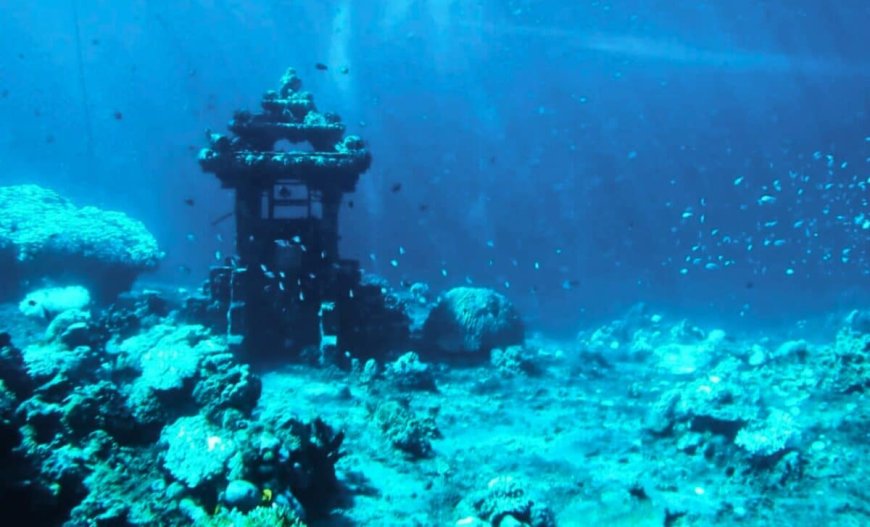
For years, the Java Sea looked like a gap in the record. Some of the most important Homo erectus fossils ever found came from nearby Java, but the shallow seabed between the islands seemed to hold nothing that could explain how these early humans moved across the region.
That changed in the Madura Strait, where dredging work off Indonesia’s coast brought up ancient animal remains and two pieces of skull. Those fragments, recovered from what had once been dry land, pointed researchers toward a drowned landscape that had vanished under rising seas.

The discovery places Homo erectus inside Sundaland, the vast lowland that once linked Java to mainland Asia during periods of lower sea level. It also ties those remains to a submerged river valley connected to the Solo River, giving archaeologists direct evidence from a world that no longer appears on modern maps.
A Seafloor Find That Reopened the Map
The main evidence comes from a 2025 paper in Quaternary Environments and Humans, which reported two hominin cranial fragments recovered from the submerged Sunda Shelf. The article says the specimens came from “the sandy fill of a late Middle Pleistocene submerged valley of the Solo River,” and that their features point to a relationship with late Java fossils of Homo erectus, especially material from Sambungmacan.
Leiden University said the wider fossil collection includes 36 vertebrate species, making it the first vertebrate fossil record from submerged Sundaland. A related ScienceDirect paper states that more than 6,000 fossils were retrieved from the dredged sand, turning what might have looked like an isolated hominin find into a much broader record of prehistoric Indonesia.

That scale is what gives the site its weight. Instead of a single skull fragment without context, archaeologists now have a seabed fossil site that preserves early human remains, animal bones, and environmental evidence from the same drowned setting.
What Homo Erectus Was Doing on Sundaland
Leiden archaeologist Harold Berghuis said the new material changes the old idea that Javanese Homo erectus lived in long isolation. “Here they had water, shellfish, fish, edible plants, seeds, and fruit all year round,” he said. In the same release, he added, “We already knew that Homo erectus collected river shells. Among our new finds are cut marks on the bones of water turtles and large numbers of broken bovid bones, which point to hunting and consumption of bone marrow.”
Those details matter because they connect the hominin remains to everyday behavior. The evidence suggests ancient human migration through river corridors was paired with access to rich food sources, including freshwater resources and large mammals. A separate taphonomy study of the Madura Strait assemblage says the fossils preserve signs of selective hunting and marrow processing by late Middle Pleistocene hominins.

Berghuis also raised a more cautious possibility about outside contact. “We didn’t find this in the earlier Homo erectus population on Java, but we do know it from more modern human species of the Asian mainland. Homo erectus may have copied this practice from these populations. This suggests there may have been contact between these hominin groups, or even genetic exchange.” That remains an interpretation rather than a settled conclusion, but it comes directly from the research team’s reading of the site.
The Java Sea Was Once a Connected Lowland
The landscape is as important as the bones. One ScienceDirect paper describes the site as the first hominin locality from submerged Sundaland and dates the valley fill to the lowstand of MIS6, with OSL dates of roughly 160,000 and 120,000 years ago. Another paper says the most likely age range for the fossil-bearing fluvial deposits is 146 to 131 thousand years ago. Together, those studies place the site in the late Middle Pleistocene, broadly matching the 140,000-year figure highlighted in Leiden’s report.
Leiden’s description makes the geography easier to picture. “We call this area Sundaland,” Berghuis said. “Homo erectus could disperse from the Asian mainland to Java.” He added that the finds came from a drowned river valley and that the material was dated to about 140,000 years ago, when global sea level was around 100 meters lower than today.

That changes the way the ocean floor discovery should be read. What is now open water between islands was once part of a connected plain crossed by major rivers. In that setting, the route between mainland Southeast Asia and Java was not a marine barrier but a usable landscape.
A Lost Ecosystem Under the Ocean Floor
The wider fossil record shows that this was not an empty corridor. Leiden says ancient Sundaland at the time resembled a dry grassland with forest strips along major rivers and animals including elephants, bovids, rhinos and crocodiles. The university also notes that Komodo dragons and river sharks formed part of that broader ecosystem.
Berghuis stressed that the team was trying to publish the site as a full landscape, not just as a headline hominin find. “Often, only the most attractive material is published in this type of research, such as hominin fossils. We present the results of our studies in four extensive, richly illustrated articles, creating a unique window to the drowned Sundaland of 140,000 years ago.”
That is the clearest way to understand this Homo erectus discovery. The two skull fragments matter, but the larger result is a reconstructed lost world beneath the ocean floor, where early humans lived along a river system in Southeast Asia before rising seas buried the landscape that connected them to the mainland.
Enjoyed this article? Subscribe to our free newsletter for engaging stories, exclusive content, and the latest news.
What's Your Reaction?
 Like
0
Like
0
 Dislike
0
Dislike
0
 Love
0
Love
0
 Funny
0
Funny
0
 Angry
0
Angry
0
 Sad
0
Sad
0
 Wow
0
Wow
0