




























Archaeologists Just Discovered a Hidden Water System Beneath Petra, And It’s Far More Advanced Than We Thought

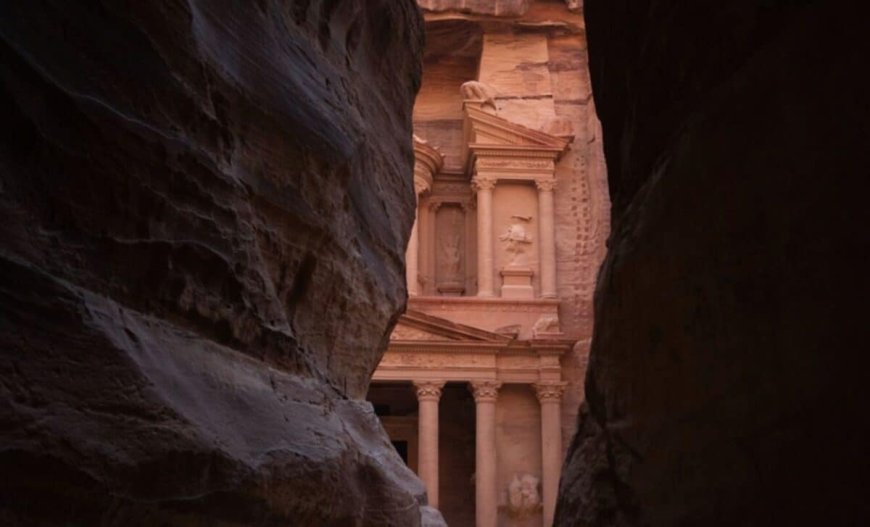
Archaeologists have identified a second main conduit within the ‘Ain Braq aqueduct that supplied water to ancient Petra, carved into red sandstone cliffs in present-day Jordan, developed into a major administrative and trading center despite its semi-arid climate. As capital of the Nabataean kingdom until its annexation into the Roman province of Arabia, the city required a stable and carefully managed water supply.
Water supported more than daily consumption. Baths, agricultural plots, gardens, temple basins, and a sacred fountain known as a nymphaeum depended on a functioning hydraulic network. For decades, scholars believed they understood how that network operated. What lay hidden along the southeastern edge of the city, however, suggests that Petra’s engineers had devised something far more intricate than previously imagined.
Excavation Reveals an Overlooked Pipeline
The discovery emerged from the Urban Development of Ancient Petra project led by Niklas Jungmann of Humboldt-Universität zu Berlin. Researchers were studying cisterns, basins, a dammed reservoir, and the known aqueduct channel when they identified something unexpected.
“The discovery of numerous water structures on the plateau directly above the rock slopes with the presumed aqueduct channel and the dam, raised broader questions about the engineering and chronology of this area,” he said.
Based on the study published in Levant, the aqueduct did not contain just the previously documented terracotta-lined conduit. Investigators found the imprint of a second channel that once housed a welded lead pipe encased in mortar. The pipeline measured approximately 380 feet (116 meters) in length.

Although most of the lead is no longer present, its former existence was inferred from the regular surface imprint left in the underlying stone. That texture differs clearly from the irregular impressions associated with terracotta pipes.
Physical Evidence Confirms the Material
Additional confirmation came during a later survey of Petra’s city center. Nabataean conduit blocks were uncovered with hardened mortar still preserving fragments of lead pipe. According to Jungmann, the imprint’s dimensions and surface characteristics matched those documented in the earlier find.
“Overall, this study underscores the potential for further research into Nabataean water management,” explained Jungmann.
The larger diameter of the lead pipeline, compared to terracotta pipes in the area, also supported the interpretation that it served a distinct hydraulic function.

A Pressurized Water Network Defied the Desert
Researchers concluded that the long, narrow lead pipe most likely functioned as an inverted siphon. In such a system, water flows through a header tank before entering a pressurized conduit that allows it to pass beneath obstacles.
“While some hypotheses about the aqueduct’s two branches into the city have been proposed above, more fieldwork is required in order to provide a fuller understanding of the distribution system and its evolution over time.”
The westward orientation of the pipeline suggests it supplied reservoirs on az-Zantur hill. Earlier theories had proposed that the conduit might have diverted toward another district before reaching its destination. As explained by the research team, such a detour would not have been viable, since an inverted siphon requires an uninterrupted pipeline capable of maintaining internal pressure.
Enjoyed this article? Subscribe to our free newsletter for engaging stories, exclusive content, and the latest news.
What's Your Reaction?
 Like
0
Like
0
 Dislike
0
Dislike
0
 Love
0
Love
0
 Funny
0
Funny
0
 Angry
0
Angry
0
 Sad
0
Sad
0
 Wow
0
Wow
0