





























Archaeologists have found an ape fossil in Egypt and now believe we’ve been searching for our common ancestor in the wrong place all along

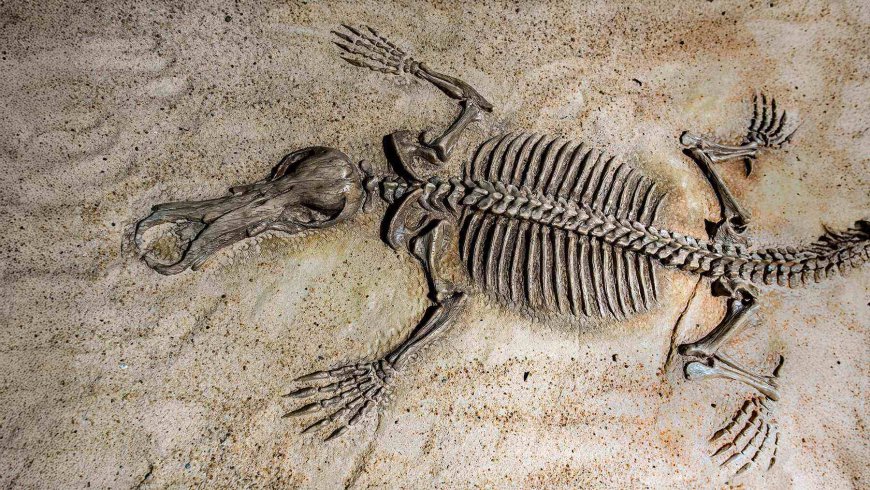
We may have been searching for our common ancestor in the wrong places.
We have developed an astonishing ability to study ancient fossils to better understand how we came to be who and what we are today. A recent discovery of an ape fossil in Egypt may prove that we have been searching for our ancestors in all the wrong places all along.
How has this fossil find reshaped our hominoid timeline?
How we have developed a clearer picture of early humans through extensive research
Mankind has spent the best part of the last century digging up the Earth to find fossils that enable extensive study of early humans.
An example is the discovery of a finger bone in Siberia. This discovery proved the existence of the Denisovans, which was backed up by discoveries of a skull and jawbone in other parts of the world.
We have learnt that early humans exhibited a range of physical characteristics.
The discovery of “hobbits” in Indonesia has shown us that our biology has changed dramatically over time as we evolved as a species and spread throughout the world.
With new technology, we have enhanced our ability to study ancient life
3D imaging and other new technologies have made discovering new fossils around the world a far simpler process.
We have long known about the Neanderthal species, but a few missing pieces in their specific puzzle have remained, until a recent discovery in a cave in Siberia completed the Neanderthal genome catalog.
And there is still so much of our ancient timeline of life that we are yet to discover.
But not every discovery of fossils requires a crew of archaeologists to get to. Two men who were simply walking their dog discovered evidence of ancient footprints in Scotland during the Roman invasion, a first of its kind in the land of kilts.
For the most part, the vast majority of the scientific world agrees that humans emerged in Africa.
But recent evidence has forced scholars to debate which part of the huge continent our common ancestors came from. So, how do we get answers to this significantly important question?
A recent study, “Scientists say we’ve been looking in the wrong place for human origins,” published in the American Association for the Advancement of Science (AAAS) in March 2026, may have a few answers.
Have we been searching for our ancestors in the wrong place? A study says yes
We have known for a long time that the African continent was the birthplace of what we consider to be humans.
The discovery of Homo Naledi in the Rising Star cave system in South Africa was a landmark achievement for mankind. It proved that even thousands of years ago, humanoids were burying their dead in a starkly similar fashion to what we do today.
The search for the “missing pieces” in the human puzzle has mostly been located in East Africa.
However, the aforementioned study has found evidence that we have been searching in the wrong places all along. The study details the discovery of a 17 to 18 million-year-old ape fossil in Egypt.
The findings point to the fact that early apes lived in North Africa.
This reshapes the previous set of evidence that they mostly emerged from the East of the African continent. The study finds that the discovery of this ancient ape fossil challenges existing timelines of early hominoid evolution and diversification.
Science and archaeology have proven that our lineage was far more complex than we ever knew.
This discovery points out that we need to widen the search for early human ancestors, as we may have been looking in the wrong place all along. What more will we find as we broaden our target area of study?
What's Your Reaction?
 Like
0
Like
0
 Dislike
0
Dislike
0
 Love
0
Love
0
 Funny
0
Funny
0
 Angry
0
Angry
0
 Sad
0
Sad
0
 Wow
0
Wow
0