



























Archaeologists Discover a 5,000-Year-Old Spanish Dolmen Built for the Dead and Packed with Signs of Power

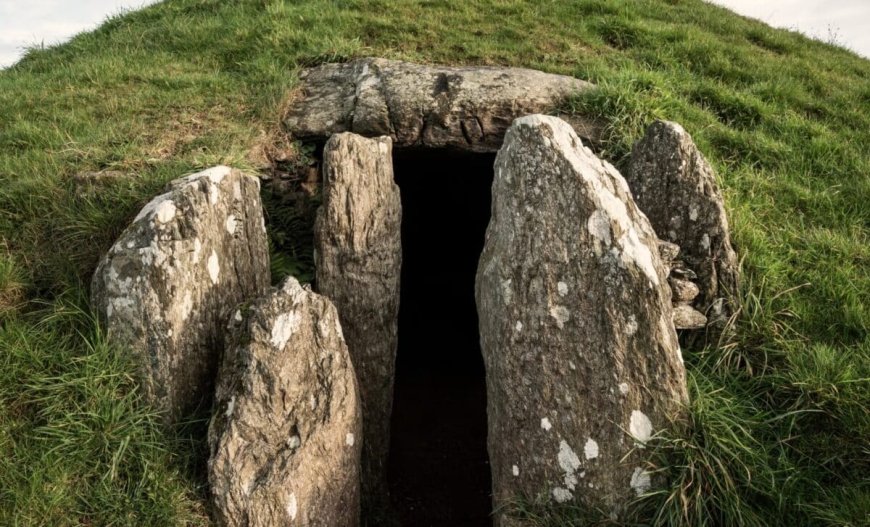
A newly excavated 5,000-year-old tomb in Spain is drawing attention not just because of its age, but because of what it still holds. Near Teba, in Málaga province, archaeologists uncovered a long stone tomb filled with prehistoric burials and high-status grave goods, including ivory, amber, flint pieces, seashells, and a halberd. The monument, known as Dolmen I of the La Lentejuela necropolis, is emerging as one of the most important recent archaeological discoveries in Spain.
The structure measures 13 meters, or about 43 feet, making it a notably large dolmen in Andalusia. Researchers from the University of Cádiz say its preservation is unusually strong, giving them a rare chance to study how prehistoric communities in southern Iberia built monuments, buried their dead, and displayed status through exotic materials. That combination of scale, preservation, and grave goods is what makes this ancient tomb discovery stand out.
A Prehistoric Tomb Built to Dominate the Landscape
The find comes from four excavation seasons at La Lentejuela, a megalithic necropolis near Teba. The University of Cádiz describes the monument as one of the most monumental and best-preserved funerary structures in Andalusia, with a complex internal layout and a length of 13 meters. The work was directed by Eduardo Vijande and Serafín Becerra, both linked to the university’s Thalassa research group.
Its architecture helps explain why this prehistoric stone tomb mattered. Live Science reports that the walls were built with vertical stone slabs, or orthostats, around 2 meters high. Eduardo Vijande said, “The entire dolmen was also covered by horizontal large stone slabs, and on top of this covering, there was a tumulus [a human-made mound] of sand and small stones.” That means the monument was not just a burial chamber, but a built landmark meant to be seen in the landscape.

The site’s design suggests planning, labor, and social coordination. This was not an improvised grave. It was a substantial megalithic tomb with architectural ambition, the kind of structure that can reveal how communities in the third millennium B.C. organized memory, ritual, and territory. Live Science also notes that dolmens could serve not only as tombs, but sometimes as ritual spaces or territorial markers in agricultural societies.
Multiple Prehistoric Burials, Not a Single Elite Grave
One of the most revealing parts of the discovery is that the tomb was reused. Archaeologists documented several ossuaries inside the monument, indicating that it functioned as a collective burial space for multiple people rather than as a one-time grave. That places the Teba structure within a broader pattern of prehistoric burials in which megalithic monuments were revisited over time.
That repeated use matters because it shifts the story away from a single dramatic burial and toward a longer social history. The tomb appears to have remained meaningful across generations, with the dead placed alongside carefully selected objects. The University of Cádiz says the find offers key information about funerary practices and exchange networks in southern Iberia during the third millennium B.C.

The Teba dolmen also stands out because the human remains were found in a structure that is still legible enough to study as architecture. In many prehistoric sites, researchers are left with fragments. Here, they can examine how the spaces inside the tomb were arranged and reused, which may help explain how burial, ritual, and social identity worked together in this part of ancient Spain.
Ivory, Amber, Flint, and Shells Point to Status and Exchange
The grave goods are a major reason this ancient treasure-filled tomb has attracted broad attention. According to the University of Cádiz, archaeologists found prestige items made from ivory, amber, flint, and marine shells. The assemblage also included arrowheads, large flint blades, and what the university described as an exceptional halberd. Live Science likewise reports seashells, ivory pieces, arrowheads, and a halberd among the finds.

Those materials matter because they speak to status and movement. Marine shells found at an inland site are especially suggestive, pointing to exchange networks that reached beyond the immediate area. The University of Cádiz explicitly frames the discovery as evidence for wider connections in the south of the Iberian Peninsula. In other words, this was not only a burial site. It was also a place where prestige materials were gathered, displayed, and deposited with the dead.
Why This Dolmen Could Become One of Spain’s Key Archaeology Finds
The strongest verified quotation attached to the discovery comes from Serafín Becerra. As quoted by Popular Mechanics from the university statement, “We could be talking about one of the most monumental and complete dolmens in all of Andalusia.” Eduardo Vijande Vila added that “The true potential of this structure” lies in “its extraordinary state of conservation, which will allow us to gain a detailed understanding of the lifestyles and beliefs of these communities.” Both remarks align with the central point of the excavation: preservation is what turns an old tomb into a major research opportunity.
That is why this 5,000-year-old dolmen in Spain has quickly become a compelling ancient tomb discovery story. The monument combines size, intact architecture, collective burials, and exotic grave goods in a way that can deepen understanding of prehistoric Spain, especially in Andalusia and Málaga.
Research is still ongoing, but the site already looks like one of the more important recent windows into how ancient communities in southern Iberia buried their dead and projected power through stone, objects, and place.
Enjoyed this article? Subscribe to our free newsletter for engaging stories, exclusive content, and the latest news.
What's Your Reaction?
 Like
0
Like
0
 Dislike
0
Dislike
0
 Love
0
Love
0
 Funny
0
Funny
0
 Angry
0
Angry
0
 Sad
0
Sad
0
 Wow
0
Wow
0