


























Archaeologists Breach a Cave Sealed for 40,000 Years to Find the Last Neanderthal on Earth

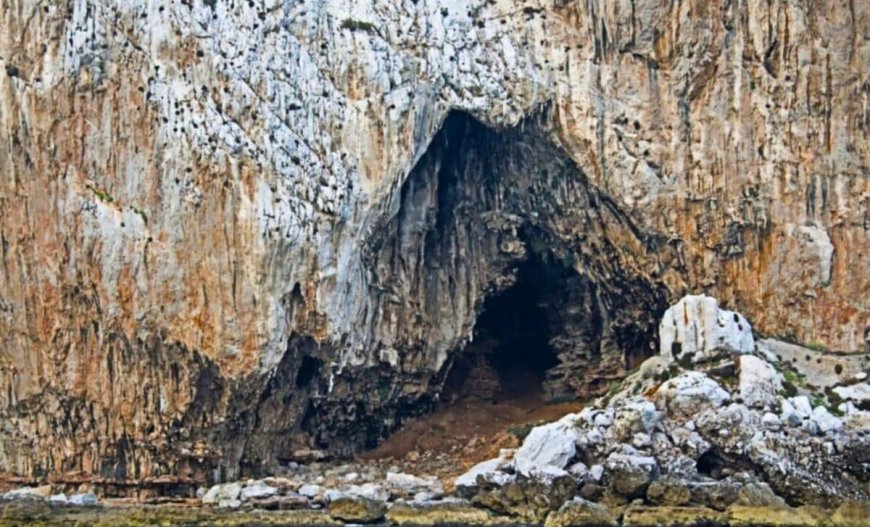
The limestone cliffs of the Rock of Gibraltar rise sharply from the Mediterranean Sea, containing a network of deep fissures and darkened openings. Within these coastal formations, researchers have spent decades excavating layers of sandy sediment and ancient debris. The environment remains harsh and subject to the constant erosion of the sea, yet the interior of these natural structures preserves a chronological record of prehistoric activity.
Archaeologists working at the site often navigate narrow passages that have been obstructed by natural collapses for millennia. These physical barriers have inadvertently protected the interior environments from the fluctuating climate and human interference. The specific geological conditions of the Gorham’s Cave Complex allow for the preservation of organic materials that typically vanish in other open-air archaeological sites.

Recent efforts focused on a specific area within the Vanguard Cave, where a thick layer of sand had blocked a secondary entrance. The team moved through a small gap in the ceiling to enter a space that had not been influenced by external air or light since the Late Pleistocene. This restricted access required the use of specialized lighting and careful movement to avoid disturbing the floor surface.
Professor Clive Finlayson, Director of the Gibraltar National Museum, led the team that discovered this concealed chamber. The museum staff and local researchers have been investigating the cave system as part of a long-term project to understand the final stages of the Paleolithic era. This specific investigation aimed to map the internal dimensions of the Vanguard Cave to identify previously unknown structural cavities.
The expedition successfully opened a 13-meter-deep chamber located at the back of the cave system. Upon entry, the researchers found a space that had been hermetically sealed by a sand slide approximately 40,000 years ago. The walls and ceiling remained in their original state, providing a unique snapshot of the environment as it existed during the time of the Neanderthals.
Evidence of Ancient Occupation
Initial inspections of the chamber floor revealed the physical remains of animals and evidence of predator activity. The team identified the leg bone of a lynx, the vertebrae of a spotted hyena, and the wing bone of a griffon vulture. These biological markers indicate that the cave served as a shelter for various species during the periods when it was not occupied by hominids.

The most significant finding within the new chamber was a large whelk shell that showed signs of being handled. This marine mollusk was located far from the contemporary shoreline of the era, suggesting it was intentionally carried into the cave. According to reports on the sealed chamber, the presence of the shell points to the deliberate collection of coastal resources.
Researchers also observed “scalloping” marks on the cave walls, which are physical indentations caused by ancient water flow or clawing. Near these marks, the team found stone tools that match the Mousterian technology typical of late Neanderthal populations. These artifacts were scattered across the surface, rather than buried deep within the stratigraphy, indicating they were left just before the chamber was sealed.
“These are exciting discoveries that open a new chapter of our history,” said Fabian Picardo, the Chief Minister of Gibraltar. The local government has supported the ongoing excavations because the site provides a specific window into the lives of the Homo neanderthalensis groups that inhabited the southern edge of the Iberian Peninsula.
The Last Refuge of a Species
The Gorham’s Cave Complex is recognized as a UNESCO World Heritage site because it represents one of the highest concentrations of Neanderthal occupation sites in Europe. Data collected from the surrounding area shows that this population survived in Gibraltar significantly longer than in other parts of the continent. The new chamber provides a direct link to the cultural practices of these final surviving groups.

Scientists believe the climate in Gibraltar remained stable while the rest of Europe entered a period of extreme cold. This stability allowed the Neanderthals to continue hunting diverse prey and gathering plants long after their counterparts to the north had vanished. Detailed climatic and stratigraphic analysis supports the theory that this location acted as a final refugium for the species.
The discovery of a child’s milk tooth near the entrance of the chamber further confirms that family groups utilized the space. This tooth, found in a layer associated with Neanderthal activity, suggests the cave was a site of domestic life rather than just a temporary hunting camp. Analysis of the surrounding sediment is currently underway to identify microscopic plant remains and pollen.
Mapping the Deep Interior
The Gibraltar National Museum researchers plan to continue the excavation to determine if there are burial sites located deeper within the limestone. Because the chamber was sealed so effectively, the chemical composition of the soil has not been altered by modern pollutants. This creates an ideal environment for recovering ancient DNA from the floor sediments.

The current findings suggest that the Neanderthals were capable of complex social behaviors and resource management. They utilized the Rock of Gibraltar as a strategic vantage point to monitor the movements of animal herds across the coastal plains. The proximity to the sea also provided a reliable source of protein in the form of shellfish and marine mammals.
The Vanguard Cave chamber is part of a larger network that includes Gorham’s Cave, where previous excavations found ancient engravings. These cross-hatched marks are considered some of the earliest examples of Neanderthal abstract art. The newly opened space offers the potential to find similar cultural expressions that have been protected from erosion.
Enjoyed this article? Subscribe to our free newsletter for engaging stories, exclusive content, and the latest news.
What's Your Reaction?
 Like
0
Like
0
 Dislike
0
Dislike
0
 Love
0
Love
0
 Funny
0
Funny
0
 Angry
0
Angry
0
 Sad
0
Sad
0
 Wow
0
Wow
0