





























A YouTuber Helped Scientists To Finally Solved the Mystery of the World’s Oldest Computer Lost for 2,000 Years

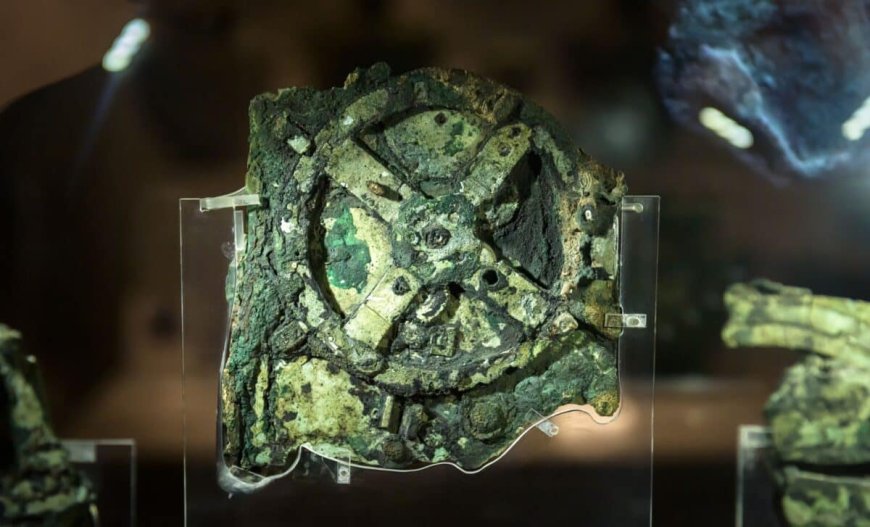
A corroded early computer discovered in a shipwreck is challenging modern timelines of computing. New research now clarifies one of the biggest mysteries surrounding the Antikythera mechanism, revealing how it likely tracked time with extraordinary precision.
For decades, this ancient machine has stood apart from other archaeological discoveries. Its dense system of gears and dials suggested a purpose far beyond what was expected from the ancient world. The renewed attention comes from a 2024 study led by researchers at the University of Glasgow, who applied modern statistical tools to revisit long-standing assumptions.
A Discovery That Challenged The Timeline Of Computing
The Antikythera mechanism was discovered in 1901 in a Roman-era shipwreck near the Greek island of Antikythera. Dating back to the early first century BCE, it is widely considered the first known analog computer.
Its intricate design includes interlocking bronze gears that appear to simulate astronomical cycles. According to reporting published in The Horological Journal, scientists have long suspected that the mechanism was used to track celestial events, though its exact functions remained debated for more than a century.
This uncertainty made the device one of archaeology’s most fascinating puzzles. Early comparisons often pointed to modern computing milestones such as ENIAC. This mechanism predates them by nearly two millennia, shifting the historical baseline of technological innovation.

Ancient Computer Engineering Decoded
The recent breakthrough came when researchers Graham Woan and Joseph Bayley applied techniques not originally intended for archaeology. As reported by the University of Glasgow, the team used Bayesian analysis alongside methods developed for detecting gravitational waves, the same phenomena studied by observatories like LIGO.
Their focus was the mechanism’s calendar ring, a circular component believed to encode time cycles. By analyzing existing data, they determined that it likely contained between 354 and 355 holes, matching the length of a lunar year.
“Previous studies had suggested that the calendar ring was likely to have tracked the lunar calendar, but the dual techniques we’ve applied in this piece of work greatly increase the likelihood that this was the case,” Bayley explained. “It’s given me a new appreciation for the Antikythera mechanism and the care Greek craftspeople put into making it.”
The computer’s structure reveals remarkable precision. The holes were arranged along a circle with a radius of approximately 77.1 millimeters, each separated by just 0.028 millimeters, a level of accuracy that highlights craftsmanship rarely associated with that period.

A YouTube Test Leads to a Breakthrough
The study was inspired by a modern attempt to recreate the computer. A YouTuber, Chris Budiselic, who runs the channel Clickspring, had been documenting efforts to build a replica. As noted by Graham Woan, this raised a question that could be explored statistically.
“A colleague pointed me to data acquired by YouTuber Chris Budiselic, who was looking to make a replica of the calendar ring and was investigating ways to determine just how many holes it contained,” Woan explained. “It struck me as an interesting problem, and one that I thought I might be able to solve in a different way during the Christmas holidays.”
This unexpected link between hands-on reconstruction and academic research illustrated how new perspectives can still reveal insights in artifacts that have been studied for decades.
Enjoyed this article? Subscribe to our free newsletter for engaging stories, exclusive content, and the latest news.
What's Your Reaction?
 Like
0
Like
0
 Dislike
0
Dislike
0
 Love
0
Love
0
 Funny
0
Funny
0
 Angry
0
Angry
0
 Sad
0
Sad
0
 Wow
0
Wow
0