


























A real interstellar comet entered the Solar System, and the buzz on social media was so intense that even artificial intelligence began generating data about aliens and impossible trajectories

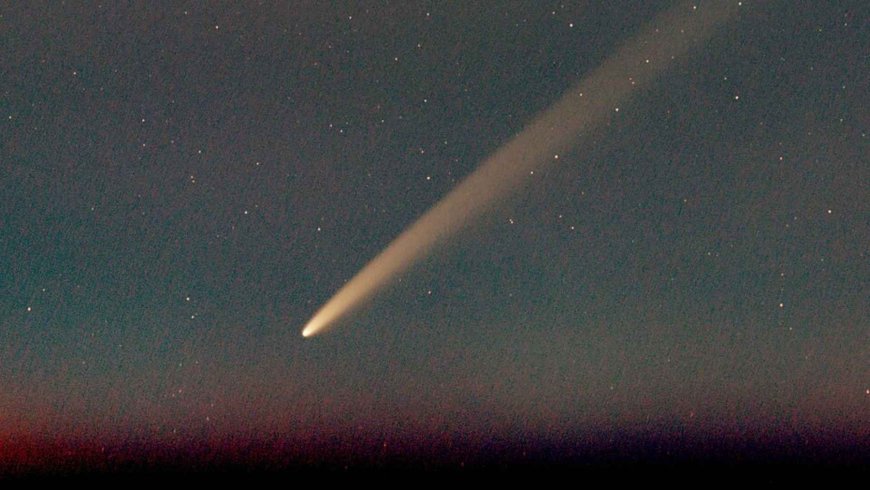
Open your phone at night and you might see grainy clips labeled “UAP,” confident chatbot predictions, and promises that a coming document dump will settle the alien question. Fun, sure, but science runs on measurements, not vibes.
That matters because a real interstellar visitor, comet 3I/ATLAS, has crossed into our neighborhood, and online chatter around it has mixed astronomy with plain errors. Researchers say the only way to separate the two is to collect quantitative data in the open and let others stress test it.
What 3I/ATLAS really is and what it is not
NASA says the NASA-funded ATLAS telescope in Río Hurtado, Chile reported 3I/ATLAS on July 1, 2025, after its path suggested it came from interstellar space. Archived observations pushed sightings back to June 14, the kind of unglamorous detail that locks down an orbit.
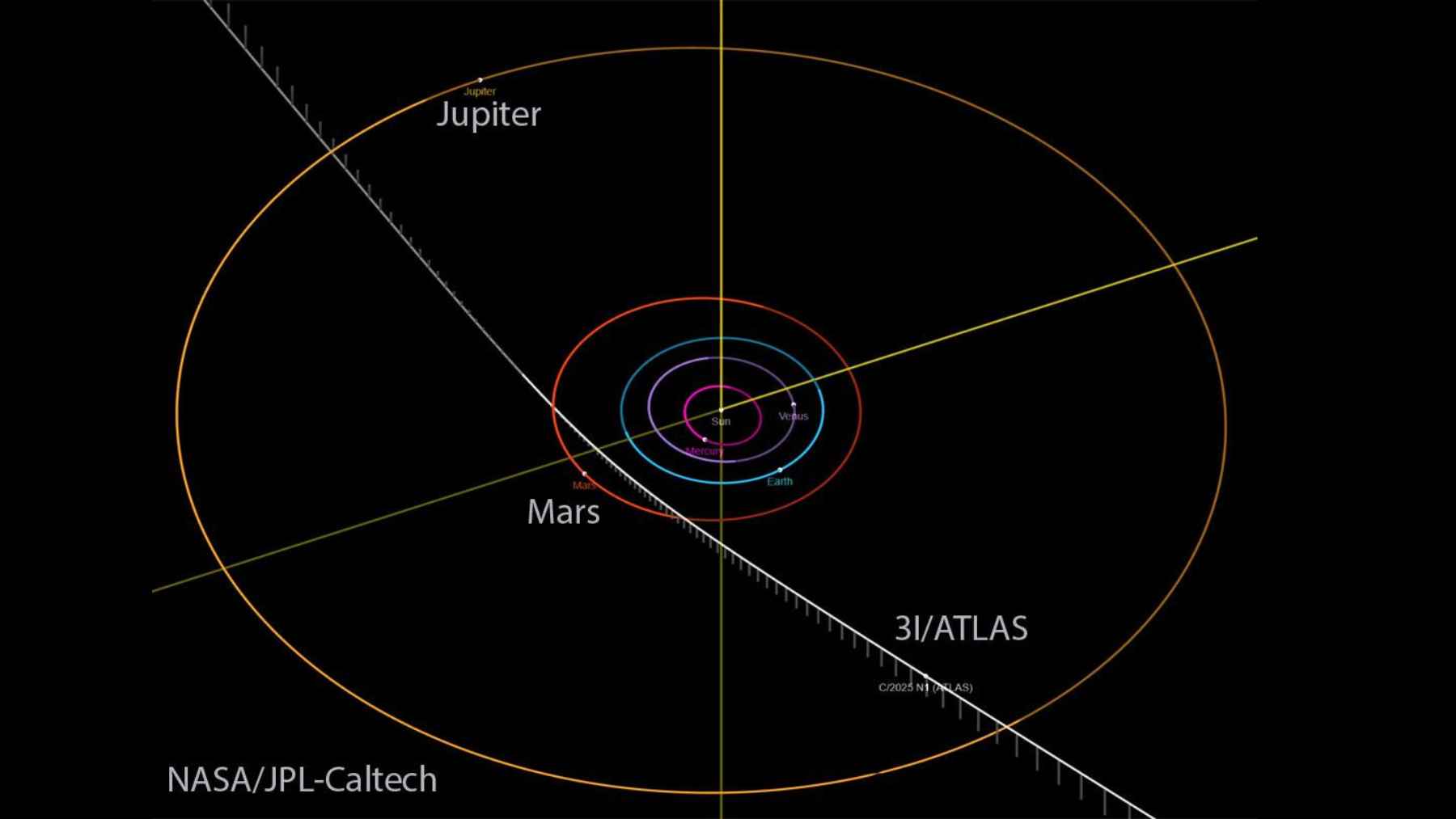
For Earth, the headline is that there is no danger. NASA says the comet will remain at least 1.6 astronomical units away, about 150 million miles, and it should pass closest to the Sun around late October 2025 at about 1.4 astronomical units, just inside Mars’ orbit.
NASA has also lined up a fleet of observers, from Hubble to Webb, because objects like this do not come around often. Hubble data suggests the nucleus is no larger than about 3.5 miles across and could be much smaller, while the glowing fuzz is largely dust and gas released as sunlight warms ice.
How misinformation spreads, even through AI
Even with a real comet in the sky, rumors move faster than photons. Writing in El Confidencial, Harvard astrophysicist Avi Loeb said several AI systems repeated a claim that 3I/ATLAS would pass within about 5,000 miles of Ganymede, yet orbital checks put it tens of millions of miles from Jupiter.
Loeb’s broader argument is simple: physics is supposed to shrink our imagination down to what reality allows, the way a detective rules out flattering suspects. When the incentives reward the most shareable story, the “grain” of data can vanish under a lot of “chaff.”
He points to criminal justice as a reminder that confident testimony is not the same as truth. The Death Penalty Information Center counts 34 people exonerated from death row using DNA evidence, beginning with Kirk Bloodsworth in 1993, and the lesson is familiar to anyone following environmental debates.
The new observatories turning the sky into a data stream
The good news is that the sky is becoming a real-time data stream. On February 25, 2026, the NSF and DOE Vera C. Rubin Observatory announced it had issued its first scientific alerts, about 800,000 in a single night, with the system expected to scale up to as many as seven million alerts per night.
Those alerts are public and fast, triggered within minutes, so other telescopes can follow up while an event is still unfolding. Rubin’s team says the same pipeline helps discover and track asteroids for potential Earth threats and can also flag rare interstellar objects.
Loeb says the Galileo Project wants to add another layer with ground-based observatories that continuously monitor the whole sky in infrared, visible, radio, and audio bands and use machine learning to hunt for outliers.
In a March 2026 post, he wrote that three observatories are operating in Massachusetts, Pennsylvania, and Nevada, and that triangulation between sensors about 10 kilometers apart can measure distances to objects to better than 10 percent.
Why an alien rumor story belongs in environmental news
So why does an alien rumor story matter for ecology? Because science literacy is environmental infrastructure, and a society that cannot agree on a comet’s orbit will struggle to agree on what satellites and field sensors show about heat, smoke, or CO2.
There is also a practical planetary angle: big impacts can rewrite climates and ecosystems in a geologic instant, so early detection is a form of risk reduction. The same habit of mind — publish the measurements, state the uncertainty, invite independent checks — is what makes climate and biodiversity numbers trustworthy.
For now, 3I/ATLAS is best understood as a rare icy visitor, not proof of alien technology, and it is a useful stress test for how we handle uncertainty online. Ask where a claim comes from, then look for the data trail, because the best surprises survive contact with measurement.
The press release was published by the Rubin Observatory.
What's Your Reaction?
 Like
0
Like
0
 Dislike
0
Dislike
0
 Love
0
Love
0
 Funny
0
Funny
0
 Angry
0
Angry
0
 Sad
0
Sad
0
 Wow
0
Wow
0