

























A Massive Discovery Beneath Ancient Ruins Points to a Forgotten Civilization Erased by a Mysterious Flood

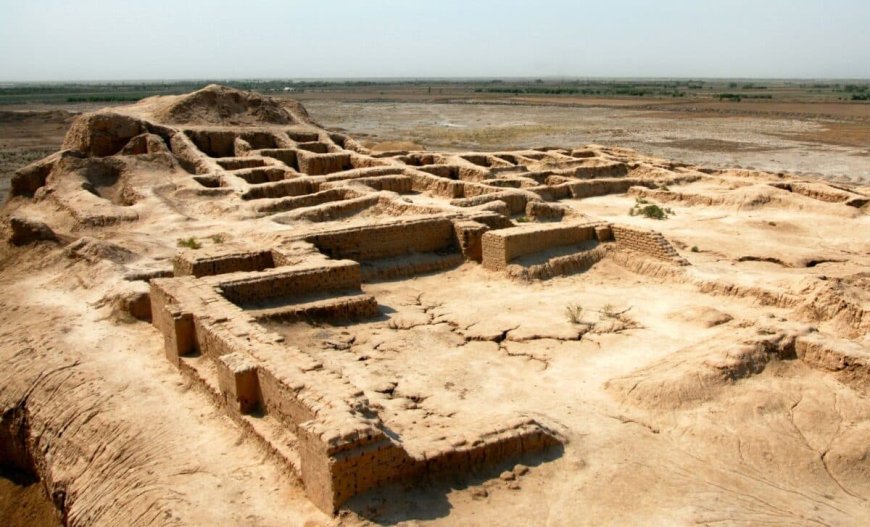
A thick band of clay and sand, believed to be the remains of a massive flood, has been discovered beneath ancient ruins in Iraq, reopening a familiar question in archaeology: could earlier human communities have existed before the rise of the first known cities?
The discovery comes from the archaeological site of Tell Fara in southern Iraq, where excavations revealed an unusual sediment layer lying beneath remains associated with the Sumerian civilization. The Sumerians established some of the earliest known urban centers roughly 5,000 years ago, which makes anything found beneath their structures immediately intriguing.
Hints of an Older Human Presence
In a report by the Daily Mail, the sediment discovered at Tell Fara consists of dense deposits of clay and sand, the sort typically left behind when floodwaters sweep across a landscape and later recede. At first glance, it may sound like a routine geological feature. But its position beneath Sumerian ruins is what caught researchers’ attention.

As Indy100 pointed out, the layer shows a huge flood occurred long before the Sumerians settled there. So any evidence of earlier human activity would probably be buried under the flood deposits.
Flood Deposits Across Ancient Worlds
The flood layer identified in Iraq is not entirely unique. Researchers have noted comparable sediment deposits in several historically important regions, including Mesopotamia, the Indus Valley, and parts of Egypt.
As mentioned in the same source, these geological traces have encouraged some researchers to consider whether large flooding events may have affected multiple early societies across different regions. The idea itself is not new; floods are deeply embedded in both geological records and ancient storytelling traditions.
Still, identifying flood sediments does not automatically mean the same disaster occurred everywhere. In many cases, regional river systems can produce similar deposits at very different times.
Treasures Beneath the Flood Layer
Beneath the flood layer at Tell Fara, archaeologists uncovered a remarkable set of artifacts, including proto-cuneiform tablets, distinctive Fara II bowls, and vividly decorated polychrome vessels. Together, these items suggest a surprisingly advanced level of artistry and cultural development.
Erich Schmidt, a lead archaeologist from the Penn Museum, noted a dramatic contrast between the objects found above the flood deposit and those buried beneath it. In his excavation noted, he described the transition as an “absolute culture break,” implying that the flood may have marked the abrupt end of one cultural phase.

Only a limited number of skeletons were recovered from the earlier layer, leading Schmidt to suggest that that the city’s residents may have escaped before the disaster struck.
A Contested Ancient Disaster
Researcher Matt LaCroix has proposed a broader interpretation of the evidence. He argued that geological records, including ice cores, tree rings, volcanic debris, and shifts in the Earth’s magnetic field, may point to a major environmental event around 20,000 years ago.“Nothing in the last 11,000 years even comes close to explaining it,” He shared with the Daily Mail.
He also compared these natural indicators with flood stories preserved in ancient traditions. His argument is that both the scientific data and the myths might be describing the same large-scale catastrophe.
Many archaeologists, though, remain skeptical. Evidence from around 20,000 years ago generally shows humans living in small nomadic hunter-gatherer groups rather than organized cities. That contrast is one reason why the hypothesis of a forgotten civilization from that era still remains highly contested.
Enjoyed this article? Subscribe to our free newsletter for engaging stories, exclusive content, and the latest news.
What's Your Reaction?
 Like
0
Like
0
 Dislike
0
Dislike
0
 Love
0
Love
0
 Funny
0
Funny
0
 Angry
0
Angry
0
 Sad
0
Sad
0
 Wow
0
Wow
0