



























A 4-Meter “Living Fossil” Is Swimming Again in a Swedish River Where It Hadn’t Lived for a Century

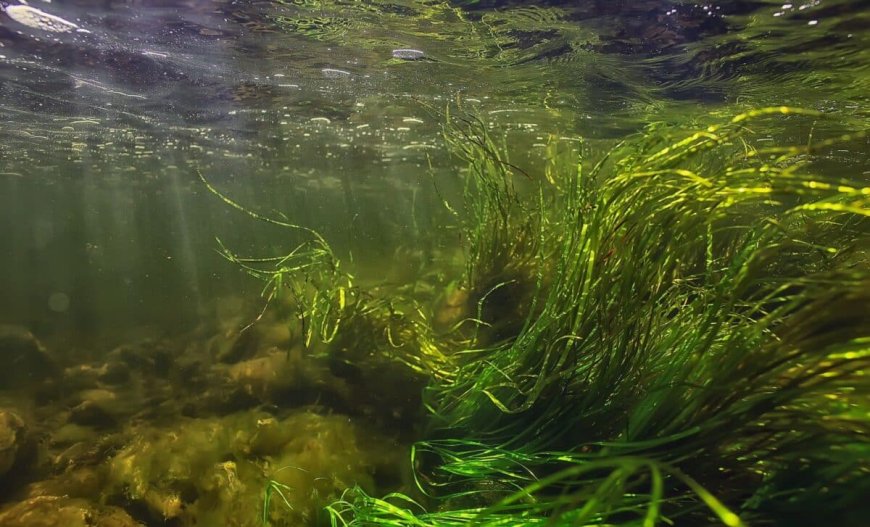
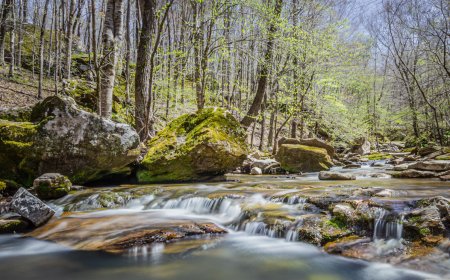
Something unusual has slipped back into the dark, fast-moving waters of Sweden’s Göta River: a prehistoric “living fossil.”After more than a century of absence, a massive and ancient fish has begun swimming there again, almost unnoticed.
Its return is not accidental. Behind this discreet comeback lies a long-planned scientific effort aimed at bringing back a species that vanished from the river in the early twentieth century.
For thousands of years, this fish inhabited rivers across northern Europe before disappearing under the combined pressure of overfishing, pollution and river engineering. Now researchers and conservation groups are attempting to rebuild that lost presence by releasing young individuals into the Göta River.
A Prehistoric Giant That Barely Changed Over Time
The returning species is the Atlantic sturgeon, a fish whose evolutionary history stretches deep into the past. According to Discover Wildlife, the species dates back at least 70 million years, while the wider sturgeon family may have appeared around 200 million years ago, during the age of the dinosaurs.

Sturgeons are often described as “living fossils” because their bodies have changed little over time. Instead of scales, they are covered with rows of bony plates known as scutes, which form a kind of natural armor. Near their mouths, they also carry barbels, whisker-like sensory organs that help them detect prey along the riverbed.
It’s also remarkable for its size and lifespan. Adults can grow longer than four metres, weigh more than 350 kilograms, and live for over 90 years, according to reporting by Discover Wildlife. Their reproductive cycle is unusually slow: males typically begin breeding between eight and twelve years old, while females may not spawn until around twenty years of age.
A Museum Discovery That Confirmed The River’s Past
Before launching the reintroduction effort, scientists needed clear evidence that this “living fossil” had historically reproduced in the Göta River. For years, only stories from fishermen suggested that the species had once lived there.

That changed in 2016, following an unexpected discovery. Researchers at the Gothenburg Museum of Natural History found three juvenile sturgeon specimens preserved in the museum’s storage collections. The fish had been caught in the Göta River during the mid-1800s.
“As they were juveniles – and juvenile sturgeon are unable to survive in saltwater – this proved that the fish hatched in the river. It was the breakthrough we were looking for,” explained biologist Dan Calderon, who came up with the idea of reintroducing Atlantic sturgeon to the Göta River in 2014.
Hundreds of Sturgeon Return
The reintroduction began gradually, 100 sturgeon about ten months old were released into the Göta River in 2024, each measuring roughly 60 centimetres and weighing around 700 grams.
The program expanded the following year. In 2025, conservation teams released another 140 young “living fossil” species, along with around 2,000 fry into the river.
“Moving forwards, it’s important we release fish every year, because a lot of them – especially the smaller ones – will be eaten by predators,” said Linnéa Jägrud, a freshwater specialist at Sportfiskarna, the Swedish Anglers Association.
Some of the fish are equipped with acoustic transmitters, allowing scientists to track their movements throughout the river system. Because these “living fossils” take many years to reach maturity, rebuilding the population will take time.
“We’re striking a balance by releasing larger and smaller fish at the same time. The smaller fish are more vulnerable, but those that do survive will probably have a stronger instinct to return and spawn here. Given the time it takes for Atlantic sturgeon to reach breeding age, it might be 14 or 15 years before we reach that point,” she added.
Enjoyed this article? Subscribe to our free newsletter for engaging stories, exclusive content, and the latest news.
What's Your Reaction?
 Like
0
Like
0
 Dislike
0
Dislike
0
 Love
0
Love
0
 Funny
0
Funny
0
 Angry
0
Angry
0
 Sad
0
Sad
0
 Wow
0
Wow
0