




























They lifted a rock on a Caribbean island — And found the world’s smallest snake no one had seen in nearly 20 years

Certain animal species are making a triumphant comeback.
Researchers have found several long-lost species of life that have remained hidden for decades. The rediscovery of the world’s smallest snake in an iconic vacation destination has been a major milestone for environmentalists and the more conservation-conscious among us.
Where has this tiny snake been for the last two decades?
How life is remerging across certain parts of the world is astonishing
All over the world, certain animals and lifeforms are bouncing back from the brink of extinction when given the time to do so.
In the Samara Karoo Reserve in South Africa, conservationists have reintroduced apex predators such as lions. This has led to a “green” chain reaction that affects the entire ecosystem in the region.
A great number of species have been bouncing back, thanks in no small part to our own conservation efforts.
The Przewalski’s horse, which is the world’s last truly wild horse, has been reintroduced to Kazakhstan after a nearly 100-year absence, proving that if we just gave animal life our attention and care, the world can heal from centuries of devastation.
The island nations of the world are a diverse mix of life
The multitude of island nations across the world is far more than just tiny landmasses; they are the “evolutionary laboratories” of life.
Several species that were close to the brink of vanishing before our eyes have been remerging in these regions of the planet. Despite only accounting for roughly 5.3% of the world’s land area, islands boast approximately 20% of all bird and plant species.
Some animal life has been hiding for decades while we thought they were gone for good.
Such as the aforementioned rediscovery of the world’s smallest snake. But other species have also been remerging from their decades-long slumber, such as a species of catfish in the Amazon River.
For many decades, some parts of the world have suffered tremendously due to our collective advancement as a society.
So it’s not just animal life that has been remerging from the depths of despair. Yellowstone’s iconic and emblematic forests have been regrowing after nearly 80 years of stagnation, proving the world is alive and thriving, in some cases at least.
A recent rediscovery led by a scientist from Re:wild has shed light on where the smallest snake in the world disappeared to for years.
The island nation of Barbados sees the rediscovery of an emblematic snake
Barbados has some of the most diverse wildlife anywhere on the planet.
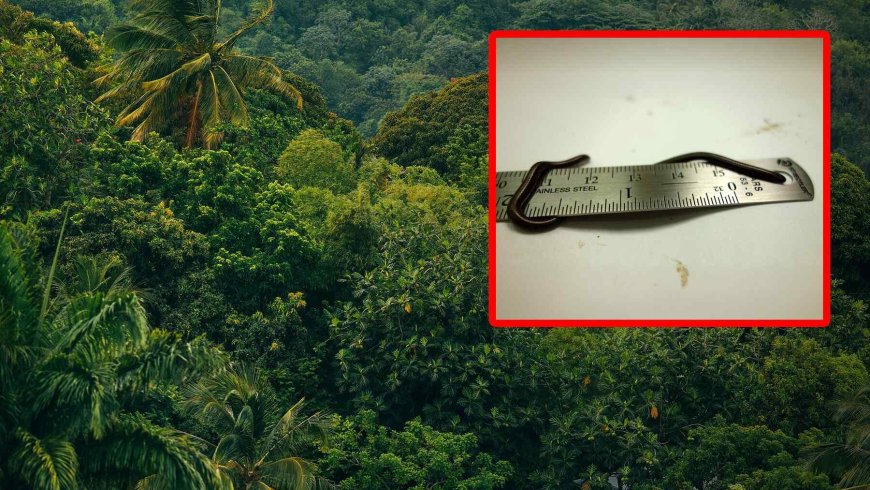
A team led by Connor Blades from the Barbados Ministry of Environment and National Beautification, alongside Justin Springer of Re:wild, has rediscovered the world’s smallest snake by simply lifting up a rock in the island nation.
Tetracheilostoma carlae, better known as the Barbados Threadsnake, vanished from the island nearly 20 years ago, and no one knew why.
After its initial discovery in 2008, the snake has slithered back into life
The species was first discovered in its natural habitat in 2008, but researchers were unable to find it again after that first discovery. Thankfully, due to the efforts of Connor Blades and Justin Springer, the animal, which is widely recognized as the smallest snake in the world, has been rediscovered.
Our impact as a society on the world has been profound.
From fading lakes that have lost almost a third of their water mass to the deforestation that has placed the Barbados Threadsnake in danger, we are now beginning to understand how we change the world around us.
By documenting that the snake still exists, Blades and Springer have made a great case for increased conservation efforts that could protect wildlife, especially in island nations like Barbados.
What's Your Reaction?
 Like
0
Like
0
 Dislike
0
Dislike
0
 Love
0
Love
0
 Funny
0
Funny
0
 Angry
0
Angry
0
 Sad
0
Sad
0
 Wow
0
Wow
0