
























The Arctic is melting, something frozen for 30,000 years has come “back to life” — and scientists are now watching closely

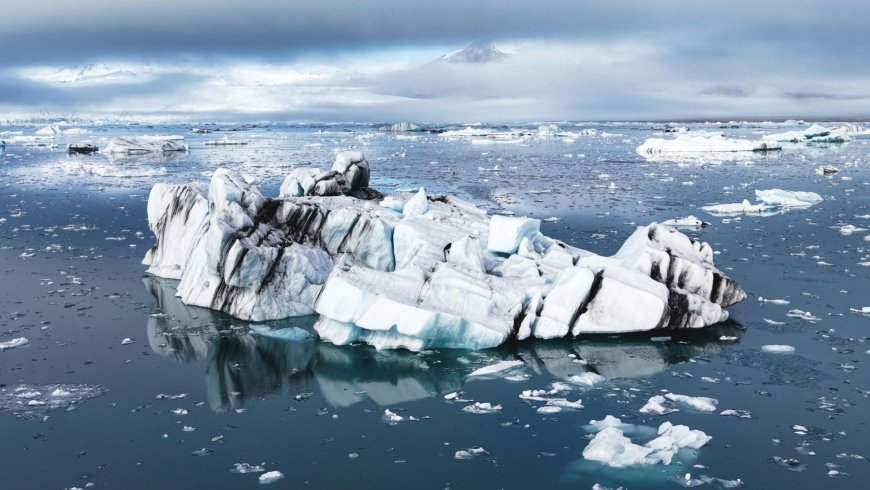
The Arctic rarely surprises anyone. It’s cold, remote, and famously slow to change. Ice forms, ice melts, repeat. But recently, scientists working in the far north began noticing something unusual: the ground itself is changing faster than expected.
And what’s coming out of it isn’t just mud.
A frozen world that was never meant to thaw
For tens of thousands of years, vast areas of the Arctic have been locked in a deep freeze called permafrost. This permanently frozen soil stretches across Siberia, Alaska, and northern Canada, acting like a natural freezer that never shuts off.
Inside it lies an entire archive of ancient life — plants, animals, bacteria, and microscopic organisms from a time long before cities, agriculture, or even modern humans. As Arctic temperatures rise nearly four times faster than the global average, this frozen archive is beginning to thaw, a trend described in climate-health research published by Cell Press in One Earth. The ice isn’t just disappearing. It’s revealing history.
When nature presses play after 30,000 years on pause
Extreme cold doesn’t always destroy life. Sometimes, it preserves it astonishingly well.
Researchers studying thawed permafrost have discovered that biological material buried for millennia can remain intact — even functional. In controlled laboratory conditions, some microorganisms behave as if they were frozen yesterday, not tens of thousands of years ago.
A major scientific review published via ScienceDirect explains how warming permafrost is exposing ancient biological material and why scientists are increasingly focused on what happens when this material re-enters modern ecosystems.
So far, the findings are fascinating. And slightly unsettling.
The moment scientists stopped laughing
This isn’t just a theoretical concern.
In 2016, an unusually warm summer in Siberia thawed the frozen remains of a reindeer that had died decades earlier. The result was a localized outbreak of anthrax, a disease caused by bacteria released from the ice.
No lab accident. No science fiction. Just heat, ice, and biology reactivating itself.
That incident became a wake-up call. If bacteria could return after decades in ice, researchers began asking an obvious question: what else is down there?
Here’s what’s actually waking up in the ice
This is the part that sounds dramatic — but is backed by peer-reviewed science.
Scientists have successfully revived viruses frozen for nearly 30,000 years after extracting them from Arctic permafrost. These experiments, documented in the journal Viruses (MDPI), proved that some viruses can remain intact and infectious after tens of millennia in frozen conditions.
To be clear: these ancient viruses were tested only on amoebas under strict laboratory safety protocols. None have been shown to infect humans or animals. But the implication is important — viral survival over geological time is real.
As climate change accelerates Arctic thaw, researchers are confronting a new reality: the past is no longer staying buried.
Should we worry — or just pay attention?
Scientists are careful not to fuel panic. There is currently no evidence that ancient permafrost viruses pose an immediate threat to humans. But ignoring the issue would be a mistake.
As outlined in One Earth, climate change is increasingly a public health issue, not just an environmental one. Monitoring thawing permafrost, studying ancient microorganisms safely, and preparing for biological surprises are now part of climate adaptation strategies.
The Arctic isn’t unleashing monsters.
But it is reminding us that warming the planet means reopening chapters of Earth’s history we barely understand.
And some of those chapters are still very much alive.
What's Your Reaction?
 Like
0
Like
0
 Dislike
0
Dislike
0
 Love
0
Love
0
 Funny
0
Funny
0
 Angry
0
Angry
0
 Sad
0
Sad
0
 Wow
0
Wow
0