



























Scientists Scanned Tiny Fossil Still Wrapped in Skin, and Discovered the Oldest Breathing System Ever

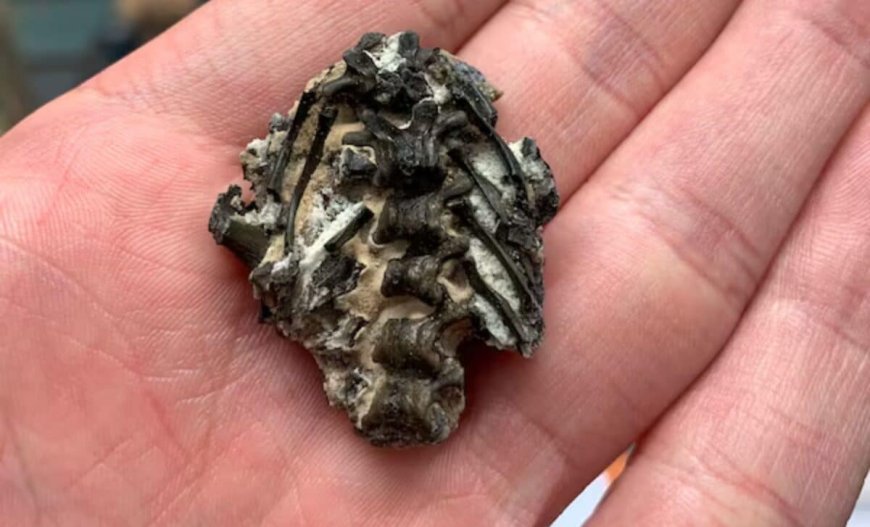
A tiny reptile that died nearly 300 million years ago is now helping scientists figure out how the first land animals breathed. This fossil shows the oldest known version of a rib-based breathing system, one that still exists in animals today.
The study, published in Nature, focuses on Captorhinus aguti, a small reptile found in Oklahoma. What makes it special is how incredibly well it was preserved, with skin, cartilage, and even traces of proteins still there after all this time.
Finds like this don’t happen often. It gives a rare, almost direct look at a moment when animals were adapting to life on land and needed a better way to breathe.
Skin, Soft Tissues, And Even Proteins Still Intact
The fossil, now at the Royal Ontario Museum, was found at Richards Spur, a site packed with early land animal remains. A study featured Nature showed that unusual conditions such as low oxygen levels and hydrocarbons helped preserve parts that usually disappear, like skin and cartilage.
Researchers scanned the fossil using neutron computed tomography, which let them see inside without damaging it. They found thin, textured skin still wrapped around the body, with an accordion-like pattern. Ethan Mooney, the co-author of the study, said:
“I started to see all these structures wrapped around the bones,” he added that, ” they were very thin and textured. Lo and behold, there was a nice wrapping of skin around the torso of this animal. The scaly skin has this wonderful accordion-like texture, with these concentric bands covering much of the body from the torso and up to the neck.”
The team also detected protein remnants. The researchers pointed out that these are nearly 100 million years older than anything like it found before, which is pretty surprising for fossils this old.

A Breathing System That Looks A Lot Like Ours
The most important part of the discovery is how this animal breathed. By studying several fossils, scientists rebuilt a rib-based breathing system, where the ribs and muscles move to pull air into the lungs. According to Professor Robert Reisz, the fossil shows a setup with a segmented sternum,sternal ribs, and intermediate ribs, plus links to the shoulder area. It is the oldest known example of this kind of system in amniotes.
Earlier animals like amphibians mostly relied on skin breathing or throat pumping, which isn’t very efficient. This new system allowed deeper breathing and likely supported more movement, closer to how many animals breathe today.

The Step That Made Life on Land Possible
This kind of breathing likely helped these animals stay more active and adapt better to life on land, while also helping early reptiles spread and diversify. Mooney described Captorhinus as:
“Captorhinus is an interesting lizard-looking critter that is critical to understanding early amniote evolution.”
This fossil helps show how even something as simple as breathing influenced life on land, shaping how early animals adapted to survive outside aquatic environments.
“This finding substantially changes expectations of soft tissue preservation in deep time to reveal the potential ancestral amniote breathing mechanism and its impact on terrestrial vertebrate evolution,” the authors wrote.

Enjoyed this article? Subscribe to our free newsletter for engaging stories, exclusive content, and the latest news.
What's Your Reaction?
 Like
0
Like
0
 Dislike
0
Dislike
0
 Love
0
Love
0
 Funny
0
Funny
0
 Angry
0
Angry
0
 Sad
0
Sad
0
 Wow
0
Wow
0