





























Scientists Opened a 5,000-Year-Old Megastructure, and Found Evidence It Was Used Thousands of Years Later

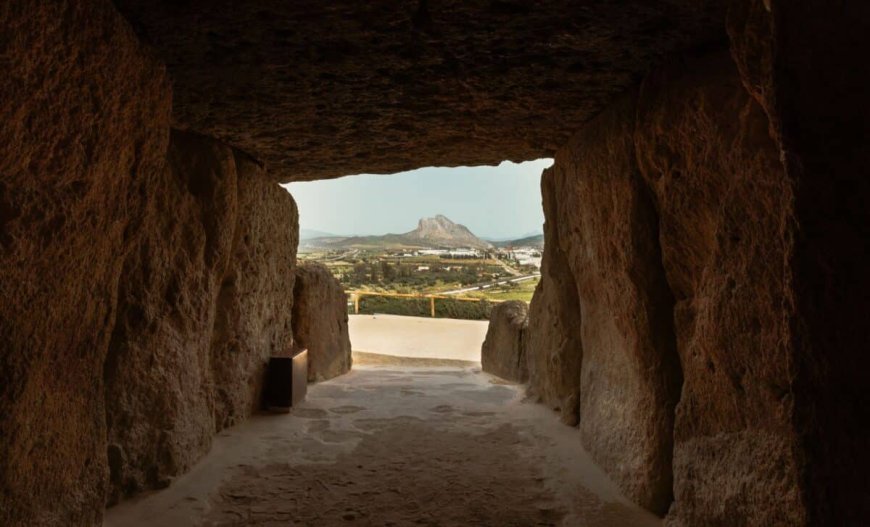
Two medieval burials inside the megastructure of the Menga dolmen in southern Spain have revealed surprising genetic links beyond Europe. These findings reveal that the monument retained its relevance over millennia, and they help clarify how diverse and mobile medieval populations were.
The Menga dolmen, in Antequera (Malaga), dates back to around 3800-3600 BC and is part of a UNESCO World Heritage site. It’s one of the best-known Neolithic structures in Iberia, mainly studied for its size and construction.
Now, researchers are looking at what happened there much later. A team including the University of Huddersfield, the Francis Crick Institute, Harvard University, and the University of Seville analyzed two men buried at the entrance between the 8th and 11th centuries AD. According to the Journal of Archaeological Science Reports, their bodies were carefully placed along the axis of the monument’s megastructure, suggesting this was anything but random.
Damaged DNA, But Still Usable
Working with ancient DNA here wasn’t easy. The genetic material was badly preserved, which is common in Mediterranean sites. As the authores detailed:
“We analysed DNA from two individuals, radiocarbon dated to the 8th–11th centuries CE, who were buried in the atrium, aligned with the dolmen’s axis of symmetry.” They added, “DNA content was very low and highly degraded, in line with previous observations from (pre)historic Mediterranean Iberia.”
Even so, scientists managed to recover part of the genome of one individual using SNP enrichment. As explained in the new study, his DNA shows a mix: European lineages, but also clear links to North Africa and the Levant. His mitochondrial DNA includes mutations also found in a present-day individual from the Mozabite population in Algeria.

Such a mix reflects what scholars have already documented about Al-Andalus, where communities from different backgrounds coexisted and exchanged over time.
A Deliberate Medieval Reuse Of An Ancient Megastructure
The way the two men were buried matters as much as their DNA. They were placed in the atrium, right along the dolmen’s symmetry line, with their heads facing inward. As explained by the research team, this pointed to a structured burial practice.

It also fits a broader pattern seen across Iberia, where ancient monuments were reused during the Middle Ages. In this case, the dolmen may have acted as a hermitage or shrine, sometimes called a marabout. So, it wasn’t just an old structure sitting there, it likely still had meaning for the people using it.
A Megastructure That Never Really Lost Its Role
The Menga dolmen has stood for roughly five millennia, and there are strong indications that it was never truly abandoned or forgotten. Across different periods, the megastructure appears to have remained embedded in the landscape not only as a physical structure, but as a place carrying meaning for the communities around it. As the authors noted, it likely maintained a sacred or funerary function over time, even as the societies interacting with it changed.
This continuity is reflected in the way later populations chose to reuse the megastructure, not randomly, but with deliberate and structured practices. The positioning of the medieval burials, aligned with the monument’s internal layout, suggests a clear awareness of its significance.
As reported in the Journal of Archaeological Science Reports, such long-term reuse points to a form of cultural memory, where ancient sites remained part of living traditions rather than being reduced to silent remnants of the past.
Enjoyed this article? Subscribe to our free newsletter for engaging stories, exclusive content, and the latest news.
What's Your Reaction?
 Like
0
Like
0
 Dislike
0
Dislike
0
 Love
0
Love
0
 Funny
0
Funny
0
 Angry
0
Angry
0
 Sad
0
Sad
0
 Wow
0
Wow
0