


























Once Earth’s Filthiest Waters, the Great Pacific Garbage Patch Is Now Home to a Strange Marine Life

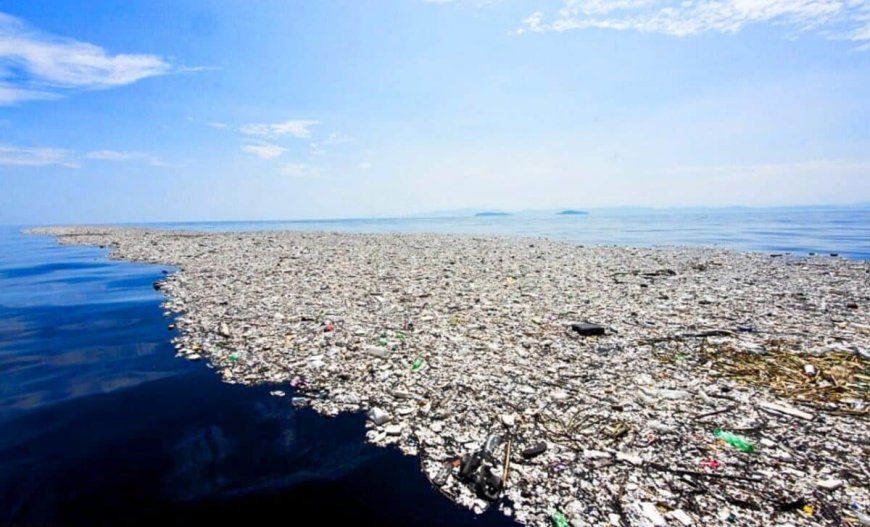
The Great Pacific Garbage Patch has long been described in terms of scale. In the waters between Hawaii and California, inside the North Pacific Subtropical Gyre, debris drifts into a broad convergence zone that keeps plastic circulating for years. The nonprofit The Ocean Cleanup estimates that about 1.8 trillion plastic pieces are now floating there, with a total mass of roughly 100,000 tonnes. Those numbers alone explain why the patch became one of the best-known symbols of ocean pollution. (theoceancleanup.com)
What has made the Great Pacific Garbage Patch harder to categorize is the kind of material concentrated there. Much of the mass is not made up of small consumer fragments but larger objects that can stay afloat far longer, including ropes, buoys, and abandoned gear from offshore fishing. According to The Ocean Cleanup, fishing nets account for 46% of the patch by mass, and more than 75% of its plastics appear to be linked to offshore fishing activity. That means the patch is not just a cloud of tiny waste. It is also a field of long-lasting floating structures.
![The Great Pacific Garbage Patch is the largest of the five plastic accumulation zones in the world’s... [+] oceans.](https://imageio.forbes.com/blogs-images/scottsnowden/files/2019/05/GPGP2.jpg?format=jpg&width=1440)
For marine biologists, those floating structures raised a different question. If plastic can remain on the sea surface for years or even decades, what exactly is living on it while it drifts across the Pacific? That question became more urgent after earlier debris from Japan crossed the ocean with live organisms still attached. The Great Pacific Garbage Patch was already known as a pollution hotspot, but researchers had reason to suspect it might also be something else.
What researchers found on the drifting debris
The study that brought that question into focus was published in Nature Communications in 2021. It was led by Linsey E. Haram of the Smithsonian Environmental Research Center, working with researchers from Williams College, Scripps Institution of Oceanography, the University of Hawaii at Manoa, Fisheries and Oceans Canada, and other institutions. Their paper examined floating plastic in the North Pacific Subtropical Gyre and described an emerging community of organisms living far from shore. That was the point where the Great Pacific Garbage Patch stopped looking like a simple accumulation zone.
Reporting based on that research said the team identified 46 kinds of invertebrates from six major animal groups on debris collected from the patch. Of those, 37 were coastal species and 9 were pelagic species, meaning about 80% of the observed diversity came from organisms usually associated with shorelines rather than the open ocean. The authors argued that floating plastic is supporting a mixed sea-surface community made up of both oceanic species and coastal species. In practical terms, the Great Pacific Garbage Patch was hosting animals many scientists did not expect to persist there.

The researchers gave that community a name: the neopelagic community. In the paper, they wrote that durable floating plastics have created habitat that was previously absent or scarce in the high seas. Natural rafts such as wood, seeds, seaweed, and pumice have always moved species across water, but those materials usually broke down too quickly to support long residence times. Plastic changed that equation by adding buoyant surfaces that can survive ocean exposure far longer than most natural debris.
The 2011 tsunami changed the picture
A key part of that story began on March 11, 2011, when the Tōhoku earthquake and tsunami sent a huge debris field from Japan into the North Pacific Ocean. The Nature Communications paper says scientists later found hundreds of coastal Japanese marine species alive on debris that landed on the North American Pacific coast and the Hawaiian Islands after traveling more than 6,000 kilometers. Several organisms were not just alive but had apparently grown for years at sea. Some had even reproduced on the debris while still in the open ocean.

That event changed how researchers thought about rafting across the ocean. Before then, coastal species on drifting objects were generally treated as temporary passengers making a short crossing. The tsunami debris showed that anthropogenic debris, much of it plastic, could act as long-lived rafts that remained habitable for years. By the time researchers turned their attention back to the Great Pacific Garbage Patch, they were no longer asking whether coastal species could survive a crossing. They were asking whether some were settling into a new offshore habitat.
Why plastic behaves differently from natural rafts
The answer seems to depend on duration. The Nature Communications study says floating plastics in subtropical gyres can have residence times of years to decades or longer, giving attached organisms repeated chances to survive, feed, and reproduce. That matters because the open ocean was long considered a barrier for most coastal marine life, not a place where stable populations could form. The paper says suitable habitat now exists in the open ocean, allowing coastal organisms to survive for years and reproduce, potentially leading to self-sustaining communities on the high seas.

That does not make the Great Pacific Garbage Patch any less harmful as a pollution zone. The same floating structures that host marine life also trap, injure, and kill it. The Ocean Cleanup says ghost nets are among the most dangerous components of the patch because animals can become entangled and die after contact with discarded fishing gear. The ecological story, then, is not that the patch has become healthy. It is that plastic pollution has created habitat and hazard at the same time.)
The patch is still a pollution reservoir
The study’s authors also pointed to another risk. If coastal species can persist on drifting plastic in the open ocean, the debris may become a stepping-stone system that helps species spread across ocean basins and reach new coastlines. Their paper says the persistence of coastal species on plastic debris may increase the potential for successful transoceanic dispersal of non-native species.
For now, the Great Pacific Garbage Patch remains both a reservoir of floating waste and a site where researchers have documented a neopelagic community living on that waste.
Enjoyed this article? Subscribe to our free newsletter for engaging stories, exclusive content, and the latest news.
What's Your Reaction?
 Like
0
Like
0
 Dislike
0
Dislike
0
 Love
0
Love
0
 Funny
0
Funny
0
 Angry
0
Angry
0
 Sad
0
Sad
0
 Wow
0
Wow
0