



























Near the South Orkneys, hundreds of whales are feeding together again but industrial krill trawlers are already there

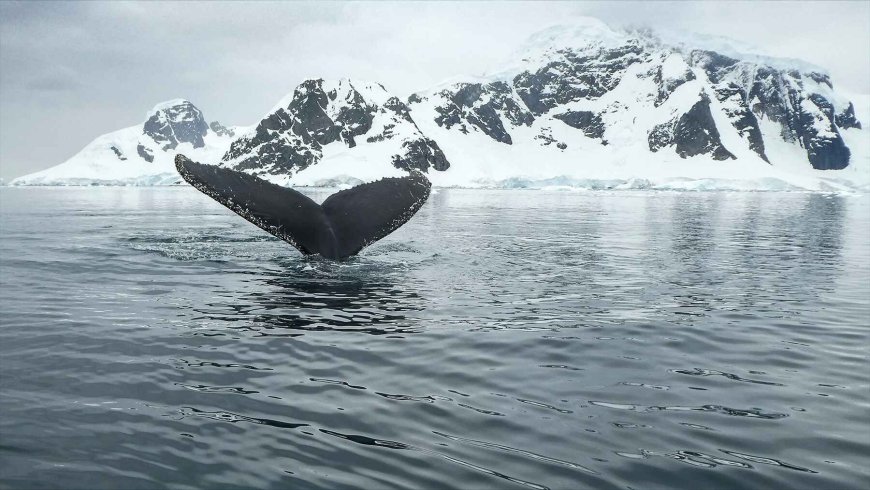
Humans are having a profound effect on the wildlife of the Earth.
For generations, we knew that this time was coming. We can not progress as a species without having some sort of impact on the world around us. But hundreds of whales near the South Orkneys have been facing issues as industrial krill trawlers operate in the region.
What effect have these krill trawlers had on whale and marine life overall?
We now understand our impact on marine life, thanks to conservation and science
We used to think that plant life was the primary source of oxygen on our planet.
Recent studies have found this to be inaccurate. We now know that the ocean produces the vast majority of the air we need for life. Recent findings state that it acts as the planet’s “heart” and “lungs,” meaning that roughly 50% to 70% of the oxygen in our atmosphere comes from the ocean.
Our population growth has had a profound impact on the sea, and that much has become clear in recent years.
Overfishing, habitat destruction, and pollution have devastated our oceans. Some state that nearly one-third of all marine life is now facing the risk of extinction due to human-led factors.
Conservation of animal life is paramount to maintaining balance with nature
As we have learnt, much to our own detriment, that the planet is constantly evolving and changing, we need more extensive conservation projects, and soon.
For us as humans, the planet has been sending us not-so-cryptic messages in recent years as new weather disasters become an all too common feature of living in the modern world.
The recent accelerated start of the U.S tornado season has proven that much to be true.
And as the climate situation worsens, the impact we have had on marine life has become clearer. We know that as a species, we need vast amounts of food and energy that will inevitably have an impact on the ocean, but things are reaching a tipping point.
The ocean holds ancient mysteries that we are only now beginning to develop technology to allow us to solve.
Such as a living fossil that disappeared without a trace for ten years before making a comeback. The ocean is getting warmer at an alarming rate, but an issue has been raised by conservationists that could have been avoided with a little pragmatic forethought, yet here we are.
The Sea Shepherd Conservation Society has been working diligently to raise awareness about the latest problems for marine life, in particular, whales.
Saving marine life has a new name: The Sea Shepherd Conservation Society
The Sea Shepherd Conservation Society has become one of the most important organizations in history regarding saving the beautiful marine life in our oceans.
They found a new problem for whales near the Orkney Islands. Our impact on the world has been an issue for river monsters and huge marine life like whales. We know that the sea is warming at a rapid pace, but the latest issue for marine life comes directly from our need to advance as a species.
Sea Shepherd has found that the hundreds of industrial krill trawlers in the region near the South Orkneys have devastated the very food that whales rely on: krill.

While most of our impact on the world has been a necessity in some form or another, krill is used for fish feed and supplements rather than human consumption.
Sea Shepherd’s “Operation Antarctica Defense” campaign is confronting the krill issue head-on.
Attempting to raise public awareness and force the industrial krill trawler companies to reevaluate their operations. While some of us are baffled by recent findings of strange blue blobs on beaches around the nation, Sea Shepherd is trying to protect one of our most iconic and emblematic creatures: whales.
What's Your Reaction?
 Like
0
Like
0
 Dislike
0
Dislike
0
 Love
0
Love
0
 Funny
0
Funny
0
 Angry
0
Angry
0
 Sad
0
Sad
0
 Wow
0
Wow
0