



























NASA’s 1,300-Pound Satellite to Crash Into Earth Today! Here’s What to Expect

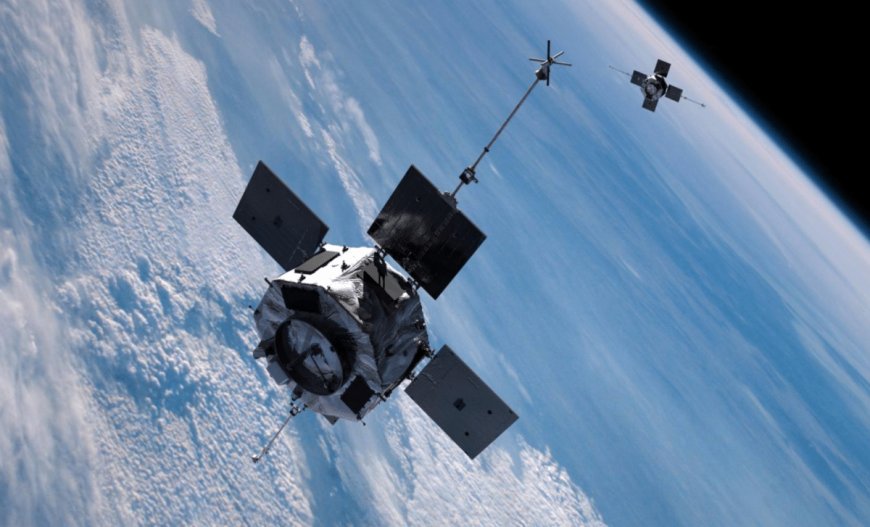
NASA’s Van Allen Probe A is making its final journey toward Earth after spending nearly 14 years in orbit, studying the radiation belts that surround our planet. This mission, launched in 2012, was originally designed to last two years but was extended due to the valuable scientific data it continued to provide. On March 10, the spacecraft is expected to reenter Earth’s atmosphere and crash back to the surface. While most of the spacecraft will burn up during reentry, the Van Allen Probe A’s legacy is its contribution to our understanding of space weather and its potential to impact technology on Earth. In this article, we explore the Van Allen Probe mission, the expected reentry, and the invaluable data it has provided.
Van Allen Probe A: A Mission That Outlasted Its Expectations
Launched in August 2012, the Van Allen Probes were designed to study the Earth’s radiation belts, a dynamic area of space that can affect everything from satellites to power grids. Initially, the mission was expected to last just two years. However, due to the valuable insights being gained, the probes continued operating well beyond their planned mission timeline. By 2019, both probes, Van Allen Probe A and its twin, Van Allen Probe B, had far exceeded their expected operational life.
NASA officials had anticipated the mission would only contribute to short-term studies, but the spacecraft’s longevity allowed for long-term observations of the radiation belts. These belts are crucial for understanding solar activity, which can influence various technologies on Earth. The spacecraft was not only a triumph in scientific data collection but also in the durability of space technology. The extended life of the Van Allen probes allowed scientists to gather data on how the Earth’s radiation belts behave during periods of intense solar activity, which can help predict space weather events with greater accuracy.
The Reentry Process: What Will Happen When the Van Allen Probe Returns to Earth?
As NASA’s Van Allen Probe A nears its final moments in space, the spacecraft is scheduled to reenter Earth’s atmosphere on March 10. While this event is not unusual for spacecraft that complete their missions, it marks the end of a highly successful mission. According to NASA, most of the spacecraft will burn up as it travels through the atmosphere. However, some components are expected to survive reentry. This is typical for spacecraft reentries, as the heat and pressure encountered during atmospheric entry cause most objects to disintegrate.
Despite the dramatic nature of reentry, NASA has emphasized that the risk of harm to people on Earth is extremely low. The estimated chance of injury is about 1 in 4,200. This risk is further mitigated by the fact that about 70% of Earth’s surface is covered by water, so any surviving debris from the spacecraft is more likely to land in the ocean, far from human settlements. NASA officials have reassured the public that the spacecraft’s reentry is closely monitored, and updated information will be provided as new data becomes available.
The Impact of the Van Allen Probes on Space Weather Predictions
The primary goal of the Van Allen Probes was to study the radiation belts that encircle Earth. These belts, which are composed of charged particles, have a profound effect on space weather—solar activity that can disrupt communications, satellite systems, and power grids on Earth. By studying these belts, NASA scientists were able to make groundbreaking advancements in predicting space weather events and understanding their potential consequences.
“By reviewing archived data from the mission, scientists study the radiation belts surrounding Earth, which are key to predicting how solar activity impacts satellites, astronauts, and even systems on Earth such as communications, navigation, and power grids,” NASA officials explained in a recent update.
The Van Allen Probes were also instrumental in improving the accuracy of space weather forecasts. By continuously monitoring the radiation belts and observing how they respond to changes in solar activity, the probes helped refine models that predict the potential impacts of space weather on modern technology. This contribution is one of the lasting legacies of the mission and highlights the critical role of scientific exploration in safeguarding our technology-dependent society.
The Future of Space Exploration and the Legacy of the Van Allen Probes
Although the Van Allen Probes’ mission is officially coming to an end, the data they have collected will continue to benefit the scientific community for years to come. The research conducted by these spacecraft has advanced our understanding of space weather and its potential impacts on modern technology. As NASA looks ahead to future missions, the insights gained from the Van Allen Probes will be used to guide the design and operation of new spacecraft and satellites.
The success of the Van Allen Probes demonstrates the importance of long-term scientific missions in space exploration. Spacecraft that are able to operate for extended periods provide a wealth of data that can help answer fundamental questions about the Earth’s radiation environment. As we move toward a future where space exploration and technology are increasingly intertwined, the Van Allen Probes’ contributions to space weather forecasting will be more important than ever.
NASA’s Vigilant Monitoring and the Importance of Space Debris Mitigation
While the reentry of the Van Allen Probe A is an exciting and scientifically significant event, it also serves as a reminder of the ongoing challenges related to space debris. As more and more satellites and spacecraft are launched into orbit, the potential for collisions and the accumulation of space junk increases. NASA and other space agencies are constantly working on ways to mitigate the risks posed by space debris, including improved tracking systems and the development of technologies that can safely deorbit defunct spacecraft.
The upcoming reentry of the Van Allen Probe A underscores the need for continued vigilance and innovation in space debris management. By monitoring the reentry of spacecraft like the Van Allen Probes, NASA is not only ensuring the safety of individuals on Earth but also gathering valuable data that can be used to improve future spacecraft designs. This mission serves as a model for how space agencies can safely manage the end of a spacecraft’s life and ensure that it does not pose a threat to our planet.
Enjoyed this article? Subscribe to our free newsletter for engaging stories, exclusive content, and the latest news.
What's Your Reaction?
 Like
0
Like
0
 Dislike
0
Dislike
0
 Love
0
Love
0
 Funny
0
Funny
0
 Angry
0
Angry
0
 Sad
0
Sad
0
 Wow
0
Wow
0