


























During a Restoration Project, Construction Workers Dug Out a 2,000-Year-Old Tunnel Under a Turkish City That Still Carries Water

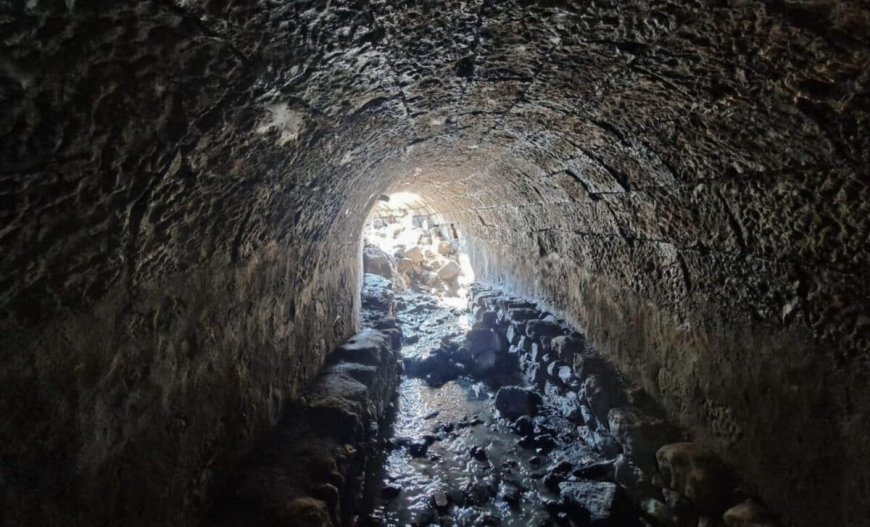
During a restoration project in Trabzon, Turkey, construction workers made a discovery that nobody saw coming: an ancient tunnel stretching nearly 1,300 feet beneath the city’s streets. Hidden deep below the surface for centuries, this remarkable structure has remained largely untouched by time and development.
While its purpose seems tied to the Roman Empire, its exact function remains shrouded in mystery. As experts rush to uncover the full story, one thing is clear: this find could change everything we know about the city’s past. What was this tunnel really used for, and what secrets might still be buried inside?
A Roman Engineering Marvel
When construction workers uncovered the passageway, it was a surprise, especially because the area hadn’t been considered a major Roman site. According to Mehmet Yavuz from Karadeniz Technical University, the tunnel’s design is unmistakably Roman, with finely cut stones and a vaulted roof, a typical feature of Roman architecture but not something usually found in this part of Anatolia.
“The discovery came as a surprise,” he said. “We did not previously consider that area to have been an intensely inhabited zone during the Roman or Hellenistic periods.”

The tunnel, which measures about 4 feet by 4 feet, was built to bring fresh water to the city’s busy port. Yavuz added that:
“The tunnel lies roughly 1.5 to 2 meters beneath the surface. In its center is a water channel about 1.2 meters in diameter, with 50-60 centimeter walking areas on both sides.”
He believed that it may have been part of a larger system that helped supply water to Roman soldiers stationed in the area.
Water Channel Turned Wastewater System
As stated by Türkiye Today, the underground passage has winding turns, steps, and bends, which likely helped control the flow of water. Over time, though, its purpose changed. By the Ottoman period, and continuing into the early years of the Turkish Republic, the tunnel became part of a wastewater system, transporting runoff and sewage instead of fresh water.
This shift in function shows how the burrow adapted to the needs of the city over the centuries. While it was originally built to support a busy port, it later became an important part of the infrastructure managing wastewater. Some sections of the tunnel still carry wastewater today, proving that even ancient structures had staying power.
Though some sections of the tunnel have been damaged by modern construction, researchers are hopeful they can uncover more as they continue to explore. The team from the Trabzon Museum Directorate and Karadeniz Technical University is dedicated to preserving the tunnel and its surrounding area. Their ongoing work could lead to even more discoveries about the city’s Roman history and infrastructure.
Enjoyed this article? Subscribe to our free newsletter for engaging stories, exclusive content, and the latest news.
What's Your Reaction?
 Like
0
Like
0
 Dislike
0
Dislike
0
 Love
0
Love
0
 Funny
0
Funny
0
 Angry
0
Angry
0
 Sad
0
Sad
0
 Wow
0
Wow
0