





























Construction Crews Building Apartments Accidentally Unearth a 500-Year-Old Castle Buried by an Emperor

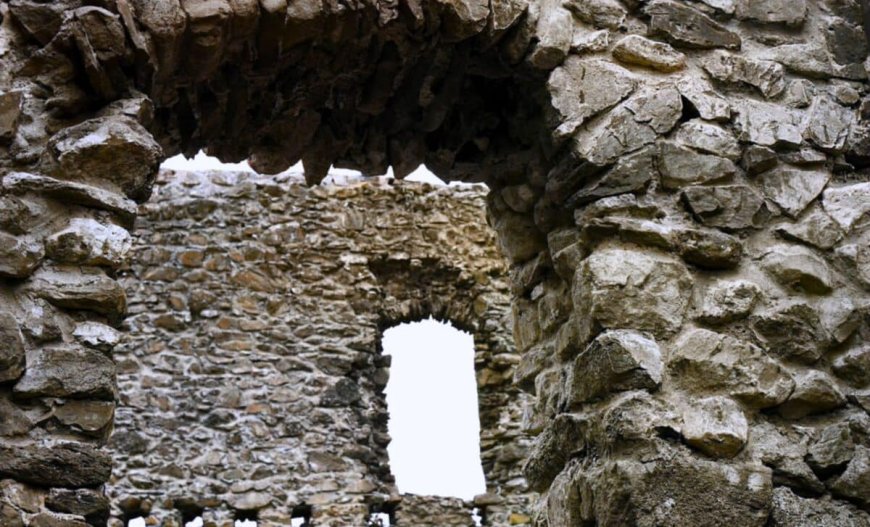
Deep trenches now cut through the ground in Ghent, Belgium, where construction crews recently began transforming a historic military site into a new public park. Excavators first tore through asphalt and modern fill near the former location of the Spanish Castle, a fortress that once dominated the eastern edge of the city. The work initially appeared routine. Urban planners expected the digging to expose fragments of the citadel before landscaping the site into green space.
But the soil began to tell a different story as the machines dug deeper. Beneath the modern layers appeared dark earth mixed with carefully shaped stones that looked far older than the 16th-century fortress. Archaeologists from the Ghent Archaeological Service gathered along the edges of the trenches as buckets lifted debris from the excavation. The shapes emerging in the mud did not resemble defensive walls or artillery positions.

Thin lines of stone gradually formed patterns across the exposed ground. Instead of thick ramparts, the outlines looked more like building foundations from a much earlier settlement. Some structures appeared small and rectangular, arranged in rows that hinted at narrow streets or property lines. What began as a routine construction dig was starting to reveal something far older beneath the remains of the fortress.
On February 19, 2026, researchers confirmed the suspicion. The foundations uncovered in the trenches did not belong to the citadel at all. They were part of a medieval settlement that had disappeared centuries before the fortress was constructed. Reports from VRT NWS suggested the massive structure had unknowingly sealed an entire forgotten district beneath its walls.
A Neighborhood That Disappeared in 1540
As archaeologists widened the excavation area, the layout of the buried district became clearer. The site revealed the outlines of homes and civic structures linked to the historic St. Bavo’s Abbey district, once one of the most active areas of medieval Ghent. Foundations showed where houses once stood tightly packed together along narrow lanes. In the center of the site, archaeologists uncovered the large footprint of a stone church.
According to VRT News, the church was dedicated to Saint Bavo, whose abbey once served as an important religious institution in the city. The size of the structure suggests it functioned as the spiritual center for thousands of people living nearby. Surrounding walls indicate a dense residential quarter filled with homes, small workshops, and spaces connected to daily trade.
This district vanished abruptly in 1540, during a confrontation between the city and imperial authority. After residents revolted against new taxes, Holy Roman Emperor Charles V ordered severe punishment. His decree demanded the destruction of St. Bavo’s Abbey and roughly 800 surrounding houses, clearing space for a new fortress that would enforce imperial control.
For centuries, historians believed the neighborhood had been completely cleared away before construction began. The new excavation shows that the earlier settlement was never fully removed. Instead, builders constructed the citadel directly on top of the abandoned ruins.
The Fortress That Preserved the Past
That decision unintentionally protected the earlier layers of the city. The thick ramparts and foundations sealed the ground beneath heavy stone and compacted soil. While other parts of Ghent were redeveloped over centuries, the buried district remained undisturbed beneath the fortress footprint.
“This is a real treasure trove,” said Geert Vermark of the Ghent Archaeological Service. According to Vermark, the citadel functioned almost like a protective lid that kept the medieval structures intact. The weight of the fortress prevented later construction from cutting into the older layers of soil.

Among the most significant discoveries is a cemetery located beside the church foundations. Archaeologists uncovered more than 200 human skeletons arranged in organized rows, forming what was once the parish graveyard of the district. The burials were placed carefully, indicating a structured community cemetery rather than an improvised burial site.
Initial examination shows the remains include men, women, and children of different ages. This distribution suggests the cemetery belonged to an ordinary civilian population living in the abbey district. The graves appear to predate the fortress and have no connection to soldiers who later occupied the citadel.
What the Trenches Are Revealing
The soil surrounding the cemetery has also produced thousands of smaller objects linked to everyday life. Archaeologists have recovered fragments of Roman ceramics, metal tools, and broken household pottery scattered through several soil layers. Each artifact adds new details about the long history of activity at the site.
The presence of Roman material suggests the location may have been inhabited for more than 1,000 years. Long before the abbey district emerged, the area may already have been part of a settlement connected to trade routes along the nearby Scheldt River. Its position along the river would have made it a strategic location for transportation and commerce.

As the excavation continues, archaeologists are documenting multiple historical layers stacked within only a few meters of soil. Each level represents a different period in the development of the city. The deeper researchers dig beneath the fortress foundations, the further back the timeline appears to extend.
Meanwhile, the skeletons recovered from the cemetery are being carefully removed for bioarchaeological analysis. Researchers hope to study bone chemistry and skeletal markers to better understand the diet, health, and living conditions of people who once lived in medieval Ghent.
Inside the Walls of the Spanish Castle
Above these older layers once stood one of the most powerful fortresses in the region. The citadel, completed in 1540, was designed to control the city after the tax revolt against Charles V. The structure featured thick limestone ramparts, pointed bastions, and a wide moat connected to the river.
Recent excavations have exposed sections of the fortress foundations that had not been visible for nearly two centuries. Archaeologists noticed that many stones used in the structure came directly from the demolished abbey complex. Decorative blocks and carved pillars from Sint-Baafsabdij appear embedded within the fortress walls.
Builders reused the rubble of the destroyed district as filler material for the massive ramparts. Recycling these stones allowed the construction of the fortress to proceed quickly while using materials already available on site.
The excavation also revealed the remains of a wooden bridge that once crossed the inner moat of the fortress. Because the surrounding soil remains waterlogged, the timber beams survived in unusually good condition for a structure nearly five centuries old.
Enjoyed this article? Subscribe to our free newsletter for engaging stories, exclusive content, and the latest news.
What's Your Reaction?
 Like
0
Like
0
 Dislike
0
Dislike
0
 Love
0
Love
0
 Funny
0
Funny
0
 Angry
0
Angry
0
 Sad
0
Sad
0
 Wow
0
Wow
0