




























Artemis II Astronauts Witness Meteorites Hitting the Moon in Real Time in a Historic First

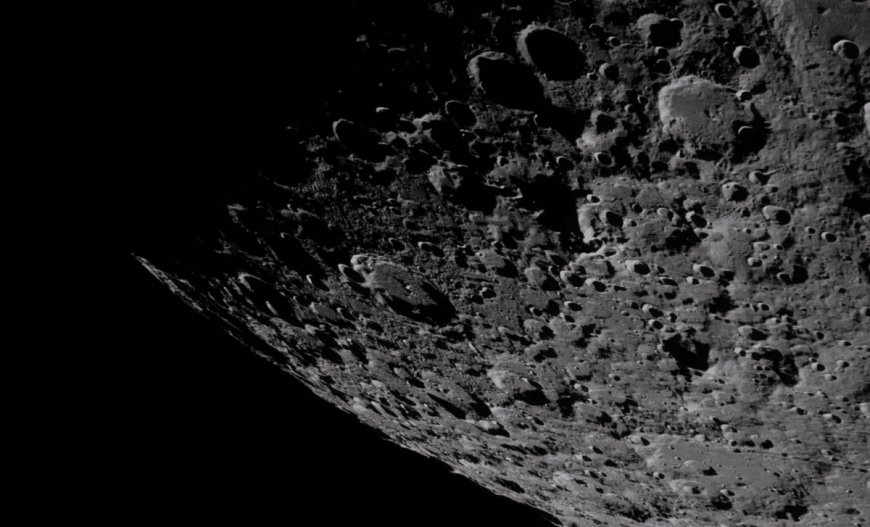
NASA’s Artemis 2 mission has already made waves in the space exploration community, but a recent discovery by the crew aboard the Orion spacecraft has pushed its significance to new heights. During their historic flyby of the moon on April 6, 2026, astronauts spotted what experts are calling “impact flashes,” brief, bright flashes of light caused by micrometeorites striking the lunar surface. This event marks the first time in over 50 years that humans have observed such phenomena from space, highlighting the power of modern space exploration and scientific inquiry.
The Unbelievable Sighting
The Artemis 2 mission is NASA’s return to the moon, and its astronauts have been tasked with not only navigating the lunar terrain but also gathering critical scientific data. During the flyby, astronauts made a startling discovery. As they neared the moon’s far side, the crew saw flashes of light on the lunar surface, micrometeorites impacting the moon. “That was definitely impact flashes on the moon. And Jeremy (Hansen) just saw another one,” reported Reid Wiseman, the mission commander, while observing the phenomena live. The crew’s immediate reaction, captured in real-time, was a mix of surprise and awe.
In a mission brief, Kelsey Young, the lunar science lead, expressed her astonishment, admitting she hadn’t expected the crew to witness such events on this particular mission.
“I don’t know if I expected to have the crew see any on this mission, so you probably saw the surprise and shock on my face,” Young said.
This discovery offers a glimpse into the hidden world of micrometeorite impacts on the moon, an area of research that had remained largely theoretical since the Apollo missions.
The Science Behind Impact Flashes
Micrometeorites are tiny, fast-moving particles from space that regularly bombard celestial bodies like the moon. Though they are too small to reach Earth’s surface, they can still create significant impacts when they strike the moon, which lacks an atmosphere to burn them up. These impacts, while small, create flashes of light when they strike the lunar surface, allowing scientists to gather valuable information about the lunar environment. According to Science Alert, the Artemis 2 astronauts observed these flashes with the naked eye, an extraordinary feat that demonstrates the impact of modern space exploration.
“I would suspect there were a lot more of them,” said Canadian astronaut Jeremy Hansen, who was part of the observation team. The flashes were extremely brief, with mission commander Wiseman noting that they lasted “a millisecond, like the fastest a camera shutter can open and close.”
Despite the speed, the flashes were clearly visible to the crew, who described them as “white to bluish white” in color.
This unexpected discovery has opened new avenues for lunar research. According to Bruce Betts, chief scientist at the Planetary Society, the observation was a monumental achievement. “To me, there was no doubt we were seeing it, and we were all seeing it,” he said. “I’m personally surprised they would see that many, although they had been trained to look for them.” The observations suggest that micrometeorites are more frequent than previously thought, offering fresh insights into the lunar environment and potential hazards for future lunar missions.
The Surprising Science of Micrometeorites
Micrometeorites are not only fascinating because of their impact on the moon but also because they offer clues about the broader space environment. These particles, often no larger than a grain of sand, can reveal crucial information about the formation of the solar system, the moon’s surface properties, and the potential challenges for future space missions. Scientists have long theorized about micrometeorite impacts but have never had the chance to study them in such detail as the Artemis 2 crew.
The flashes observed by the astronauts are important because they provide direct evidence of micrometeorites’ frequency and intensity. As Young noted, the crew’s training had prepared them to look for these phenomena, but their success in spotting multiple impacts was a pleasant surprise. “Were they prolonged? And did you notice any color?” Young had asked the crew. Their observations will help scientists better understand the dynamics of the lunar surface and improve future exploration strategies.

Credit: NASA
A New Era of Lunar Exploration
The Artemis 2 mission represents a new chapter in lunar exploration, not only because it is the first human mission to the moon in more than five decades, but also because of its scientific value. The mission has already begun to yield data that will shape humanity’s future in space. As NASA prepares for even more ambitious lunar missions under the Artemis program, discoveries like these impact flashes will continue to guide the way.
This historic flyby, which included capturing the first-ever human-eye observations of micrometeorite impacts on the moon, underscores the importance of integrating scientific research with space exploration. As the Artemis 2 crew continues their journey, the data they collect will be invaluable in preparing for the next phase of humanity’s return to the moon.
Enjoyed this article? Subscribe to our free newsletter for engaging stories, exclusive content, and the latest news.
What's Your Reaction?
 Like
0
Like
0
 Dislike
0
Dislike
0
 Love
0
Love
0
 Funny
0
Funny
0
 Angry
0
Angry
0
 Sad
0
Sad
0
 Wow
0
Wow
0