


























A Student Found a Single Stone Hidden Beneath an English Forest That Led to a 3,700-Year-Old Ritual Site

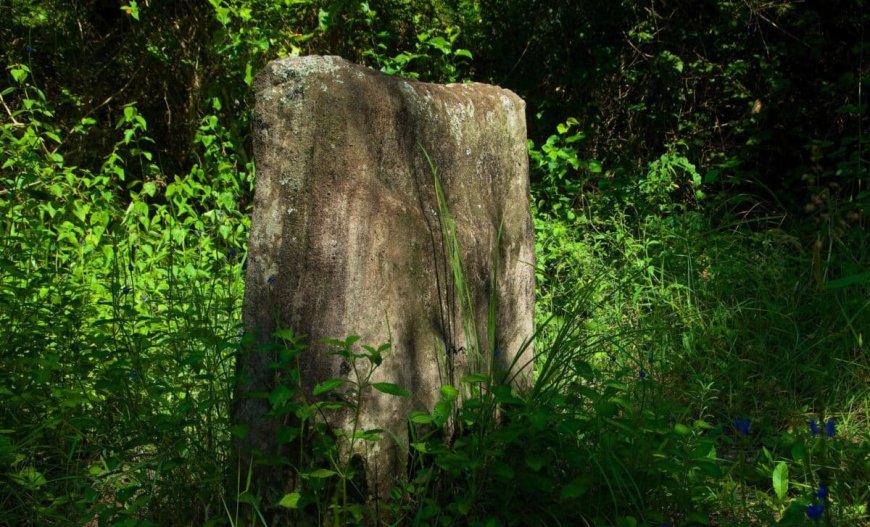
A single stone standing in a quiet Derbyshire forest did not seem remarkable at first. One student’s doubt changed that, leading to the discovery of a hidden Bronze Age ritual site dating back 3,700 years.
For years, the Farley Moor standing stone in Farley Wood was treated as a standalone feature. Despite its height and its location in a region rich in prehistoric remains, it drew limited investigation. Most people assumed it was simply a lone marker.
That view shifted when George Bird, a 24-year-old student, began visiting the site more closely. Having explored other stone circles in the area, he suspected this one might not be as simple as it looked. He documented what he saw and shared it with specialists.
One Simple Question That Changed Everything
George Bird spent years walking through local landscapes, often including stone circles in his routes. According to the BBC, he started to question whether more stones could be hidden near Farley Moor. He compiled a detailed account and sent it to Forestry England, hoping it would draw attention.

excavation. Credit: Time Team
“I just couldn’t wait to get stuck in giving [the team] a hand with the excavation,” said Bird, “It’s just fantastic now finding out that this has all been confirmed, those peculiar rocks are in fact a larger monument.”
His report led to a collaboration between Forestry England and the television program Time Team. Excavations were organized, and Bird joined the team on site. As Lawrence Shaw from Forestry England explained, the standing stone was known, but its wider context was not. The investigation revealed that Bird’s suspicions were well founded.
“We were never going to do anything without George – it was his idea and he was part of the team as far as we’re concerned.” He added, “we knew that this stone was here but we had absolutely no idea of the potential for the bigger monument that we ended up discovering.”
A Ritual Site Built Around Water
Excavations uncovered more than expected. Archaeologists found a stone platform built directly above a natural spring, indicating a likely connection between the site and ritual practices involving water.

Five additional stones were identified as having once stood upright nearby. Together, they formed an oval-shaped arrangement measuring about 82 by 75 feet. According to Forestry England, this layout points to a structured ceremonial space.
Using carbon dating, researchers determined that the site dates back to around 1700 B.C.. The platform appears older than the standing stone, suggesting the area was used for rituals over a long period.
Not Just One Site But A Wider Pattern
The findings at Farley Moor fit into a broader context of Bronze Age Britain, where stone circles and ceremonial sites were relatively common. While places like Stonehenge are widely known, many others remain less visible. As Derek Pitman of Bournemouth University noted in an University statement, the forested areas may still contain undiscovered archaeological sites.
“This project also showcases the value of investigating sites that have been hidden in the nation’s forests for the last few decades and implies a wealth of archaeology still waiting to be explored.”
The Farley Moor site had remained hidden in a landscape people regularly explored. Its discovery shows how easily significant history can go unnoticed.
“By George giving us the heads-up and working with us to bring in Time Team and really get to the bottom of what’s going on here, we’re now able to manage the site as though it’s a nationally protected monument,” concluded Shaw.
Bird’s friends used to joke about it, but he never stopped dragging them out on weekend walks to see stone circles. Years later, those same outings are reshaping Britain’s prehistoric record.
Enjoyed this article? Subscribe to our free newsletter for engaging stories, exclusive content, and the latest news.
What's Your Reaction?
 Like
0
Like
0
 Dislike
0
Dislike
0
 Love
0
Love
0
 Funny
0
Funny
0
 Angry
0
Angry
0
 Sad
0
Sad
0
 Wow
0
Wow
0