





























While Renovating Their Home, This Belgian Family Uncovered An Underground Escape Tunnel Beneath Their Living Room

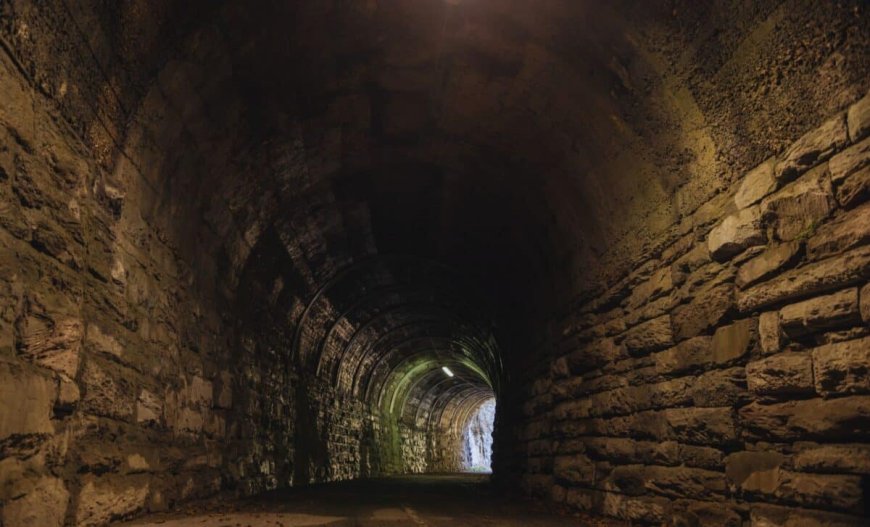
A routine renovation in Tielt, Belgium, has led to an unexpected wartime discovery: a concealed shaft and tunnel believed to date back to World War I. The underground passage, found beneath a historic townhouse, may once have served as a discreet escape route for German military officers.
The find was made at Nieuwstraat No. 7, near the town’s historic center, when homeowners uncovered a hidden well cap beneath their floor. What initially looked like an old utility feature quickly revealed itself to contain unexpected historical layers.
A Shaft Hidden in Plain Sight
The discovery began with a small, almost mundane detail: a concealed well cap uncovered during interior renovations. Beneath it, a vertical shaft dropped nearly 13 feet, leading to a brick-lined water well dating to the 18th century, when the house was originally built in 1769.
As mentioned in a translated release from Belgium’s Agency for Immovable Heritage, the investigators identified two metal manhole covers. One provided access to the original well, constructed with bricks consistent with the home’s initial build. The second, located just a few feet away, revealed a separate vertical shaft positioned between the well and the house.

The shaft’s walls were not connected to the original masonry, and its supports clearly indicated a subsequent addition. At the bottom of the shaft, a northwest wall had been deliberately breached. The opening, more than seven feet high, had been cut through the brick and “neatly finished,” the agency reported.
A Narrow Passage Between Neighboring Homes
From the well, a WWI-era brick barrel-vaulted tunnel stretched nearly 32 feet to the northwest, running parallel to the rear façades of the Nieuwstraat homes. The passage measured just four feet in height, yet remained accessible.
At its far end, a now-blocked opening once led directly into the cellar of Nieuwstraat No. 5. According to reporting by Popular Mechanics, the townhouse complex had been seized by German forces in October 1914 and served as headquarters for the German Fourth Army until 1918.

The site reportedly housed a war room and even a 1:20,000-scale replica of the front lines, used to coordinate operations on the Western Front. French bombardment struck the area in 1918.
Traces of a World War–Era Purpose
The structural evidence narrows the timeline. While the well and cistern system appear original to the 18th-century construction, the shaft and tunnel include features that date to after 1909. Based on information from the Agency for Immovable Heritage, the use of metal I-beams and the nature of the modifications confirm the later intervention.
“The remarkable history of the house makes another function more likely,” indicated the agency, “namely an escape route from the First World War.”
The tunnel’s flat profile, lack of slope, and construction materials make it unlikely that it served as a water conveyance system. Its placement would have allowed unseen movement between properties.
“Given the strategic function of the property,” the statement outlined, “with the map cabinet and top generals above the floor, that is not a forgotten theory.”
Enjoyed this article? Subscribe to our free newsletter for engaging stories, exclusive content, and the latest news.
What's Your Reaction?
 Like
0
Like
0
 Dislike
0
Dislike
0
 Love
0
Love
0
 Funny
0
Funny
0
 Angry
0
Angry
0
 Sad
0
Sad
0
 Wow
0
Wow
0