


















They found a giant tooth embedded in the neck of a plesiosaur, and the “culprit” was not a marine reptile, but a massive predatory fish

In a drawer at Chicago’s Field Museum of Natural History, scientists found what amounts to a frozen moment of ancient violence. A neck vertebra from a long-necked marine reptile held a broken tooth deep inside the bone, pointing to a direct clash between predators that once ruled North America’s coastal seas.
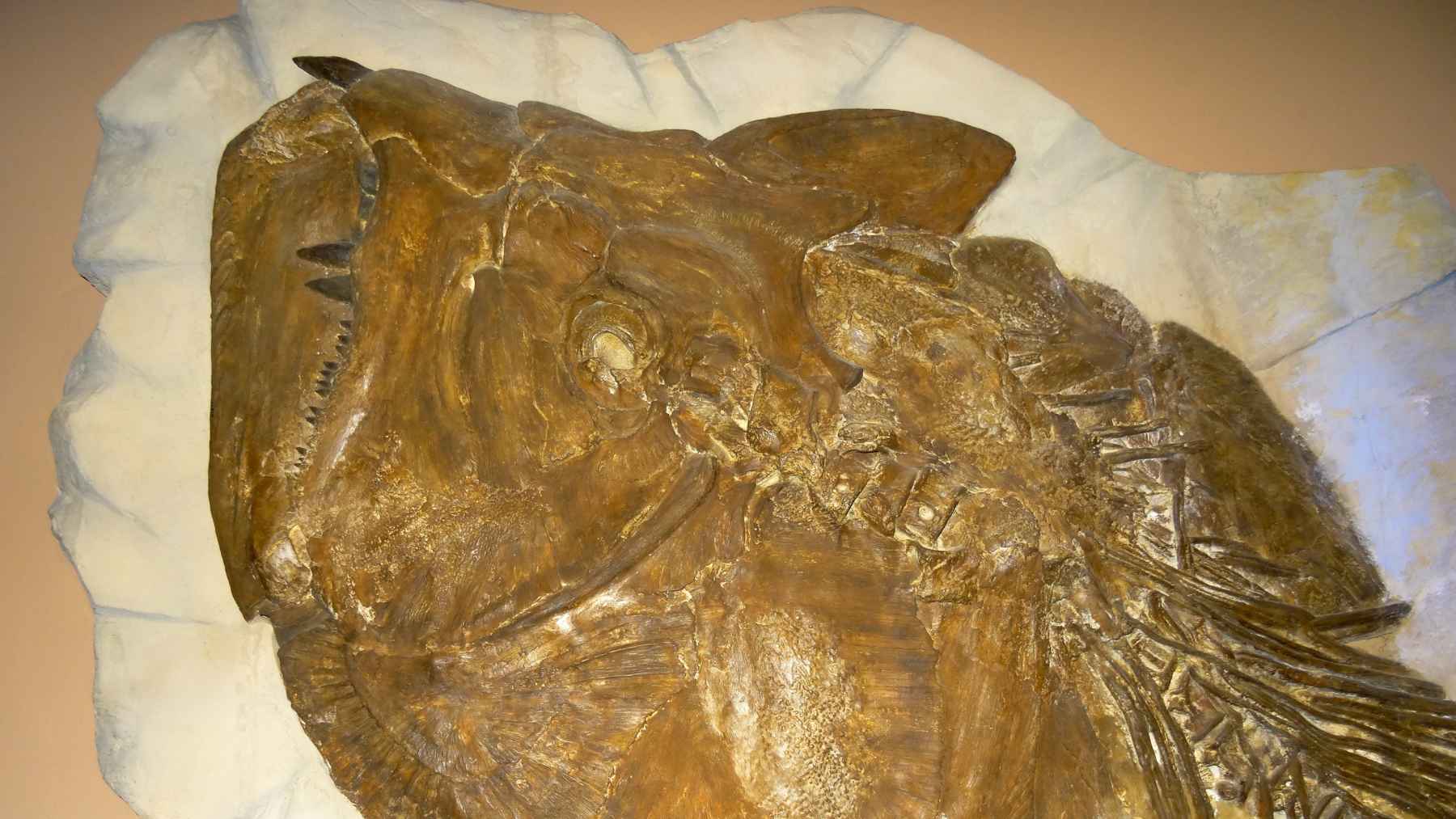
The new analysis, published online on March 12, 2026, argues the biter was Xiphactinus, a giant predatory bony fish, not a shark or another reptile. The victim was a subadult Polycotylus latipinnis measuring about 13 feet long (4 meters), and the wound involved a tooth fragment about 1.74 inches long (44.3 millimeters) that the researchers say “could certainly have been fatal.”
A museum specimen with a hidden surprise
The Polycotylus skeleton was collected in 1949 from the Mooreville Chalk Formation near West Green, Alabama, and much of it is still preserved, from the full run of neck vertebrae to fragments of the skull. Researchers estimated its body size partly from the left humerus, which measures about 19.0 inches (48.3 centimeters), just a bit shorter than an adult comparison specimen at about 19.9 inches (50.6 centimeters).
The clue was easy to miss because time did not treat it gently. The tooth was crushed and broken at both the tip and base, and later preparation work left tool marks that complicated the surface evidence.
Even so, an embedded tooth is the fossil equivalent of catching a suspect’s fingerprint at the scene. The authors note that “finding embedded teeth, while rare, removes this ambiguity,” because the attacker literally left part of itself behind.
CT scans turned damage into evidence
To figure out what kind of animal could leave a tooth like this, the team used computed tomography, which is the same basic imaging idea used in hospitals. They scanned the entire vertebra and then ran a higher-resolution scan focused on the bite itself.
The scan resolution was fine enough to pick out features smaller than a grain of sand. The whole element was scanned at about 0.003 inches (73.4 micrometers) per voxel, and the close-up scan reached about 0.0014 inches (34.5 micrometers) per voxel.
From there, students virtually “dissected” the fossil and built a three-dimensional model of the tooth and its pulp cavity from 2,006 stacked image slices. The team also looked for healing or infection in the surrounding bone and found none, suggesting the bite happened at or near the time of death.
Meet Xiphactinus, the likely biter
Once the tooth was visible inside the bone, its shape narrowed the suspect list fast. The fragment is about 1.74 inches long (44.3 millimeters) and roughly 0.44 inches across at its widest point (11.3 millimeters), and its interior shows a large pulp cavity.
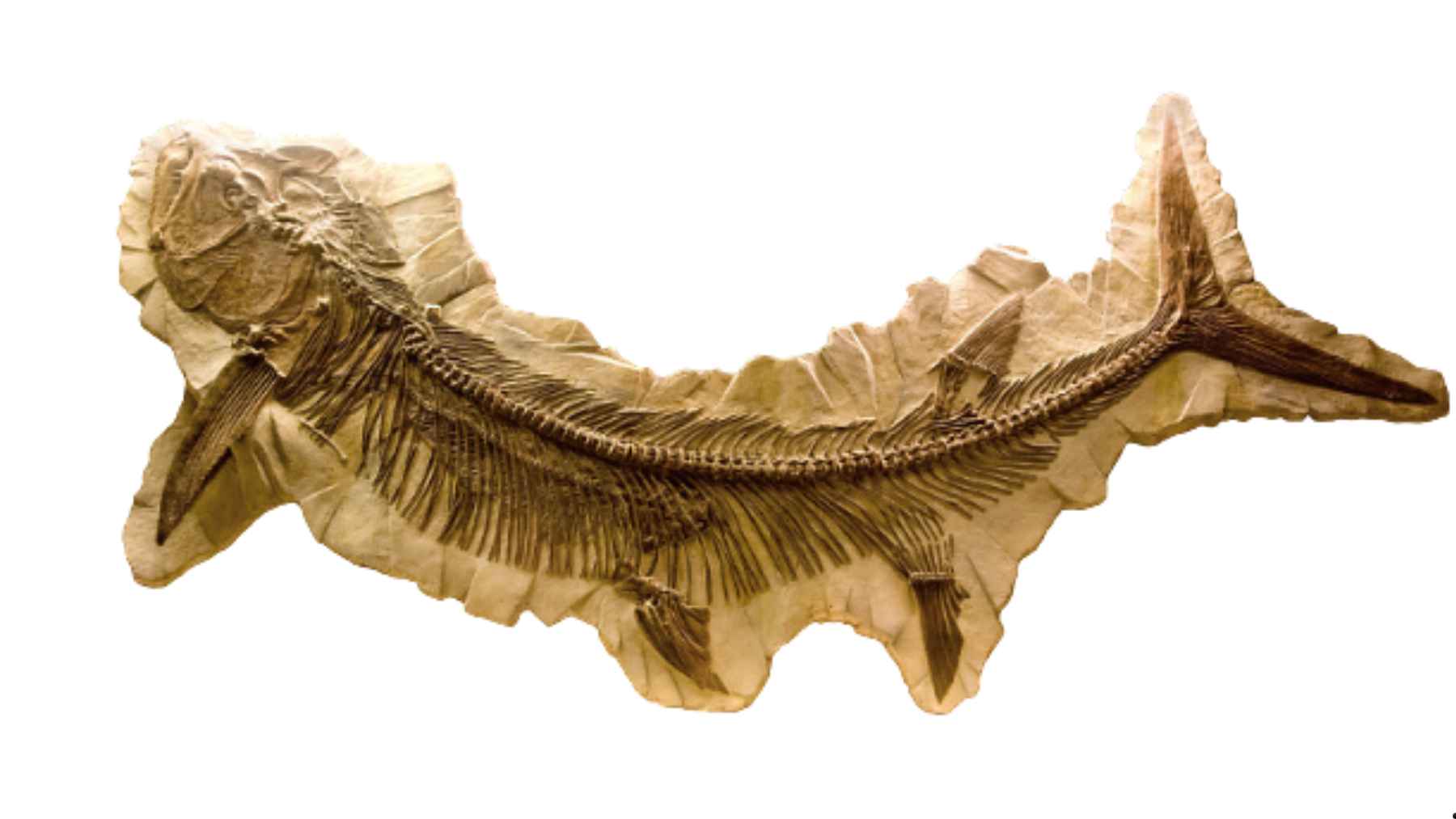
Those details do not match the teeth of sharks or the marine reptiles known from the Mooreville Chalk, and the paper argues they are inconsistent with mosasaurs as well. So who fits? Among the bony fishes in that formation, only the enormous ichthyodectid Xiphactinus is known to have a gape and dentition big enough to drive a tooth into a neck vertebra and punch through the bone.
The team is careful about how far to push the ID. While only Xiphactinus audax has been documented from the Mooreville Chalk, the damaged tooth shows a mix of features, so the authors stop short of naming a species with confidence.
A bite to the throat that changed everything
The placement of the tooth is what makes this fossil feel almost uncomfortably personal. It is lodged in a mid-neck vertebra, where the trachea and major blood vessels would have run, and the authors write that “the location and depth of the bite could certainly have been fatal.” Long necks are iconic, but they also concentrate vital anatomy into a narrow, exposed target.
The researchers suggest the injury could have triggered a loss of lung pressure and buoyancy, helping explain why the skeleton remained relatively intact before sinking into deeper, low-oxygen waters. In those anoxic conditions, scavengers are fewer and decay slows down, which can give a carcass a better chance of entering the fossil record.
Was this hunting, scavenging, or something closer to a fight? The team notes that Xiphactinus is often linked to fossils suggesting it swallowed prey whole, and the neck is not an especially nutrient-rich target, which makes an agonistic encounter plausible. On the other hand, surface bite marks are hard to diagnose on this specimen, so early-stage scavenging cannot be fully ruled out.
What it says about ecosystems then and now
The Mooreville Chalk and the better-known Smoky Hill Chalk preserve a long list of predators, from sharks to marine reptiles to giant bony fish. Bite marks, gut contents, and now embedded teeth are helping paleontologists rebuild a food web that looks less like a simple ladder and more like a crowded intersection.
This case stands out because it does not fit neatly into the usual expectations for who eats whom. The authors describe a “complex, dynamic trophic structure” where even top predators competed, scavenged, and sometimes collided directly, despite patterns that otherwise hint at niche partitioning.
There is also a quiet message about how science moves forward. New imaging tools can turn an old museum drawer into a new discovery, and a single tooth about the length of a house key can redraw the map of an ecosystem.
What's Your Reaction?
 Like
0
Like
0
 Dislike
0
Dislike
0
 Love
0
Love
0
 Funny
0
Funny
0
 Angry
0
Angry
0
 Sad
0
Sad
0
 Wow
0
Wow
0