


























They didn’t “play fair”: New Yorkers risk losing licenses even as “good drivers”

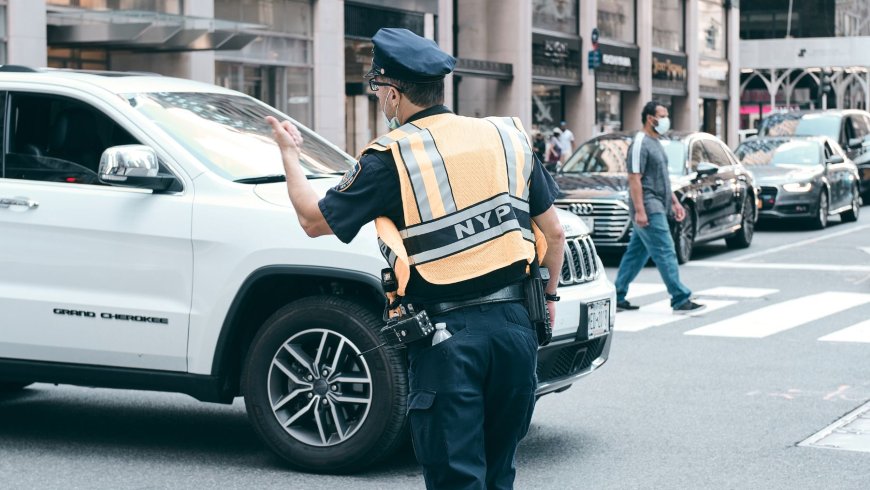
New Yorkers now risk losing their licenses based on tighter restrictions. Across all states, a point system is used to track and record your road traffic violations. Once these points reach a certain threshold, drivers may face penalties such as fines and license suspension. These points are valid for a specified amount of time on your driving record, and each road traffic violation carries a varying value depending on the severity of the violation. Now, new changes are in store for New York drivers thanks to updates from the DMV.
New driving laws for drivers across states
Not just limited to New Yorkers, drivers across states have seen a variety of new road traffic legislation go into effect at the start of this year, the majority of which tighten current legislation and increase the severity of associated penalties and convictions. California drivers, for example, can expect to see 13 new significant road traffic legislations begin this year, including approval to lower the speed limit in school zones from 25mph to 20mph by 2030.
Other legislative changes include approval to install 75 new speed cameras in highway construction zones statewide. Should these cameras catch you speeding through these zones, drivers face fines as high as $500. The cameras have been installed to prioritize the safety of highway construction workers by forcing drivers to slow down. California drivers also now face a $1,000 fine if they are convicted of manufacturing devices that intentionally obscure or hide license plate numbers from road traffic authorities. If convicted, the behavior is also now classified as an infraction.
Major changes for New Yorkers regarding license suspension
The start of this year saw the beginning of the largest revision of New York’s point system in over two decades. The changes were first announced in 2024 and are intended to reduce the number of road accidents and fatalities by identifying high-risk motorists faster.
In an official statement from the New York State DMV, the biggest change New Yorkers must take note of is that the license suspension threshold has changed from 11 points accumulated over 18-months to 10 points accumulated over 24-months. This essentially means that points are valid on your record for longer, making the room for error smaller. Additionally, authorities have revised the associated number of points for a specific driving behavior, as well as made the following behaviors carry points when previously they did not:
- Illegal U-turns: two points
- Vehicle equipment violations: one point per violation.
- Failure to move over for emergency vehicles: three points.
- Obstruction of traffic: two points.
Road traffic violations will also now be sorted into the following tiers to categorize the level of risk:
- Safety-Critical: Highest point values (5-8 points)
- Moving Violations: Medium point values (2-4 points)
- Administrative/Equipment: Lowest point values (1-2 points)
New technological upgrades for New York’s DMV
Accompanying the new point system is the New York DMV’s installation of updated technology statewide at facilities in order to improve and streamline services at the DMV. New Yorkers must take note that all DMV offices will be closed on February 13, 2026, from 14:00 to allow the new technology to be properly installed. The updated DMV systems highlight the ways in which modern technology is playing a larger role in assisting road traffic authorities across multiple roles, including the growing presence of automated speeding and red-light camera technology.
However, despite the success automation has seen at reducing road traffic accidents, authorities are having to pass laws that regulate these cameras due to privacy concerns. Washington state lawmakers are the most recent authorities to do so, passing new legislation that provides strict guidelines regarding the use of Automatic License Plate Reader (ALPR) systems. Previously, the state did not have any regulations regarding how and by whom the technology could be used.
What's Your Reaction?
 Like
0
Like
0
 Dislike
0
Dislike
0
 Love
0
Love
0
 Funny
0
Funny
0
 Angry
0
Angry
0
 Sad
0
Sad
0
 Wow
0
Wow
0