




























The Last Total Lunar Eclipse for 3 Years Is About to Happen, Here’s When and Where to See It!

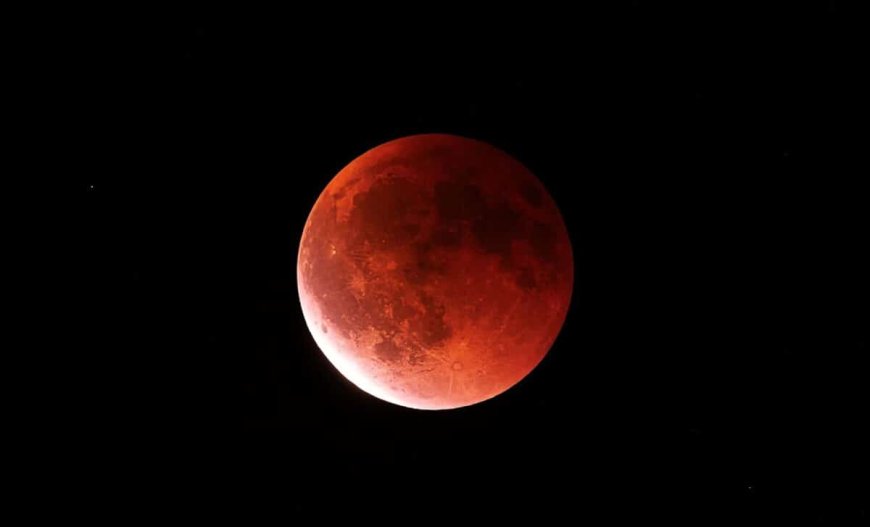
Skywatchers have a rare opportunity to witness the last total lunar eclipse for almost three years. Happening today, this event will see the Moon bathed in a deep red hue as it passes through Earth’s shadow. With the next total lunar eclipse not occurring until 2028, this is a must-see spectacle for those in the Americas, Australia, and parts of Asia.
Why Total Lunar Eclipses Are So Special
Lunar eclipses are a fascinating celestial event, but total lunar eclipses are especially captivating. During these events, the Moon moves fully into the Earth’s shadow, taking on a dramatic red color due to the scattering of sunlight through Earth’s atmosphere. According to NASA’s SpacePlace, while lunar eclipses are not as rare as solar eclipses, total lunar eclipses are much less common. The rarity stems from the Moon’s precise alignment with Earth’s shadow, making the next total eclipse in 2028 a long wait for many observers.
However, total lunar eclipses are visible from half of the planet, unlike solar eclipses, which are seen only in narrow paths. This wide visibility makes them accessible to a large audience, though each eclipse is unique in its appearance. The current event is particularly special as it marks the last total eclipse for the next three years.

Counting Down to the Next Total Lunar Eclipse
The gap between total lunar eclipses can feel long, especially when partial or penumbral eclipses, where only part of the Moon enters Earth’s shadow, take center stage. As mentioned in IFLScience, the next six lunar eclipses will be partial or penumbral, including one in January 2028, where less than 7% of the Moon will be completely eclipsed. Though partial eclipses still show the Earth’s shadow creeping across the Moon, they lack the full, dramatic red hue of a total eclipse, often leaving observers feeling unsatisfied. In contrast, penumbral eclipses are so subtle that they may be hard to notice at all.
The 2028 New Year’s Eve Eclipse
If you miss today’s total lunar eclipse, you won’t have to wait long for the next one, but it will be a lengthy wait. The following total lunar eclipse will occur on New Year’s Eve 2028, visible in regions across Asia, Australia, and parts of Europe.
Once total lunar eclipses resume in 2028, they will do so with intensity. In June 2029, a particularly deep total lunar eclipse is expected, as the Moon will pass almost directly through the Earth’s shadow.
Enjoyed this article? Subscribe to our free newsletter for engaging stories, exclusive content, and the latest news.
What's Your Reaction?
 Like
0
Like
0
 Dislike
0
Dislike
0
 Love
0
Love
0
 Funny
0
Funny
0
 Angry
0
Angry
0
 Sad
0
Sad
0
 Wow
0
Wow
0