





























Scientists Say We’ve Been Looking in the Wrong Place for Human Origins After They Found This Fossil in This Forgotten Region of Egypt

A fossil found in northern Egypt is shaking up what scientists thought they knew about our origins. Named Masripithecus moghraensis, this ape lived around 17 to 18 million years ago and may be very close to the ancestor of all modern apes.
For a long time, East Africa has been the main focus when it comes to early human evolution. Many of the most famous discoveries come from there, shaping the idea that it is the key region where everything began.
But this new find suggests the picture might be wider than expected. Fossils from this period are rare and unevenly spread, and large parts of Africa have not been explored much at all, leaving scientists with an incomplete story.
A Discovery That Shifts The Spotlight North
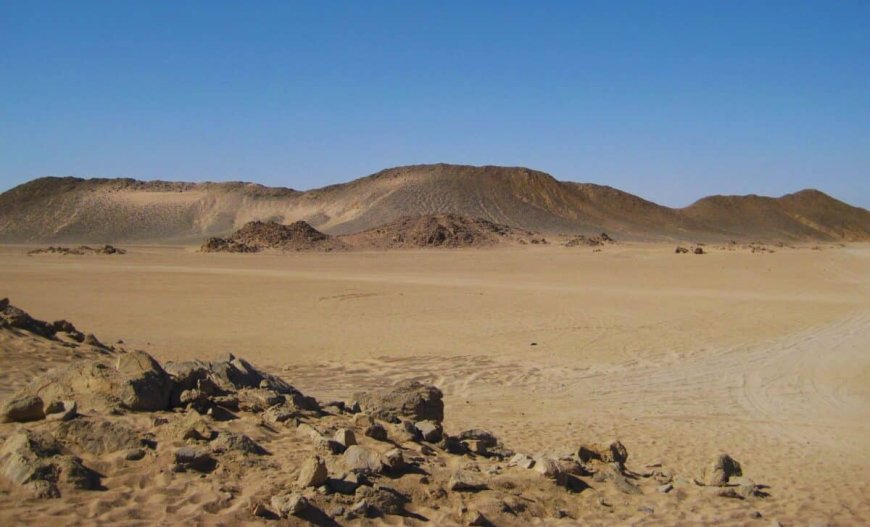
The fossil was discovered in the Wadi Moghra region in northern Egypt and dates back roughly 17 to 18 million years. According to the latest research published in Science, Masripithecus moghraensis could be one of the closest known relatives to the lineage that eventually led to all living apes.
“The vast majority of early hominoid fossil hunting has taken place in East Africa, where a rich collection of fossils and lineages has been uncovered,” explained the research team.
That is a major shift because it challenges the long-standing focus on East Africa. As David Alba and Júlia Arias-Martorell pointed out:
“[The] findings […] confirm that paleontologists might have been looking for crown-hominoid ancestors in the wrong place.”

How Scientists Figured Out Where It Fits
To place this species on the evolutionary tree, the research team led by Shorouq Al-Ashqar used a Bayesian tip-dating method. This approach combines physical traits with the fossil’s age to estimate relationships between species. As the authors wrote:
“Other regions in Africa have been less explored for various reasons, inspiring the question of whether a focus on East Africa has shaped opinions about where early hominoid evolution occurred.”
As explained in the study, the results show that Masripithecus belongs to the group known as stem hominoids, meaning it is closely linked to the ancestors of all modern apes. It lived during a time when Afro-Arabia was starting to connect with Eurasia, allowing species to move between continents.

A Wider Map For Ape Origins
This discovery suggests that the origins of modern apes may not be tied to one specific place. Instead, regions like northern Afro-Arabia, the Levant, and the eastern Mediterranean could all be part of the story.
The same study reported that the fossil record from this time is still too limited to give a clear answer. Still, finds like this show that important clues might be waiting in places scientists have not looked closely at yet.
Enjoyed this article? Subscribe to our free newsletter for engaging stories, exclusive content, and the latest news.
What's Your Reaction?
 Like
0
Like
0
 Dislike
0
Dislike
0
 Love
0
Love
0
 Funny
0
Funny
0
 Angry
0
Angry
0
 Sad
0
Sad
0
 Wow
0
Wow
0