




























Scientists Reveal Mars’ Hidden Geysers Are Forming Mysterious Spider-Like Landscapes

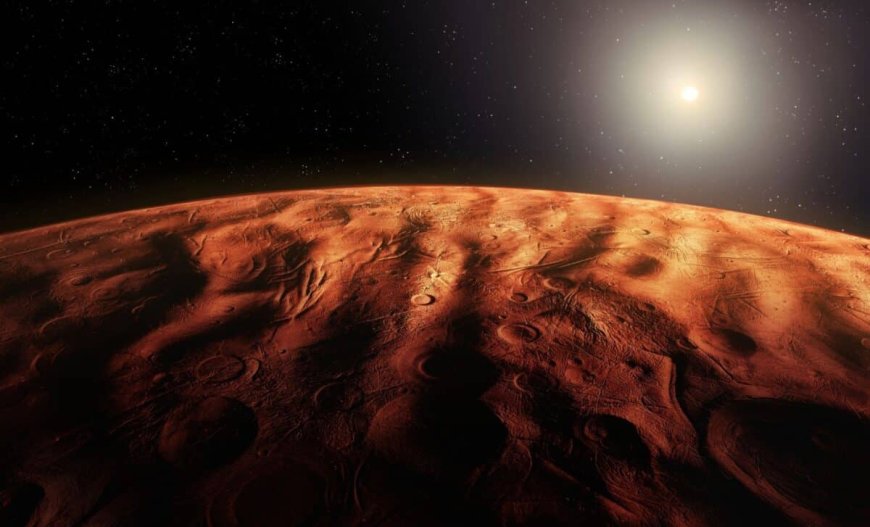
Mars, the cold and lifeless neighbor to Earth, might seem like an unlikely candidate for beauty. But the planet has something truly strange to offer: mysterious geysers and intricate, spider-shaped patterns that are unlike anything we see on our own planet.
While the Red Planet may seem barren and desolate, but it harbors natural wonders that are anything but dull. During its long winters, the planet’s carbon dioxide freezes into a thick ice sheet, and as the seasons shift, the warming sun triggers a spectacular eruption of gas, creating geysers and spider-like formations across its surface. These phenomena are part of Mars’ dynamic seasonal rhythm.
Mars’ Explosive Secret
Mars’ unique atmosphere is key to understanding how these CO2 geysers form. According to NASA, during the planet’s winter, carbon dioxide from the thin atmosphere freezes over the polar regions, forming a dense, solid layer of ice. This ice remains locked in place for months. When spring rolls around, however, the situation changes. The sun’s rays begin to warm the ice, which is actually transparent enough to let some sunlight through. This causes the CO2 beneath the surface to slowly turn into gas, which then builds up in pockets beneath the ice.
The pressure from this accumulating gas eventually becomes too much for the ice to contain. As stated by Science Alert, the resulting eruptions are capable of sending gas and dark materials shooting out across the surface. These eruptions can cover vast areas, sometimes as much as one kilometer in diameter, and they happen with remarkable speed, reaching up to 160 kilometers per hour.

Mars’ Spider-Like Landscapes: A Natural Wonder
One of the most striking features created by these eruptions is the “spider” patterns, which appear to crawl across the surface of Mars. Known as araneiform terrain, these formations are formed when gas escapes from cracks in the CO2 ice, leaving behind dark streaks that resemble the legs of a spider.
As the gas erupts and spreads, it leaves behind a unique pattern of radial lines, sometimes even forming clusters that make the surface look as though it has been marked by some unseen creature. Lauren McKeown of NASA’s Jet Propulsion Laboratory in Southern California explained in a NASA statement:
“The spiders are strange, beautiful geologic features in their own right,” she said. “These experiments will help tune our models for how they form.”
These patterns are a result of how gas escapes beneath the ice, and they help us understand the mechanics of how the Martian surface changes seasonally.

How Mars’ Geological Activity Sets It Apart from Earth
What’s most fascinating about these geysers is that they have no real counterpart on Earth. On our planet, the processes that shape the surface are mainly driven by liquid water, tectonic forces, and wind erosion. But on Mars, the main force is gas and it behaves very differently due to the thin atmosphere and lack of liquid water. As described by planetary scientist Hugh Keiffer:
“This gas levitates the ice, which eventually ruptures, producing high-velocity CO2 vents that erupt sand-sized grains in jets to form the spots and erode the channels. These processes are unlike any observed on Earth.”
The process, outlined in a research published in Nature, shows how CO2 sublimates from beneath the ice, building up enough pressure to cause explosive vents that send sand-sized particles flying through the atmosphere.
Enjoyed this article? Subscribe to our free newsletter for engaging stories, exclusive content, and the latest news.
What's Your Reaction?
 Like
0
Like
0
 Dislike
0
Dislike
0
 Love
0
Love
0
 Funny
0
Funny
0
 Angry
0
Angry
0
 Sad
0
Sad
0
 Wow
0
Wow
0