































Scientists Have Discovered Mysterious Barrels Encircled by Strange White Halos on the Ocean Floor

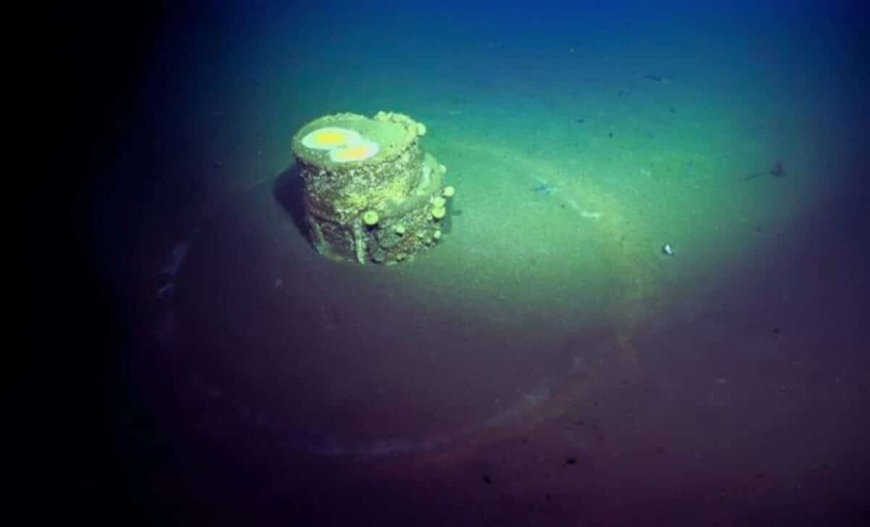
A massive underwater dumping site off the coast of Los Angeles is finally starting to reveal what it contains. Scientists have identified highly alkaline substances leaking from submerged barrels, creating areas where most forms of marine life simply can’t survive.
For decades, the seafloor in this region has been known to be littered with industrial waste, without a clear idea of what was actually inside. New research is now shedding light on some of these barrels, and what’s emerging is concerning.
This all goes back to a period between the 1930s and the early 1970s, when different kinds of waste were routinely dumped offshore. Data from the U.S. Environmental Protection Agency show that this included chemical waste, oil-drilling byproducts, as well as radioactive materials and military explosives, spread across 14 disposal sites.
The scale of the problem only really came into public view recently. In 2020, an investigation by the Los Angeles Times revealed that deep-sea surveys had uncovered large numbers of barrels scattered across the ocean floor. Follow-up missions by the Scripps Institution of Oceanography later identified around27,000 barrel-like objects and more than100,000 pieces of debris.
Alkaline Waste As The Main Suspect
For years, scientists suspected that many of these barrels contained DDT, a now-banned pesticide heavily linked to contamination in the region. Yet new sediment analyses suggest otherwise.
Findings published in PNAS Nexus show that researchers led by microbiologist Johanna Gutleben detected no increase in DDT concentrations near sampled barrels. Instead, three barrels surrounded by visible white halos showed extremely high pH levels of around 12 in nearby sediments.

This points to the presence of caustic alkaline waste rather than pesticide residues. In a statement relayed by Scripps Institution of Oceanography, Gutleben noted that:
“Up to this point we have mostly been looking for DDT. Nobody was thinking about alkaline waste before this and we may have to start looking for other things as well.”
The exact chemical composition remains unidentified, though the study notes that both DDT production and oil refining can generate alkaline byproducts.
White Halos Expose Extreme Chemistry Hotspots
The unusual white rings observed around many barrels have now been explained through chemical reactions triggered by leaking waste. The study describes how the alkaline material reacts with magnesium in seawater to form brucite, a mineral that creates a crust-like layer. Over time, this mineral dissolves, maintaining high alkalinity in the sediment and driving further reactions that produce calcium carbonate deposits, visible as pale halos.
These halos are more than just visual markers. They signal zones where chemical conditions have been drastically altered. Researchers estimate that roughly one-third of observed barrels display such features.

Marine Life Near Breaking Point
Sediment samples taken near the barrels with those white halos showed very little microbial DNA, which suggests most organisms just can’t survive in such an alkaline environment. Researchers did find a few specialized bacteria, similar to ones that live in deep-sea hydrothermal ventsoralkaline hot springs. These microbes are built for extreme conditions, but they only make up a tiny fraction of marine life.
What stands out is how long these effects have lasted. Even after more than 50 years, the waste is still affecting its surroundings. Co-author Paul Jensen said that:
“It’s shocking that 50-plus years later you’re still seeing these effects. We can’t quantify the environmental impact without knowing how many of these barrels with white halos are out there, but it’s clearly having a localized impact on microbes.”
All of this points to alkaline waste behaving like a long-term pollutant, capable of altering marine ecosystems for decades. There are still a lot of unknowns, especially when it comes to how many barrels are down there and what exactly they contain, so scientists are only starting to grasp the full extent of the issue.
Enjoyed this article? Subscribe to our free newsletter for engaging stories, exclusive content, and the latest news.
What's Your Reaction?
 Like
0
Like
0
 Dislike
0
Dislike
0
 Love
0
Love
0
 Funny
0
Funny
0
 Angry
0
Angry
0
 Sad
0
Sad
0
 Wow
0
Wow
0