

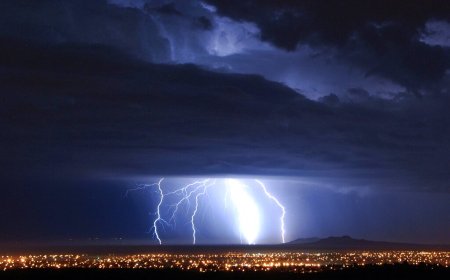



























Scientists exploring a vast coastline discovered a massive field of glass stretching for miles and now suspect an unknown meteorite caused it

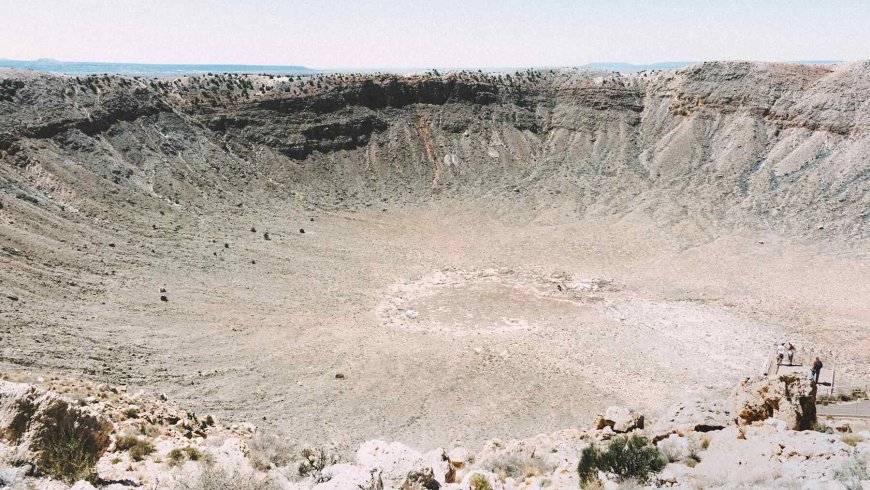
The Earth is subjected to constant change regardless of time or location.
For generations, we have been studying the planet we live on to better understand how it came to be what it is today. But when scientists found a massive field of glass that stretched for miles in a region of one of the most iconic nations in the world, the search was on for the origin.
How was this huge field of glass formed in South America?
How meteorites have changed the landscape of our only home
The Earth is an old planet and has been subjected to an onslaught of meteorites over its long history.
Over 190 impact structures have been confirmed by science over the years. The largest we have found so far is in South Africa. The Vredefor Crater in the Rainbow Nation is approximately 99 miles in diameter, although billions of years of erosion have obscured much of the original scale of the crater.
But not every meteorite impact has adversely affected life on our planet.
The Sudbury Basin in Canada has vast deposits of nickel and copper reserves due to the impact of a meteorite that melted the crust and allowed metal-rich magma in the Earth to rise to the surface.
It would take a lifetime to understand all the life forms on Earth
Indeed, it has been the singular focus for many scientists over the past few hundred years.
Researchers have been studying thousands of hours of underwater footage to better understand life in Earth’s final and unexplored frontier: the ocean. Experts found that some species in the ocean display similar social dominant behavior to us humans.
And life exists past the visible world as the Earth itself is a living, breathing creation that is slowly beginning to explain itself.
The study of life on Earth has led to several astonishing discoveries that rewrite our history books over how the planet came to be what it is today. Like a team of researchers that found evidence that early life forms were breathing oxygen long before it filled our atmosphere billions of years ago.
As we know, the impact of a meteorite’s crash landing on Earth can create near-perfect conditions for astonishing creations that boggle the mind.
The study, “Massive asteroid impact 6.3 million years ago left giant glass field in Brazil,” published in Fundação de Amparo à Pesquisa do Estado de São Paulo via ScienceDaily, has shown what takes place when a huge meteorite lands on sand-covered beaches.
Researchers have found evidence of Brazil’s first major tektite field
Tektite is a natural type of glass that forms when a large meteorite crashes on Earth.
For the most part, scientists have believed that tektites were formed when terrestrial rock formations melted by extreme heat during meteorite impacts. We know that the Earth is capable of creating extreme heat conditions, led mostly by huge volcanoes that litter the global landscape.
But this study has found evidence of tektites in a part of the world where we thought none existed.
Brazil is a mysterious and big country. The sheer size of it requires years, even decades of research to unearth its secrets. When a team of researchers made their way across the nation’s iconic terrain, they found evidence of Brazil’s first major tektite field.

They found glassy fragments known as “geraisites” that indicate a massive asteroid impact occurred in the region roughly 6.3 million years ago.
The newly discovered 559-mile field of glass found in Minas Gerais fills a significant gap in the record of geology in South America. Climate change has forever altered the landscape of the planet, but this find proves that at the drop of a hat, meteorites can do so too.
What's Your Reaction?
 Like
0
Like
0
 Dislike
0
Dislike
0
 Love
0
Love
0
 Funny
0
Funny
0
 Angry
0
Angry
0
 Sad
0
Sad
0
 Wow
0
Wow
0