





























Scientists Discover a Massive Cave That Preserved Traces of Human Life Long After They Disappeared From the Surface

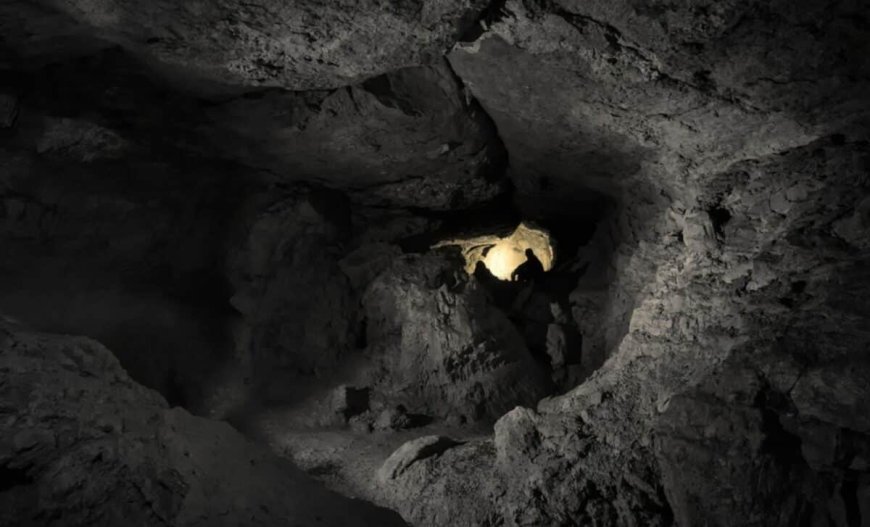
Hidden beneath Saudi Arabia’s desert, lava tube caves are revealing traces of human life stretching back thousands of years. At Umm Jirsan, researchers have uncovered clear evidence of repeated occupation, from the Neolithic through to the Bronze Age.
For decades, Arabia’s harsh, dry climate made it difficult to preserve archaeological remains. Wind, heat, and erosion often erased fragile traces of past human activity. This new research is changing that perspective. Underground environments such as caves and lava tubes appear to act as natural shelters for history, protecting what would otherwise have been lost.
Led by Griffith University’s Australian Research Centre for Human Evolution (ARCHE), the project is focusing on these long-overlooked spaces. Gradually, it is helping reconstruct how ancient communities moved across the region, adapted to shifting conditions, and maintained connections over vast distances.
A Stop Along Ancient Herding Routes
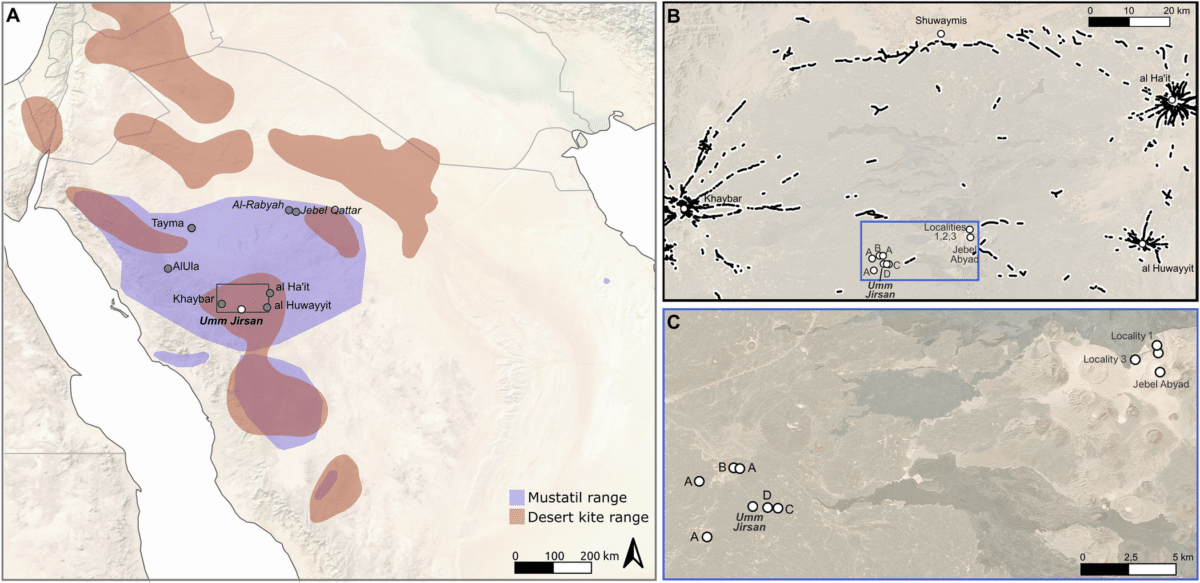
Researchers have revealed that Umm Jirsan, an extensive lava tube located about 125 kilometers north of Medina, served as a refuge for livestock herders over roughly 7,000 years, with evidence showing that people returned to the site repeatedly over millennia. According to Dr. Mathew Stewart:
“Our findings at Umm Jirsan provide a rare glimpse into the lives of ancient peoples in Arabia, revealing repeated phases of human occupation and shedding light on the pastoralist activities that once thrived in this landscape.”
He added that the cave likely served as a key stop along pastoral routes, linking oases and allowing herding groups to move livestock across the landscape.
Inside the lava tubes, rock art depicts cattle, sheep, goats, and dogs. When combined with animal remains found at the site, a clearer picture emerges of a mobile, livestock-based way of life.
Your Bones Keep a Record of Your Everyday Habits
The animal remains also reveal details about the surrounding environment. As reported by the study published in PLOS ONE, isotopic analysis shows that livestock mainly fed on wild grasses and shrubs, consistent with the region’s natural vegetation.

Human diets, however, evolved over time. While protein remained a major component, there is growing evidence that C3 plants were increasingly part of daily consumption. This subtle shift suggests the gradual emergence of oasis-based agriculture, rather than a sudden transformation.
These Caves Are More Important Than Anyone Realized
This discovery goes far beyond a single site. As stated by Professor Michael Petraglia, it is the first time lava tubes in Saudi Arabia have been studied in such depth.
“While underground localities are globally significant in archaeology and Quaternary science, our research represents the first comprehensive study of its kind in Saudi Arabia.” He also said that “these findings underscore the immense potential for interdisciplinary investigations in caves and lava tubes, offering a unique window into Arabia’s ancient past.”
Caves like Umm Jirsan function almost as time capsules. In an environment where surface evidence rarely survives, these underground spaces preserve invaluable traces of the past.
Enjoyed this article? Subscribe to our free newsletter for engaging stories, exclusive content, and the latest news.
What's Your Reaction?
 Like
0
Like
0
 Dislike
0
Dislike
0
 Love
0
Love
0
 Funny
0
Funny
0
 Angry
0
Angry
0
 Sad
0
Sad
0
 Wow
0
Wow
0