



























One of Antarctica’s Glaciers Just Pulled Back 42 Kilometers, Exposing a Massive Weak Spot in the Ice Sheet

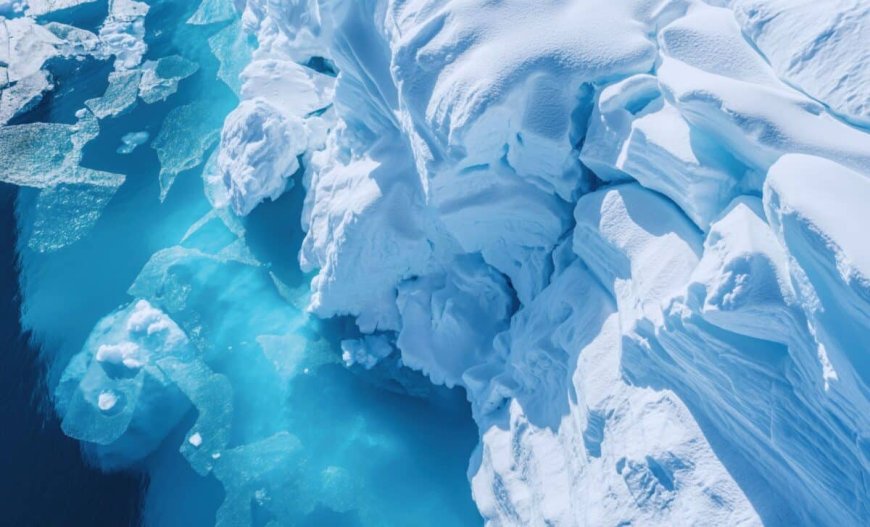
A new long-term analysis shows that Antarctica has lost 12,820 square kilometers of grounded ice between 1996 and 2025. For years, Antarctica has appeared more stable than the Arctic, where sea ice decline has been widely documented. Yet new satellite observations reveal that certain parts of the southern continent are changing rapidly even as large portions of the ice sheet remain relatively unchanged.
Scientists pay close attention to the grounding line, the boundary where glaciers shift from resting on land to floating on the ocean. Movements along this hidden shoreline are a key indicator of how stable Antarctic glaciers are and how they may evolve over time.
Three Decades of Ice Loss
Researchers analyzed satellite radar data spanning nearly three decades to track the movement of Antarctica’s grounding line. The results show that the continent lost 12,820 square kilometers of grounded ice between 1996 and 2025.
According to the study published in Proceedings of the National Academy of Sciences, this represents an area about ten times the size of Greater Los Angeles. Over the same period, the ice sheet retreated along the grounding line at an average rate of 442 square kilometers per year.

The research also found that 77 percent of Antarctica’s grounding line has remained stable during the study period. As Professor Eric Rignot of the University of California, noted in an ESA statement:
“As satellite observation capabilities continue to expand, we are looking forward to learning more about the dynamics of these systems so we can better project how they influence sea-level rise in the future.”
Glaciers on the Move in West Antarctica
The most significant changes occurred in West Antarctica, where several large glaciers have retreated by tens of kilometers. As mentioned in the study, the most affected glacier was Smith Glacier, which experienced a retreat of 42 kilometers.

Other glaciers in the region have also shifted substantially. Pine Island Glacier retreated by 33 kilometers, while Thwaites Glacier moved inland by 26 kilometers. Large retreats were also detected across the Amundsen Sea sector and the Getz sector, where grounding lines moved by up to almost 40 kilometers, as reported in the research.
These glacier systems are closely studied because they drain large portions of the West Antarctic Ice Sheet.
Warm Ocean Waters Drive Change
Scientists associate many of the observed retreats with warm ocean water reaching the underside of glaciers. Winds can push warmer water toward the Antarctic coast, allowing it to circulate beneath ice shelves and affect the grounding line.
Eric Rignot pointed out that this process does not affect the entire continent equally. He described the situation by comparing it to a ” balloon that’s not punctured everywhere, but where it is punctured, it’s punctured deep.”

The research relied on observations from several satellite missions operated by the European Space Agency, Canada, Japan, Italy, and Argentina. As the study team stated, the combination of these datasets allowed scientists to map grounding line changes across Antarctica over a long period for the first time.
One question remains unresolved. Scientists still do not fully understand why much of Antarctica has remained stable while certain sectors are retreating rapidly. As Rignot noted in comments reported alongside the study, the continent’s current stability may be fortunate since a widespread reaction across Antarctica would lead to far greater consequences.
Enjoyed this article? Subscribe to our free newsletter for engaging stories, exclusive content, and the latest news.
What's Your Reaction?
 Like
0
Like
0
 Dislike
0
Dislike
0
 Love
0
Love
0
 Funny
0
Funny
0
 Angry
0
Angry
0
 Sad
0
Sad
0
 Wow
0
Wow
0