

Mamdani drops massive 9/11 records trove as old claims about Ground Zero come under fire

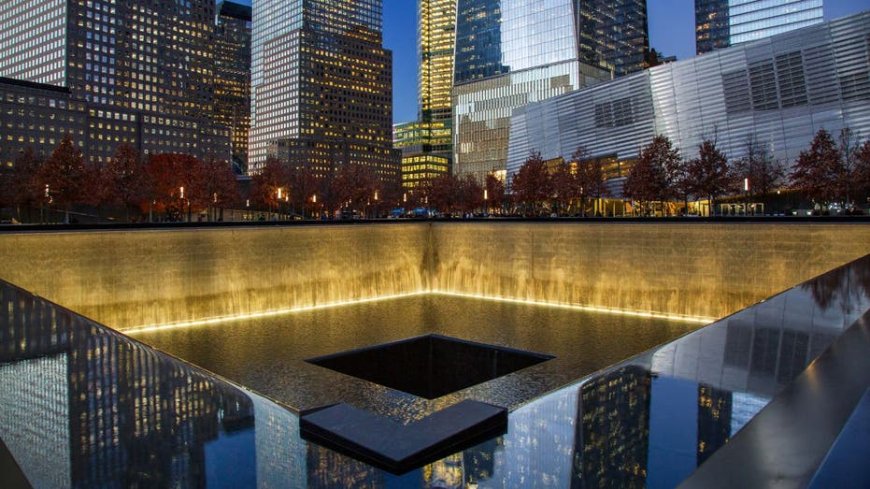
New York City Mayor Zohran Mamdani released more than 170,000 pages of records Tuesday that call into question public claims that the air around Ground Zero was safe to breathe following the 9/11 attacks.
Mamdani's office released an initial trove of approximately 170,000 pages of records, including documents found in 68 boxes at the Department of Environmental Protection in 2025 that date back to the aftermath of the 9/11 attacks.
The records release comes just days before the 25th anniversary of the 9/11 terrorist attacks in which 2,977 people were killed. Thousands of people exposed to the toxic dust and debris after 9/11 have since died from illnesses associated with the attacks, while many more continue to suffer from health conditions, according to the World Trade Center Health Program and other health authorities.
AMERICA’S HEARTLAND COMES FACE-TO-FACE WITH 9/11 HISTORY AS 25TH ANNIVERSARY NEARS
Then-EPA Administrator Christine Todd Whitman said in a Sept. 18, 2001, press release that monitoring results indicated the air near the World Trade Center was safe to breathe, following EPA assurances about environmental hazards dating to Sept. 13.
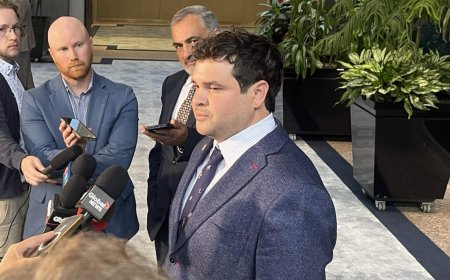
"People got sick because the leaders they trusted lied and told them they were safe to breathe in toxic air," Mamdani shared during a Tuesday press conference.
The documents revealed that ten months after the terrorist attacks, traces of asbestos were found on the roof of a building located at 15 John Street, less than a mile from where the World Trade Center once stood.
The records show that asbestos was detected at some locations at levels below applicable cleanup or exposure benchmarks and at others at levels that appeared to exceed them; health authorities have said there is no known safe level of asbestos exposure.
Among the approximately 170,000 pages released through the online portal is a Feb. 28, 2002, memo from then-Mayor Michael Bloomberg's senior policy adviser, summarizing Rep. Jerrold Nadler's concerns about indoor air quality in Lower Manhattan and warning that the city could face public-relations and legal problems over the cleanup.
The memo laid out Nadler's concerns that the Environmental Protection Agency had "handed over responsibility for measuring indoor air quality to the City" without putting in place oversight measures. The memo said the city had passed responsibility for indoor monitoring to property owners and noted that the Health Department had instructed residents to clean buildings with wet mops and rags.
"If Nadler’s concerns are justified, we are not Informing people of the real health risks In lower Manhattan, the City may face major public relations problems and Is leaving Itself open to a barrage of lawsuits," the memo, dated Feb. 28, 2002, stated. "At the least we should discontinue telling people to clean their apartments with wet mops and rags. We should be asking FEMA for funds to support Indoor cleanup."
AS AMERICAN PRIDE HITS A 25-YEAR LOW, A NEW 9/11 EDUCATION PLATFORM URGES THE NATION TO NEVER FORGET
Among the clearest evidence of lingering asbestos contamination near Ground Zero was a finding at Stuyvesant High School, where testing later revealed elevated asbestos in auditorium carpeting.
The school, located less than half a mile north of the World Trade Center, recorded what concerned parents described as "extremely high levels of asbestos" in its auditorium during testing in August 2002.
Nearly a year after the attacks, testing of a carpet sample from the school's auditorium using an EPA-recognized ultrasonication method found asbestos concentrations measured at roughly 2.5 million structures per square centimeter.
For comparison, the EPA's Lower Manhattan Test and Clean Program later called for professional cleaning when settled dust exceeded 5,000 asbestos structures per square centimeter. The Stuyvesant sample was roughly 500 times higher than that cleanup benchmark.
I LOST MY WIFE ON 9/11. PLEASE LET THIS 25TH ANNIVERSARY BELONG TO THE FAMILIES
The parents' findings also reached city officials. A copy of the press release announcing the asbestos results was transmitted through the NYC Department of Environmental Protection's Bureau of Public Affairs on Aug. 7, 2002.
In July 2002, more than 10 months after the attacks, the Independence Plaza North Tenant Association (IPNTA) wrote to the EPA arguing the agency's cleanup of two Tribeca residential buildings had not gone far enough, while also urging broader environmental testing."
The work on this project has thus far been done in an unprotected, hence possibly dangerous manner, allowing the dust from the old carpet being torn up to seep into tenants’ apartments, under and around their doors," Diane Lapson, the tenant association's environmental chair, wrote in the letter.
Lapson also criticized what she described as the EPA's and New York City's Department of Environmental Protection's reliance on visual inspections to assess conditions at Independence Plaza's buildings, including 310 Greenwich St. and 80 North Moore St., arguing the agencies should instead conduct more comprehensive testing.
She urged officials to use ultrasonication to more reliably measure the amount of asbestos still in the buildings."
Based on the illnesses that have plagued IPN residents since 9/11 (constant respiratory, sinus, bronchial, skin rashes, eye infections, headaches, etc.), we believe there is a need to do a thorough cleaning of the entire complex.
CBC CAVES ON 9/11 'TERRORISM' GUIDANCE AS US, CANADIAN OFFICIALS UNLEASH CROSS-BORDER BACKLASH
By September 2002, about two months after Lapson’s letter, the EPA announced that eight contracts had been awarded for asbestos cleanup throughout the downtown area including the ZIP code encompassing Independence Plaza North.
But EPA litigation records show that asbestos contamination remained in some Lower Manhattan apartments months after the cleanup work began.
Lori Mogol and Richard Zimbler, a couple who lived at Independence Plaza North, still had elevated levels of asbestos in their apartment as late as February 2003.
Specifically, their dining room had more than double the EPA’s risk-based clearance level for asbestos, according to tests performed by their assigned contractor.
What's Your Reaction?
 Like
0
Like
0
 Dislike
0
Dislike
0
 Love
0
Love
0
 Funny
0
Funny
0
 Angry
0
Angry
0
 Sad
0
Sad
0
 Wow
0
Wow
0