




















James Webb Telescope Finds Something Strange Blocking a Hidden “Second Earth” Moon


The James Webb Space Telescope (JWST) has pushed the boundaries of exoplanet science, yet its latest target, a nearby system with Earth-sized worlds, reveals how even the most advanced observatories can be outmatched by stellar activity. A new study published on arXiv details how astronomers attempted to detect an Earth-moon analog around planets in the TOI-700 system, only to find their search obscured by the star itself. The result highlights both a tantalizing possibility and a frustrating limitation: the signal of a moon may already be hidden in the data, just beyond our reach.
A Prime Target For Finding Another Earth-Moon System
Roughly 100 light-years away, the TOI-700 system has become one of the most closely studied planetary neighborhoods in recent years. According to Universe Today, this small M-dwarf star hosts multiple exoplanets, including TOI-700 d and TOI-700 e, both located within the star’s habitable zone, where conditions may allow liquid water to exist. Their sizes, about 1.145 and 0.919 times that of Earth, respectively, make them compelling analogs to our own planet.
These worlds present a rare opportunity. Their gravitational stability and orbital characteristics suggest they could host moons similar to Earth’s Moon, which plays a key role in stabilizing our planet’s axial tilt and influencing long-term climate patterns. Detecting such a moon beyond our solar system would mark a major step forward in understanding planetary habitability. With its unmatched sensitivity, JWST seemed uniquely equipped to capture the faint signals such a moon would produce.

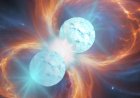
Credit: NASA/JPL-Caltech/Robert Hurt/NASA’s Goddard Space Flight Center
A Precision Leap Forward
The research, conducted by scientists from MIT, Harvard University, and the University of Chicago, and published on arXiv, leveraged JWST’s capabilities to refine our understanding of the TOI-700 planets. The telescope dramatically improved orbital measurements, increasing their precision by an order of magnitude. It also sharpened estimates of planetary radii, narrowing uncertainties by factors of two to three.
Such improvements are not incremental, they redefine what astronomers can infer about distant systems. Precise orbital timing is critical when searching for exomoons, as these bodies subtly alter the motion and transit signals of their host planets. In theory, JWST can detect brightness dips as small as 20 parts per million (ppm), the expected signature of a moon similar to ours passing in front of a star.
Yet despite these gains, the data revealed no definitive evidence of a moon. The reason lies not in the telescope’s limitations, but in the complex behavior of the star itself.
Stellar Noise: The Hidden Obstacle
As researchers analyzed the observations, they identified a persistent pattern known as red noise, a signal generated by stellar granulation, the turbulent boiling of plasma on the star’s surface. This activity produced fluctuations with an amplitude of about 46 ppm, more than double the expected signal from a moon.
The noise followed a repeating cycle of roughly 16 minutes, effectively masking any weaker signals embedded within the data. In practical terms, this means that even if a moon comparable to ours exists in the system, its signature would be drowned out by the star’s own variability.
This finding underscores a paradox in modern astronomy: instruments like JWST are now so sensitive that they capture not only the signals scientists seek, but also the complex, dynamic behavior of stars in unprecedented detail. Separating these overlapping signals has become one of the field’s greatest challenges.
A Signal Still Waiting To Be Found
Despite the setback, the study offers a compelling possibility. The researchers conclude that the existing dataset may already contain evidence of an exomoon, if a method can be developed to effectively remove the stellar noise. Current observations are sensitive only to moons larger than Ganymede with orbital periods longer than two days, leaving plenty of room for smaller, Earth-like moons to remain undetected.
This shifts the frontier from observation to computation. Advanced algorithms capable of filtering out red noise could unlock discoveries hidden in plain sight. The implication is striking: the first confirmed exomoon might not require new observations, but a new way of interpreting the data we already have.
Enjoyed this article? Subscribe to our free newsletter for engaging stories, exclusive content, and the latest news.
What's Your Reaction?
 Like
0
Like
0
 Dislike
0
Dislike
0
 Love
0
Love
0
 Funny
0
Funny
0
 Angry
0
Angry
0
 Sad
0
Sad
0
 Wow
0
Wow
0