Most people live by one simple rhythm. The sun rises, the day begins. The sun sets, the day ends. We rarely think about it. It just works.
Now imagine waking up one morning and realizing the sun is gone. Not late. Not hidden. Just gone. And it won’t be back for months. For thousands of people, this isn’t imagination — it’s normal life.
When daylight stops being reliable
Human bodies are deeply connected to natural light. Sunlight tells us when to wake up, when to focus, and when it’s time to rest. It helps regulate hormones, mood, and energy levels without us even noticing.
When that light disappears, the body doesn’t panic right away. Instead, confusion slowly sets in. Time feels less real. Morning and evening lose meaning. People rely more on alarms, schedules, and habits instead of instinct.
In places like this, daylight is no longer something you can count on.
A long night that slowly takes over
The darkness doesn’t arrive overnight. Days shrink bit by bit. Sunsets happen earlier. Mornings stay dark longer. Twilight stretches until it becomes the entire day.
Eventually, the sun simply stops rising. Streetlights stay on around the clock. Homes glow even at noon. People learn to create structure where nature no longer provides it. Daily life continues, but darkness becomes the background of everything.
What months without sunlight do to people
Living without sunlight affects the body first. Sleep problems become common. Some people struggle to fall asleep. Others sleep too much but never feel rested.
Mental effects follow quietly. Motivation drops. Small tasks feel harder. Doctors warn that long periods without sunlight can trigger seasonal depression, anxiety, and irritability.
These changes aren’t dramatic. They build slowly, which makes them harder to notice — and harder to escape.
Beauty hiding inside something harsh
Yet darkness isn’t only negative. Without sunlight, the night sky becomes extraordinary. Stars appear sharper and brighter than most people have ever seen.
Then come the colors. Green, purple, and blue lights move silently across the sky. The aurora turns darkness into motion. What feels magical to visitors becomes part of normal life. But this place still hides one detail that surprises everyone.
This is where it happens — and why people are “frozen”
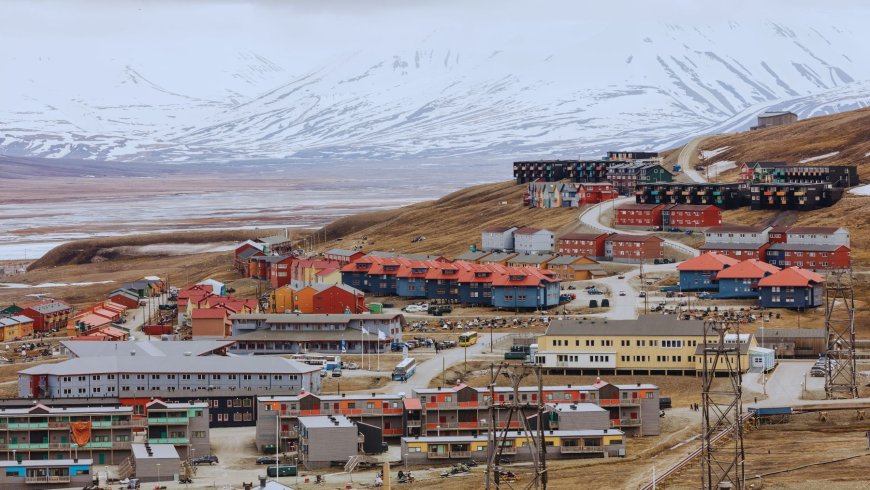
The place is Longyearbyen, Norway, deep inside the Arctic Circle. About 4,400 people live here, and every winter they experience more than 100 days without seeing the sun.
The ground beneath the town is permanently frozen, known as permafrost. Bodies buried here do not decompose. Because of this, burials have been banned for decades.
People who are seriously ill must leave the town. In simple terms, this is a place where you’re not allowed to die.
A town that forces humans to adapt
Life in Longyearbyen is built around adaptation instead of comfort. People prepare for darkness months in advance. Artificial light, routines, and social connection become essential tools.
Mental health is taken seriously. Neighbors check on each other more often. Nature sets the rules, and humans adjust. For outsiders, it feels extreme. For locals, it’s simply home.
This may be the strangest place on Earth — not because it’s hostile, but because it shows how far humans can adapt when the world refuses to behave normally.






























 Like
0
Like
0
 Dislike
0
Dislike
0
 Love
0
Love
0
 Funny
0
Funny
0
 Angry
0
Angry
0
 Sad
0
Sad
0
 Wow
0
Wow
0