





























It’s Official: Dolphins and Orcas Have Crossed Evolution’s ‘Point of No Return’ to Live on Land Again

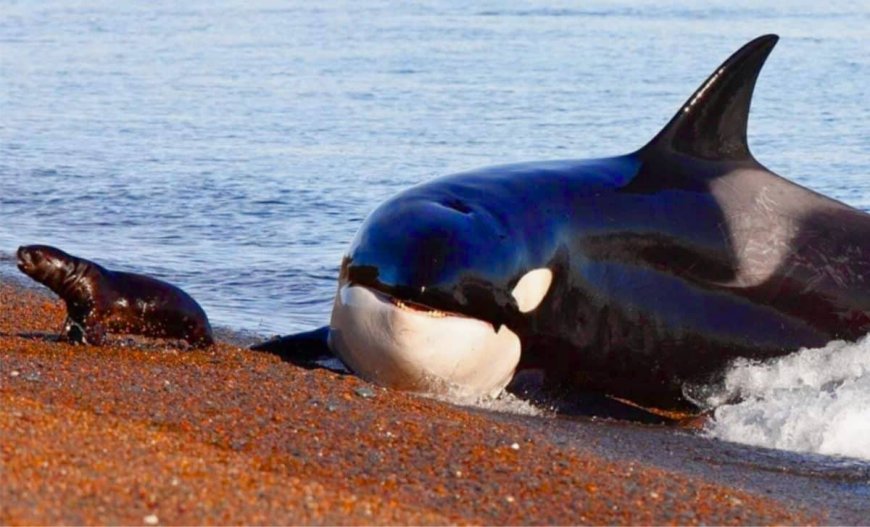
A dolphin breaking the surface for air can seem like a reminder of its mammalian past. But evolution is not nostalgia. The same body that still needs oxygen from the atmosphere is also one of the clearest examples of what happens when a land lineage becomes deeply committed to life in water. According to a 2023 study in Proceedings of the Royal Society B, some aquatic mammals appear to have evolved so far toward marine living that a return to life on land is no longer a plausible evolutionary path.
That conclusion does not rest on a dramatic claim about a single species. The study by Bruna M. Farina, Søren Faurby, and Daniele Silvestro examined aquatic adaptation across all living mammals, asking whether transitions into water are reversible and how those shifts relate to body size and diet.
The answer was nuanced but striking: stronger dependence on aquatic environments was associated with irreversible adaptations, while weaker, semi-aquatic adaptations remained reversible.
The Moment Evolution Locks the Door
The most compelling part of this research is not whether dolphins or orcas once had land-dwelling ancestors. That is already well established in mammalian history. The sharper question is whether a lineage can become so specialized for aquatic life that the route back effectively closes.
The authors approached that problem by looking beyond a simple land-versus-sea divide. Their analysis included not just fully terrestrial and fully aquatic mammals, but also freshwater and semi-aquatic species that are often overlooked in broad evolutionary comparisons. That matters because marine mammal evolution is not a single leap. It unfolds across stages, and reversibility appears to change across those stages as well.

This is where cetaceans become especially revealing. Their anatomy is built around permanent life in water. In the study’s summary, lineages that rely strongly on aquatic environments showed irreversible adaptations consistent with Dollo’s Law, while semi-aquatic mammals still retained traits that allow efficient terrestrial movement.
In plain terms, that means a beaver, otter, or hippo is not in the same evolutionary category as a dolphin or killer whale. Semi-aquatic mammals still function on land. Fully aquatic mammals are organized around a different set of constraints.
Why Life in Water Changed Everything
This is not just about flippers replacing limbs. The study points to a broader web of changes that accompany the move into water. Among mammals transitioning toward aquatic environments, including semi-aquatic ones, the researchers found a consistent trend toward increased relative body mass and a significant association with more carnivorous diets. They interpret those patterns as responses to thermoregulation in water and the energetic demands of aquatic life.
That finding helps explain why the question, can dolphins evolve to live on land again, is more complicated than it sounds. A return would not require one simple anatomical reversal. It would involve coordinated changes across locomotion, feeding, energy use, and heat conservation.

Water removes heat far more efficiently than air, so larger body size becomes advantageous. Predatory feeding strategies also fit the metabolic demands of swimming, diving, and life in aquatic food webs. Those traits are not incidental. They reinforce one another. A fully aquatic mammal is shaped not only by how it moves, but by how it stays warm, how it hunts, and how it survives in an environment where buoyancy replaces weight-bearing.
That is why the idea of a point of no return in evolution is best understood as cumulative specialization. The more traits become integrated around marine survival, the harder it becomes for evolution to reopen a path to terrestrial life.
The Mammals That Stayed Flexible
One of the study’s strongest points is its refusal to flatten all water-adapted mammals into the same story. Semi-aquatic species still matter because they show that some degree of evolutionary flexibility remains possible. These animals have not crossed the same threshold as fully aquatic lineages. They still preserve efficient terrestrial movement, which means the traits needed for terrestrial life have not been stripped away to the same extent.
That distinction keeps the findings grounded. The paper does not argue that any move into water creates an evolutionary dead end. It argues that full dependence on aquatic environments appears to be different. At that point, reversibility sharply declines.
This matters for how we talk about whale evolution, dolphin adaptation, and marine mammal evolution more broadly. Evolution does not move with foresight. It works through selection of what is immediately useful. Once a lineage becomes highly successful in water, natural selection keeps refining that success. Over long spans of time, those refinements can make older ways of living effectively inaccessible.
Why Dolphins and Orcas Likely Cannot Go Back
The paper does not claim to predict the future of every aquatic mammal, and it does not say evolution literally stops. What it supports is a macroevolutionary pattern across living mammals: lineages with strong reliance on aquatic environments tend to show irreversible adaptations, while semi-aquatic mammals retain more reversible ones.
That makes dolphins and orcas powerful examples of evolutionary commitment. They are not simply land mammals that learned to swim better. Their bodies, diets, and ecological roles have been reshaped around life in water so extensively that the possibility of returning to land no longer looks realistic under the pattern identified in this study.
For those searching why whales cannot go back to land, or whether dolphins could ever evolve legs again, the study offers a disciplined answer. The issue is not imagination. It is biological specialization. Some mammals still live between two worlds. Dolphins and orcas do not. They belong to one.
Enjoyed this article? Subscribe to our free newsletter for engaging stories, exclusive content, and the latest news.
What's Your Reaction?
 Like
0
Like
0
 Dislike
0
Dislike
0
 Love
0
Love
0
 Funny
0
Funny
0
 Angry
0
Angry
0
 Sad
0
Sad
0
 Wow
0
Wow
0