




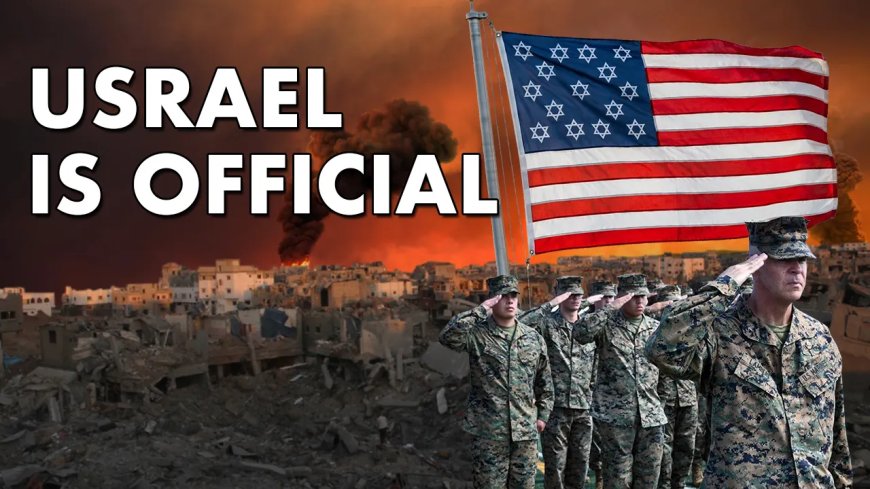
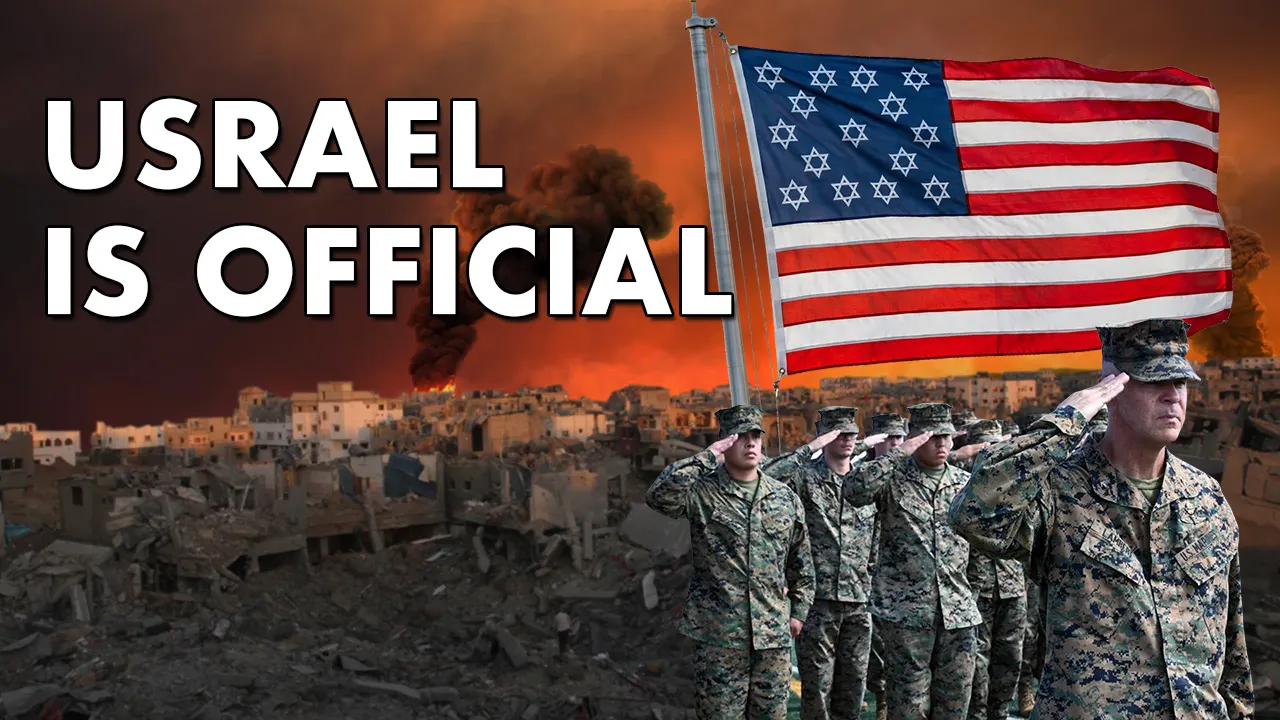
It’s Official: The US is now “USrael”

 by James Corbett,
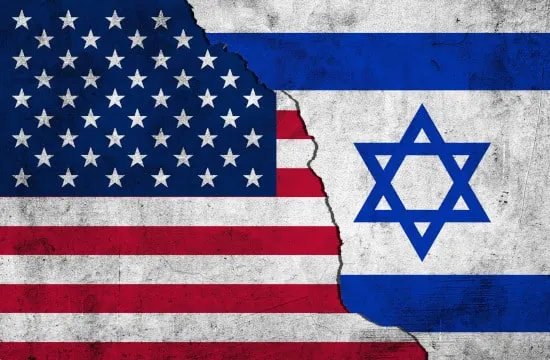
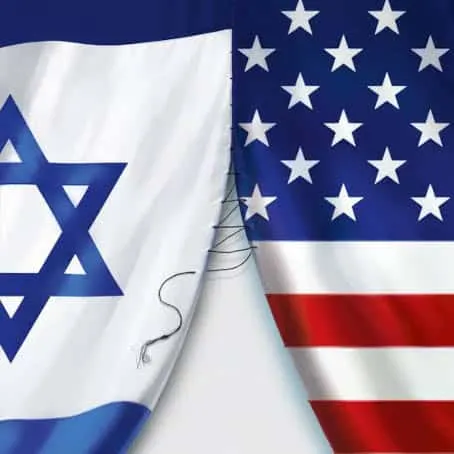
USrael, as dedicated Corbetteers know by now, is the Frankenstein’s monster that has been haunting the geopolitical stage for decades. And, as you also know by now, that monster consists of an Israeli head atop an American body. In other words, it involves Israeli influence over the largest military power in the history of the world.
USrael explains the War of Terror and the decades of pointless slaughter in Afghanistan, Iraq, Libya, Syria and the other targets on the neocons’ hit list.
USrael explains why every single US senator and congressman is required to pledge fealty to Israel—and it explains why the lone one who didn’t take that pledge just got primaried after an unprecedented campaign to boot him from office.
And USrael explains why Donald “Make American Great Again” Trump just waged a baffling and disastrous war on Iran at the behest of his dear friend, Benjamin Netanyahu.
Of course, the Snopes readers of the world have up till now been content to dismiss all evidence of USrael’s existence by calling it a conspiracy theory (or, worse, an anti-semitic conspiracy theory). But the diehard conspiracy realists in The Corbett Report audience have always known better.
Still, even the astute members of my audience might have been tempted to think of USrael as more of an analogy or a concept than a formal reality. I mean, it’s not like the fusion of the US and Israeli military apparatus is an actual, formal, bureaucratic agreement, is it?
Well, is it?
As it turns out, there is now legislation passing through the US Congress that goes further than ever before in formally integrating the US military-industrial complex and its Israeli counterpart.
Here’s what just happened, what it means and why it matters.
by James Corbett,
USrael, as dedicated Corbetteers know by now, is the Frankenstein’s monster that has been haunting the geopolitical stage for decades. And, as you also know by now, that monster consists of an Israeli head atop an American body. In other words, it involves Israeli influence over the largest military power in the history of the world.
USrael explains the War of Terror and the decades of pointless slaughter in Afghanistan, Iraq, Libya, Syria and the other targets on the neocons’ hit list.
USrael explains why every single US senator and congressman is required to pledge fealty to Israel—and it explains why the lone one who didn’t take that pledge just got primaried after an unprecedented campaign to boot him from office.
And USrael explains why Donald “Make American Great Again” Trump just waged a baffling and disastrous war on Iran at the behest of his dear friend, Benjamin Netanyahu.
Of course, the Snopes readers of the world have up till now been content to dismiss all evidence of USrael’s existence by calling it a conspiracy theory (or, worse, an anti-semitic conspiracy theory). But the diehard conspiracy realists in The Corbett Report audience have always known better.
Still, even the astute members of my audience might have been tempted to think of USrael as more of an analogy or a concept than a formal reality. I mean, it’s not like the fusion of the US and Israeli military apparatus is an actual, formal, bureaucratic agreement, is it?
Well, is it?
As it turns out, there is now legislation passing through the US Congress that goes further than ever before in formally integrating the US military-industrial complex and its Israeli counterpart.
Here’s what just happened, what it means and why it matters.
WHAT JUST HAPPENED
This section would require the Secretary of Defense to designate an executive agent responsible for synchronizing cooperative efforts between the United States and Israel, including bilateral defense technology research, development, testing, evaluation, integration, and industrial cooperation.As the bill goes on to explain, this “executive agent” will be responsible for such tasks as:
- “identifying jointly developed or Israeli-origin technologies” for use in US military operations;
- overseeing “collaborative research initiatives involving government, private sector, and academic institutions in the United States and Israel”;
- “establishing frameworks for joint ventures, licensing agreements, and United States-based co-production or manufacturing partnerships with Israeli industry”; and
- “promoting joint training exercises and information-sharing mechanisms to enhance operational readiness to deploy jointly developed technologies.”
WHAT IT MEANS
If fully enacted, this proposal would provide a higher level of military-industrial integration than the US has with any other country in the world. To be sure, the US has worked closely with its NATO partners on co-production and shared supply chains, most notably via the Defence Production Action Plan. And, as the number one arms dealer in the world, the US provides weapons to militaries across the globe. But that is mostly a one-way street, with the US providing weapons to foreign buyers who only occasionally make parts for those weapons themselves, as in the case of the F-35’s global supply chain. Section 224 would be a different beast entirely. It would fuse the US and Israeli defense sectors in multiple areas vital to the battlefields of the future, like autonomous systems and cyber. It would also bring extraordinary Israeli influence to the US beyond what it already has through the Israel lobby and its robust network of social media influencers. It would give the Israeli government the opportunity to greatly expand one of the most powerful levers of influence in US politics: jobs in the US. By expanding or starting new co-production facilities like it already has in Mississippi and Arkansas, the Israeli government could boast of providing jobs on US soil, thereby securing allies among members of Congress who represent the districts where those jobs lie.The extraordinary nature of this provision raises the question: Why has it been supported so overwhelmingly by Congress, with 44 of the 56 voting members of the House Armed Services Committee voting to authorize the Act earlier this month? As Renee Parsons wryly (but accurately) observes in a piece for Global Research: “The majority of its committee members are AIPAC recipients, which gives you an idea where their legislative loyalties lie.” Indeed, the fact that compromised Washington swamp dwellers can be cajoled (or Epsteined) into supporting such legislation might be the least surprising part of this whole story. So, it seems that this proposal to create an “executive agent” tasked with “synchronizing cooperative efforts between the United States and Israel” is unprecedented. And it certainly doesn’t seem to be the type of thing that those espousing an “America first” political philosophy would typically promote. OK, so what? Israel is a US ally, right? And we’ve all been told our whole life that Israel is the “only democracy in the Middle East” and thus needs America’s support. That being the case, why does Section 224 matter?
WHY IT MATTERS

WHAT CAN BE DONE?
It is essential to recognize that the [House Armed Services] Committee’s home page does not provide a roll call vote per usual, traditional House Committee reporting [on] public legislative action. In other words, we can only speculate who were the 44 votes of approval. [...] The question remains how the American public can monitor those electronic vote totals to assess how its elected Members are voting on foreign policy and military-related issues or if they are exchanging their honor and integrity for an AIPAC check. The Committee has one main telephone number (202-225-4151) for the entire Committee which elicits no response after a long series of unanswered rings with no-one-home for multiple days. There is no ability to leave a message since there is no answer with no message available.Good luck even finding out if your congressman supported the bill in committee, let alone finding a way to register your complaint with him. Indeed, the exhortation to “call your congressman” may have to be downgraded to “snail mail your congressman.” Or perhaps to “send your congressman a note by carrier pigeon.” But, given that AIPAC seems to be the one writing the bills and ensuring their smooth passage through Congress, even dedicated statists who still believe in the moral legitimacy of government would have to concede that all of these measures would be equally futile. If there is a bright spot in any of this, it will not be found in the tired old cliches of political activism of yore. Who can doubt that any phone campaign or street protest will fail to make the bought-and-paid-for Congress-critters deviate one iota from the path dictated to them by their AIPAC handlers? No, the bright spot in all of this is that the very act of including Section 224 in the latest NDAA is an admission of a changing political landscape in America and across the Western world. As we have seen, a move toward even deeper integration with Israel hardly seems necessary given the extensive US-Israeli ties that already exist. So, why bother codifying this in legislation and hardwiring a new bureaucracy into the US military-industrial establishment at all? Isn’t this an unnecessary act that only draws attention to the power of the Israeli lobby in Washington in the first place? The answer, of course, is that this provision would have been unnecessary in a previous era. When power is stable, it does not need to enshrine itself in law and entrench itself in the bureaucracy. It simply acts. But, just as the political activists of old are showing their age with their outdated advice—”write your congressman!”—so, too, is the prevailing political paradigm signalling its own age with this desperate Section 224 gambit. For the first time in the history of the Israeli state, the majority of Americans disapprove of the US-Israeli military alliance. Given that the majority of Americans hardly ever thought about the US-Israeli military alliance even a decade ago, it’s difficult to overstate how drastic a shift in the political landscape this disapproval represents. The Israeli lobby is not flexing its muscle by rushing to get the US-Israeli alliance codified into law. It’s simply reading the writing on the wall. Public sentiment is turning against the US government’s blind allegiance to Israel. The lobby is simply trying to hardwire this USrael relationship into law before sentiment completely turns against Israel and makes further cooperation politically impossible. In the end, politicians are going to do what politicians are going to do. But make no mistake: the public is beginning to wake up to the game that’s being played here, and the lobbyists’ move to merge the US and Israeli military establishment is an act of desperation, not an act of strength. They are about to lose the “Israel is our greatest ally” card forever and are hoping they can squeak this one through before the house of cards collapses. In the end, the real fight is not in Washington. It’s in the court of public opinion. And for once the side of justice is on the ascendant. ...But if you are a committed statist, don’t worry! The Washington scriptwriters have another hopium fix for you! Source: https://corbettreport.substack.com
What's Your Reaction?
 Like
0
Like
0
 Dislike
0
Dislike
0
 Love
0
Love
0
 Funny
0
Funny
0
 Angry
0
Angry
0
 Sad
0
Sad
0
 Wow
0
Wow
0