


























In 1940, a Boy Followed His Dog Into a Tree Hole and Found a 17,000-Year-Old Secret Cave Full of Ancient Art

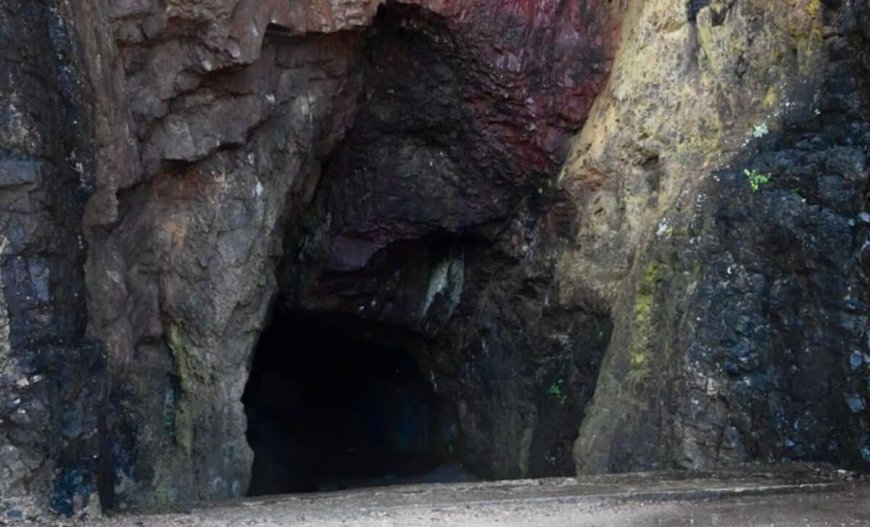
On September 12, 1940, an 18-year-old mechanic’s apprentice named Marcel Ravidat followed his dog Robot into a hole near a fallen tree outside Montignac in southwestern France. Four days later, he returned with three friends, Jacques Marsal, Georges Agnel, and Simon Coencas, widened the opening, and entered a cave system whose walls were covered with paintings of aurochs, deer, horses, ibex, and felines.
The boys had discovered Lascaux. According to the French Ministry of Culture’s archive, Ravidat first attempted to explore the opening alone but lacked tools. When he returned with the others, he slipped down a small vertical shaft, landed on a cone of scree, and slid to the bottom.
By the light of a hastily constructed lamp, they walked along a gallery some thirty metres long and saw the first paintings in what is now known as the Axial Gallery. They explored every part of the cave before halting at a black hole leading downward. The next day they returned with a rope. Ravidat lowered himself eight metres and discovered the scene of a man confronting a bison.

The boys alerted their teacher, Léon Laval, on September 18. Laval visited and recognized the images as prehistoric. Henri Breuil, a leading French archaeologist who had taken refuge in the region during the war, viewed the site two days later and confirmed its significance.
The cave contains approximately 2,000 images and 6,000 figures painted or engraved across nine sections, including the Hall of the Bulls, The Nave, and The Shaft. Some depictions exceed six feet in length and portray animals in dynamic motion. Researchers attribute the work to the Magdalenian culture and date it between 17,000 and 19,000 years before present. The artists used red ochre, hematite, charcoal, and manganese oxide. Evidence suggests they built scaffolding to reach ceilings and worked by firelight or oil lamps.
For 17,000 years, the cave remained sealed. Within two decades of its discovery, it was nearly destroyed by the people who came to see it.
What 1,200 Visitors per Day Did to a Sealed Cave
Lascaux opened to the public in 1948 following renovations delayed by the second world war. At its peak, 1,200 visitors passed through daily. Each visitor introduced carbon dioxide, water vapor, and temperature fluctuations into an environment that had been stable since the last ice age. Light exposure from lamps caused permanent pigment deterioration.
By 1963, green algae had appeared on the walls. The French government closed the cave.

The closure did not end the damage. In 2001, workmen performing maintenance on the air-conditioning system inadvertently introduced a Fusarium fungus. According to a 2003 report from ABC Science, the fungus reached walls, floors, and ceilings, though had not yet impacted the artwork at the time of reporting. Specialists deployed fungicides and later Polymexin, an antibiotic used to suppress associated bacteria. The biological balance remains unstable.
The original cave is now permanently closed to the public. Access is restricted to conservation staff and selected researchers.
You Can’t See the Real Thing. Here’s What You Get Instead
French authorities began developing alternatives almost immediately. In 1983, four years after Lascaux was declared a UNESCO World Heritage site, a partial replica including the Great Hall of the Bulls and the Painted Gallery was exhibited at the Grand Palais in Paris before moving to a structure near the original site. Lascaux II, as it became known, was created using the same techniques and naturally occurring materials as the original paintings.
Lascaux III, a traveling exhibition sponsored by the Musée d’Archéologie Nationale featuring replicas of The Nave and The Shaft, has toured internationally since 2012.
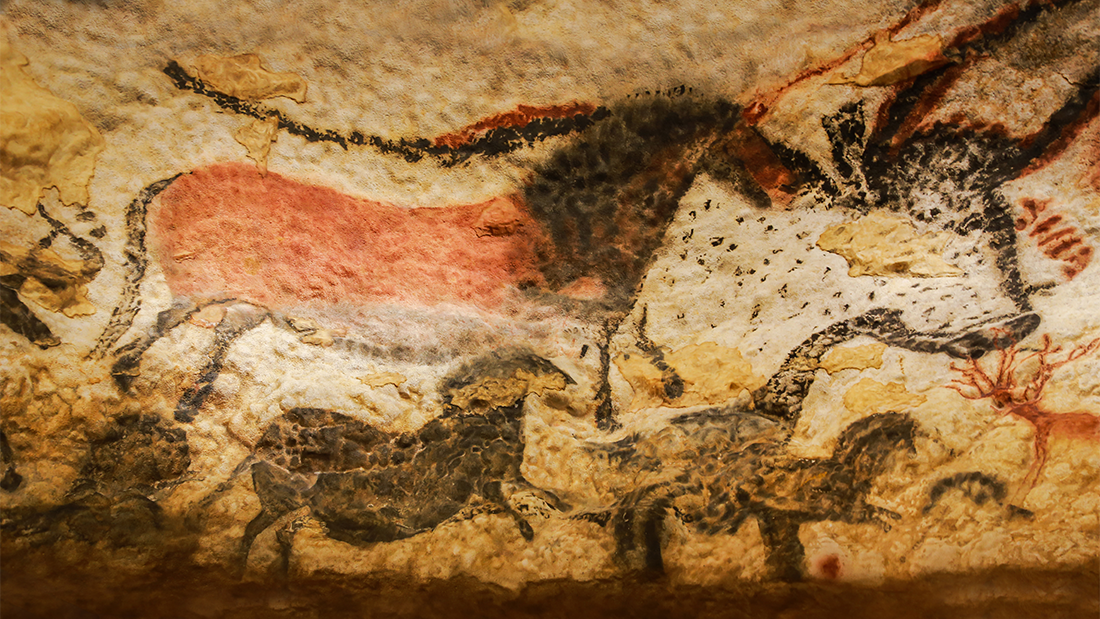
The most advanced reproduction, Lascaux IV, opened in 2016 at the Centre International de l’Art Pariétal. As reported by Mainly Museums, it integrates high-resolution 3D modeling and spatial sound to replicate the cave’s sensory environment. Dinah Casson, one of the lead designers, stated: “You see this, or you see nothing.”
The French Ministry of Culture also launched a digital tour approximately a decade ago that allows viewers to explore all nine galleries remotely via approximately three minutes of digitally rendered 3D film. The platform saw increased use during the COVID-19 pandemic.
So Why Did They Paint All Those Animals?
Scholars remain divided on the purpose of the images. Some are located deep within the cave in areas requiring artificial lighting and constructed pathways, suggesting intentional concealment or ceremonial use.
In an explainer published by The Conversation, art historian Frances Fowle pointed to the layering of images and remote placement as possible signs that the creation process itself carried symbolic value. Scenes such as the “birdman”, an ithyphallic man lying next to a disemboweled bison with a bird resting on an upright stick beside him, have been interpreted as shamanic or mythic, though other researchers caution against projecting modern frameworks onto prehistoric work.

Some researchers suggest the drawings functioned as hunting magic: by depicting animals, the artist believed they gained power over the prey they sought. Others argue the images served as territorial markers or narrative depictions of prehistoric life.
No written records exist. All interpretations remain speculative.
Seventeen Thousand Years Sealed, Eighty Years Off-Limits
The cave system has been a UNESCO World Heritage site since 1979. The French Ministry of Culture maintains that the original is off-limits to the public indefinitely. Conservation staff continue to monitor the site’s biological balance, which remains fragile following the 2001 outbreak.
Lascaux IV received approximately 300,000 visitors in 2024, according to figures published by the Dordogne tourism board. The Centre International de l’Art Pariétal plans to update its digital exhibition in late 2026 with higher-resolution scans of the Axial Gallery.
Enjoyed this article? Subscribe to our free newsletter for engaging stories, exclusive content, and the latest news.
What's Your Reaction?
 Like
0
Like
0
 Dislike
0
Dislike
0
 Love
0
Love
0
 Funny
0
Funny
0
 Angry
0
Angry
0
 Sad
0
Sad
0
 Wow
0
Wow
0