































Ham radio operators began hearing strange Persian numbers broadcast twice a day until they traced the signal to a U.S. base in Germany and realized it may be a coded wartime message

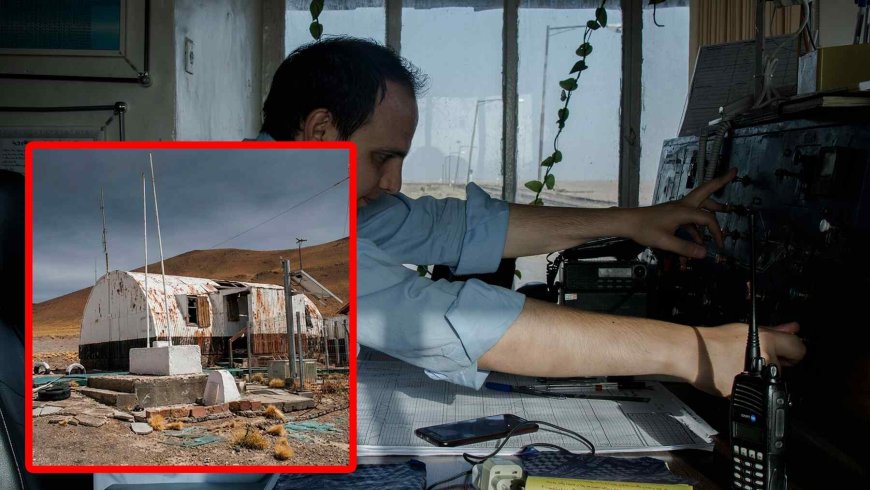
War has devastated the world throughout our long history.
Recent events in the Middle East have seen the price of filling up our cars and powering our homes skyrocket. Ham radio operators have detected a strange broadcast of Persian numbers that has been traced back to a U.S base in Germany.
How can this strange Persian signal paint a picture of current geopolitics?
How technology has revealed the secrets of warfare around the world
Warfare is a secretive part of modern-day society.
Obviously, nations do not want their military movements revealed; however, in recent years, we have seen open-source researchers using commercial satellite data to pinpoint several military structures and troop movements that were meant to remain classified.
The secrets that governments intended to keep hidden from the world have been made public, thanks in no small part to a few tech-minded activists.
The WikiLeaks development saw several worrying secrets revealed that paint a very dark picture of military operations indeed. This led to people like Snowden being forced out of the country to get as far away from the long arm of American law.
Nations have been developing astonishing new technological capabilities in recent years
The U.S is the overwhelming geopolitical giant that influences almost every aspect, and more crucially, the price, of nearly everything.
In recent years, several discoveries of odd radio signals that consist of only a few words or numbers have been made. The reasons for these strange ham radio signals have raised concerns over possible military actions across the world.
But it’s not all doom and gloom for our technological prowess.
China has developed several new maritime vessels that have been mapping the ocean floor. We know more about space than we do our own oceans, which the Chinese team is hoping to improve through their new ships.
Many of our latest technological advancements have emerged from military needs.
War is a defining factor for any nation, and the recent war in Iran has brought the world to the brink of chaos as the price of black gold hits unprecedented levels that were inconceivable only a few short months ago.
Several nations have deployed their national strategic petroleum reserves to alleviate concerns of not meeting demand, such as Japan.
Tech is making living in modern-day society challenging
Finding odd ham radio signals has become a regular occurrence in the current geopolitical climate.
Ham radio signals have been used as a primary, one-way form of communication for decades, allowing nations and their military to send cryptic messages across vast distances.
We now know that nearly every aspect of our daily lives is being tracked, with far-reaching implications for our personal privacy.
Meta recently lost a significant case in the U.S. that saw the company being held liable for developing addictive tech in its platforms. YouTube has also been found guilty of this latest tech worry.
An odd radio broadcast with Persian words has been explained
Amateur ham radio enthusiasts detected a strange broadcast of a synthesized Persian voice. Which they subsequently traced back to a U.S. military base in Germany. As we know, the American military has more bases around the world than any other nation.
These odd signals of Persian phrases are most likely being used to send one-way encrypted messages to intelligence assets in the Middle East as the war continues.
Several new technological developments have emerged that place personal privacy at the top of a very long list of priorities, but the detection of this strange Persian signal may prove that the US is communicating with assets in the region, in and around modern-day Persia: Iran.
What's Your Reaction?
 Like
0
Like
0
 Dislike
0
Dislike
0
 Love
0
Love
0
 Funny
0
Funny
0
 Angry
0
Angry
0
 Sad
0
Sad
0
 Wow
0
Wow
0