























From the United States to Australia, via Brazil and India: a world map showing the places where snakes have been observed devouring members of their own species

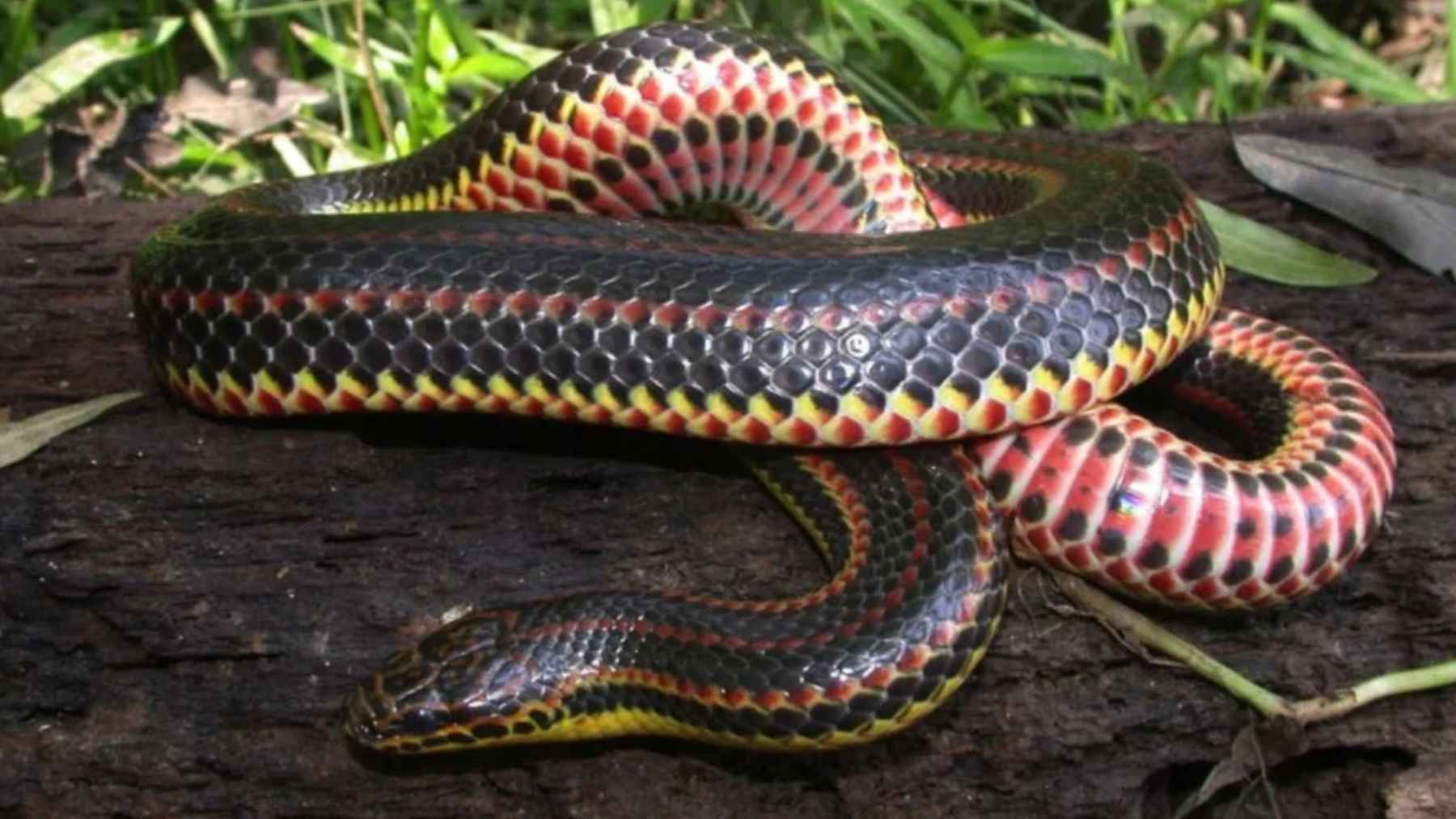
Snakes often look like lone hunters, slipping through grass or rocks with little interest in company. That’s why the idea of one snake eating another snake of the same species can feel shocking. In biology, that is called cannibalism, and it simply means eating your own kind.
Researchers recently pulled together 503 documented episodes of snake cannibalism from around the world, including events recorded in the wild and in captivity. The work was led by Bruna B. Falcão at the University of São Paulo, and it reports this behavior in at least 207 different snake species. So what turns a potential “neighbor” into a meal?
A century of records, finally gathered
To build the review, the team combed through almost 300 scientific publications, plus field notes and zoological records. Many of these observations were scattered across journals or tucked into short natural history reports.
The researchers treated each episode as a data point, not just a curiosity. They noted what kind of snakes were involved and, when possible, where the incident happened.
The final tally, 503 episodes, makes this one of the largest collections of documented snake cannibalism to date. The paper is titled Occurrence and evolution of cannibal behaviour in extant snakes, and it pulls together reports that span more than a century.
Where snake cannibalism shows up
The episodes span 55 countries and appear on nearly every continent where snakes live. The review highlights a strong presence of records in the United States, Australia, Brazil, and India.
The pattern also crosses many snake groups. The researchers found cases in 15 snake families, with most records clustered in Colubridae, Viperidae, and Elapidae. Colubrids, the most diverse snake family, account for about 29 percent of the documented cases.
There is a catch. Some countries have more snake research, more field surveys, and more published notes, which can inflate the number of recorded events. It raises an obvious question, are some snakes more cannibalistic, or are we simply watching them more closely?
Cannibalism is not one single behavior
One set of cases involves direct conflict, especially encounters between males. In these situations, one snake may kill and consume a rival during a fight or a tense face off.
Another common pattern is adults eating younger snakes of the same species. This can happen when juveniles are small enough to be swallowed, or when they share hiding places and hunting areas with larger individuals.
A rarer scenario appears during mating, when a female consumes a male. The review reports that boas account for some of the few documented cases of this kind of sexual cannibalism among snakes.
Food, opportunity, and a flexible diet
The simplest driver is food availability. When usual prey becomes scarce, another snake can become a reachable substitute, especially if two individuals cross paths in a limited space.
Diet flexibility also seems to matter. About half of the species with documented cannibalism are generalist feeders, meaning they eat a wide variety of prey instead of specializing on one type. That openness can make cannibalism look less like a “taboo” and more like opportunism.
Some families may be more likely to tip into cannibalism because they already hunt other reptiles. Elapidae, which includes cobras and kraits, represents close to 19 percent of the episodes in the review. If a snake routinely eats other snakes, cannibalism may be a smaller leap.
Size and jaws can decide what is possible
Across the dataset, predator size and prey size tend to rise together. Large snakes often consume relatively large individuals of their own species, not just tiny hatchlings.
In plain language, swallowing a meal is work. If a bigger target delivers more calories and the snake can handle it, cannibalism can fit into a normal feeding strategy instead of being a random accident.
There is also a mechanical limit that helps explain why some snakes have no records at all. The review notes no documented cannibalism in blind snakes, an ancient group with less mobile jaws that limits how wide the mouth can open. A separate 2021 University of Alberta report on snake jaw evolution helps explain why jaw flexibility is such a big deal for what many modern snakes can eat.
What these findings change, and what they do not
The headline is not that “most snakes are cannibals.” The clearer takeaway is that cannibalism appears across many branches of the snake family tree, and it has likely been underestimated.
For biologists, the review offers a clearer starting point for new questions. When does cannibalism help an individual survive, and when does it backfire by spreading disease or reducing future breeding? It also underlines how much depends on observers noticing and reporting rare events in the first place.
For people who keep snakes in captivity, the practical message is caution, not panic. Crowding, stress, and constant proximity can raise the odds of attacks, especially if food is limited or individuals differ greatly in size. In a home terrarium or a zoo enclosure, that means spacing, hiding spots, and feeding routines are not just “nice to have,” they can shape what happens next.
The main study has been published in Biological Reviews.
What's Your Reaction?
 Like
0
Like
0
 Dislike
0
Dislike
0
 Love
0
Love
0
 Funny
0
Funny
0
 Angry
0
Angry
0
 Sad
0
Sad
0
 Wow
0
Wow
0