





























For the First Time Since 1970, the Artemis II Crew Travels Behind the Moon and Sets a New Human Distance Record

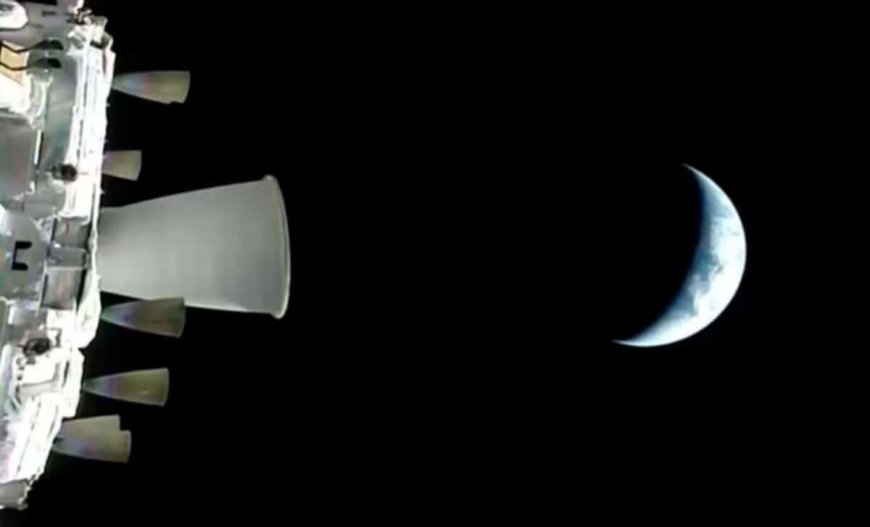
The Artemis II astronauts are pushing farther from Earth than any humans in history, surpassing a record that has stood since 1970. As Orion arcs around the Moon’s far side, the mission combines technical milestones with rare observational opportunities.
This flight marks a pivotal phase in NASA’s Artemis program, designed to return humans to lunar space and prepare for sustained exploration. The mission is a full-scale test of systems, trajectories, and crew operations beyond low Earth orbit.
Nearly 56 years after Apollo 13 set the previous distance record, Artemis II retraces a similar path while extending it, underscoring how legacy missions still shape present-day exploration.
A Historic Distance Record Beyond Apollo 13
At 1:56 PM ET, the Artemis II crew is scheduled to surpass the 248,655-mile record set by Jim Lovell, Fred Haise, and Jack Swigert during Apollo 13. According to the mission timeline published by the NASA, Orion is expected to reach a maximum distance of 252,757 miles from Earth later in the day.
This new record reflects the spacecraft’s ability to operate safely at greater distances, validating navigation, propulsion, and life-support systems under deep space conditions. Based on NASA’s mission details, this milestone occurs as the spacecraft continues its trajectory around the Moon’s far side.

Six Hours Of Lunar Tracking Without Contact
The flyby sequence includes about six hours of observations of the Moon’s far side, a region that remains out of direct view from Earth. As mentioned in the provided schedule, these observations begin at 2:45 PM ET and aim to support identification of future landing sites.
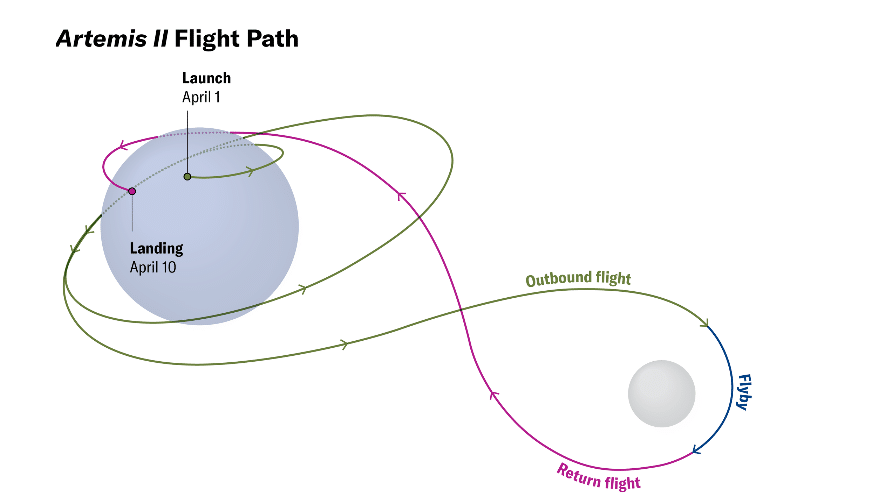
At 6:44 PM ET, Orion will pass behind the Moon, triggering a 40-minute communications blackout. During this phase, neither the Deep Space Network nor the Near Space Network can maintain contact. Communications are expected to resume at 7:25 PM ET once the spacecraft reemerges.
The spacecraft will also reach its closest approach to the Moon at 4,070 miles at 7:02 PM ET, a critical point in the trajectory that aligns with peak mission operations.
Earthrise, Eclipse, And The Road Back
As contact is restored, the crew will attempt to recreate the iconic Earthrise image first captured during Apollo 8 in 1968. As stated in mission notes, this moment is expected shortly after the spacecraft exits the Moon’s shadow.
The timeline also includes a solar eclipse visible from the crew’s perspective between 8:25 PM and 9:32 PM ET, as the Moon passes between the spacecraft and the Sun. Lunar observations conclude at 9:20 PM ET, closing out a dense sequence of events.
Following this flyby, Orion will begin a four-day return to Earth. As set out in NASA’s plan, splashdown is targeted for April 10 in the Pacific Ocean near San Diego.
Enjoyed this article? Subscribe to our free newsletter for engaging stories, exclusive content, and the latest news.
What's Your Reaction?
 Like
0
Like
0
 Dislike
0
Dislike
0
 Love
0
Love
0
 Funny
0
Funny
0
 Angry
0
Angry
0
 Sad
0
Sad
0
 Wow
0
Wow
0