























Debunking the lie that “Israel created Hamas”

by Mujamma Haraket,
The Palestinian Islamic organization Hamas is both an armed group and a political movement. It is supported by a large proportion of the Palestinian population, primarily due to its leading role in resisting Israel.
Despite its deep roots in Palestinian society, there is a pervasive, false narrative about the origins of Hamas that is widely promoted, particularly in the West – including among some sympathetic to the Palestinian national liberation cause.
That narrative goes like this: Hamas was encouraged or even created by Israel to undermine the secular Palestine Liberation Organization of the late leader Yasser Arafat.
But this narrative is a myth that emerged from both anti-Hamas elements within Palestinian society and by Israeli intelligence.
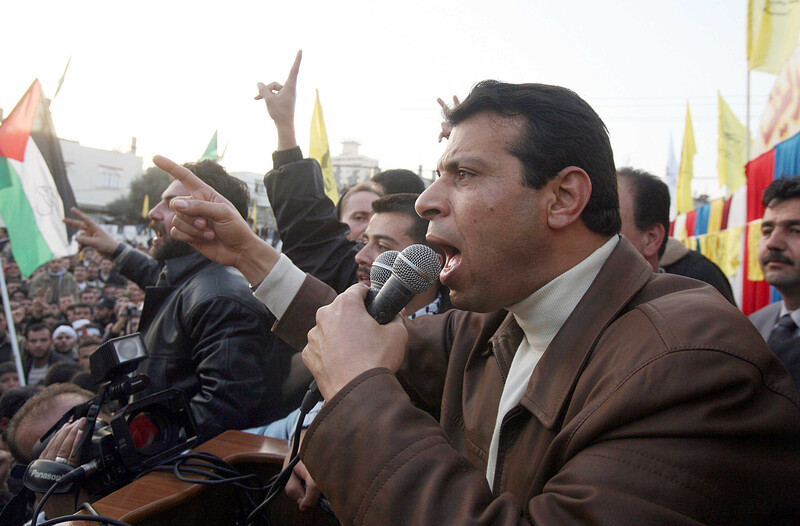
Among the former is Muhammed Dahlan who – ironically – later worked closely with the Central Intelligence Agency and was instrumental in the failed, US- and Israel-backed coup against the Hamas government that was elected by the population in 2006.
The main claims to this narrative – and a more recent iteration used as a cudgel by opponents of Israeli Prime Minister Benjamin Netanyahu – fall apart upon closer scrutiny.
Historian Khaled Hroub, a prominent expert on Hamas, explained to The Electronic Intifada why the myth is baseless.
Long and layered history
The narrative that Israel created or supported, whether directly or indirectly, Hamas has a long and layered history. One of the earliest influential instances of this narrative in the English-language media is a March 1981 report by David K. Shipler for The New York Times. Shipler quotes Yitzhak Segev, then Israel’s military governor of Gaza, stating that “the Israeli government gave me a budget and the military government gives to the mosques.” Shipler adds, without explicitly attributing these claims to Segev, that these “funds are used for both mosques and religious schools, with the purpose of strengthening a force that runs counter to the pro-PLO leftists.” In a later edition of his 1986 book Arab and Jew, which won the Pulitzer Prize for nonfiction, Shipler synthesized Segev’s remarks by stating that Segev told him that Israel had “financed the Islamic Movement as a counterweight to the PLO and the communists.” Shipler parenthetically remarks that this funding “helped nourish the seeds of Hamas.” Since then, the “counterweight” line has been attributed not to Shipler but to Segev, whose position as military governor lent this putative narrative credibility. The misattribution has been made by numerous publications and commentators, including The Intercept and analyst Alon Ben-Meir. Another early article in the American press that popularized this narrative is a 1992 piece for the Los Angeles Times by Yossi Melman, a longstanding opponent of Netanyahu, titled “Hamas: When a Former Client Becomes an Implacable Enemy.” This was compounded by Andrew Higgins’ 2009 article for The Wall Street Journal titled “How Israel Helped to Spawn Hamas.” That piece quotes Avner Cohen, an Israeli official responsible for “religious affairs” in Gaza at the time of Hamas’ ascendance, who remarks that “Hamas, to my great regret, is Israel’s creation.” Paraphrasing Cohen, Higgins states that Israel “for years tolerated and, in some cases, encouraged” the Islamic Movement in Gaza as a supposed counterweight to the secular Palestine Liberation Organization. As this article will demonstrate, the actual history is much more complex and the facts do not support the “Israel created Hamas” myth. Yet the myth proliferated after Hamas’ surprise offensive on 7 October 2023, code-named Operation Al-Aqsa Flood. Mainstream and establishment media have also echoed these claims, including Mark Mazzetti and Ronen Bergman’s widely read December 2023 article for The New York Times titled “‘Buying Quiet’: Inside the Israeli Plan That Propped Up Hamas.” Around the same time, CNN also amplified the related narrative that a Qatari cash pipeline to Hamas-governed Gaza was not only approved but championed by Netanyahu, who, according to CNN, was criticized by some of his coalition partners “for being too soft on Hamas.” Zionist outlets have used this narrative as a cudgel against Netanyahu, who they claim was overly permissive in his handling of Hamas. Tal Schneider, a political correspondent for The Times of Israel, averred in an op-ed published on 8 October 2023 that Israel’s longstanding policy had “propped up” Hamas, thereby effectively paving the road for Hamas’ operation the previous day. Josep Borrell, the former European Union foreign policy chief, remarked in 2024: “Yes, Hamas was financed by the government of Israel in an attempt to weaken the Palestinian Authority led by Fatah.” Not only does Borrell claim that Israel allowed for Qatari funding to Gaza, but he also implies that this amounted to Israel financing Hamas. This misrepresentation of history is unsubstantiated and misleading.Political rivalry catalyzed myth
The earliest insinuations of the “Israel created Hamas” myth come from figures close to Israel’s intelligence and military establishment, including Segev and his aforementioned remarks about the Israeli government allocating funds to the mosques during the nascent Islamic Movement’s mosque-building phase. In his book Hamas: Political Thought and Practice, historian Khaled Hroub notes that Israeli assessments and interpretations concerning the ascendance of Palestinian Islamism were varied and sometimes contradictory. Some viewed the rise of Islamists as an Israeli “plot,” while “others posited that Israeli policy merely ignored the phenomenon; still others asserted that the Israeli stance was absolutely and implacably hostile and aimed to repress the phenomenon.” But the myth was cemented by Hamas’ rivals in the Palestinian political arena – chiefly Yasser Arafat, the head of the Palestine Liberation Organization, whose ideological opposition to Hamas is rooted in the founders of the secular Fatah party’s splitting from the Palestinian Muslim Brotherhood (whose existence predates that of the state of Israel) in the 1950s. In his book, Hroub observes that “the PLO information apparatus wholeheartedly adopted [the Israeli] interpretations and worked to propagate them,” favoring the interpretation declaring “Hamas to be merely a creation of Israel to weaken the PLO.”
Israeli permits
A key facet of the “Israel created Hamas” myth is rooted in this phase of institution building from which Hamas emerged. “Two main Islamist hubs are usually mentioned in this context,” according to Hroub: the Islamic Center and the Islamic University of Gaza, founded in 1973 and 1978, respectively. The fact that Israel issued a permit to the Islamic Center six years after its founding, allowing it to operate above board, seeded the myth that Israel not only consented to the formation of Hamas but encouraged it. In reality, the Islamic Center’s permit was temporarily rescinded soon after its issuance and only reissued after a lengthy arbitration process. Additionally, as Mishal and Sela acknowledge, Yassin and his Palestinian Muslim Brotherhood colleagues submitted “repeated requests” for licensing to the Israeli military administration beginning in 1970, but were rejected. Indeed, as the authors write, these rejections were “not least because of [Israel’s] opposition to traditional Islamic elements.” Meanwhile, the Islamists’ secular rivals and their associations were beholden to the same Israeli colonial authorities, from which they also received permits to operate legally during this period – as was Birzeit University near the West Bank city of Ramallah in 1978.Useful cudgel
Yet the misleading claim that Hamas readily received permits from a forthcoming Israel has proven enduring and continues to be a useful cudgel wielded by the resistance movement’s opposition. It has its roots in a 1985 courtyard debate at the Islamic University of Gaza (IUG) between a young Yahya Sinwar, belonging to the Palestinian Muslim Brotherhood’s student activist circle, the Islamic Bloc, and Fatah’s Muhammad Dahlan. As Nihad al-Sheikh Khalil recounts in his 2011 book The Muslim Brothers Movement in the Gaza Strip (1967–1987), during the years 1984-1986, the student activists of the Islamic Bloc at IUG participated in a number of “discussions and debates” with Fatah students, which “took place spontaneously within the university courtyards.” Citing an interview with Subhi al-Yazji, currently a professor at IUG, al-Sheikh Khalil conveys that these discussions revolved around the Palestinian cause and armed struggle. “The most notable” such debate, al-Sheikh Khalil writes, was conducted “between Yahya Sinwar and Muhammad Dahlan in 1985,” with the conversation focusing “on the exchange of accusations between the two sides [i.e., Fatah and the Islamic Movement].” During their discussion, Sinwar condemned the Fatah leadership’s “peace overtures” while Dahlan “reproached the Muslim Brothers for not carrying out armed struggle against Israel and for operating the Islamic Association with a permit from the occupation.” Over the subsequent decades, Dahlan would continue articulating different versions of this claim, including in a November 2015 interview with Al Jazeera in which he said that Hamas “cooperates with Israel” indirectly by securing Gaza’s boundary with Israel. Ironically, Muhammed Dahlan later began to work directly with the CIA. He collaborated with the US and Israel in an effort to reverse the results of the Palestinian Legislative Council elections in 2006, in which Hamas won a majority of seats, contrary to the expectations of the Palestinian Authority’s Western patrons. These efforts resulted in a short-lived civil war between Fatah and Hamas in Gaza and the West Bank in 2007. Coup efforts by Fatah were decisively crushed in Gaza with Dahlan forced to flee, but were successful in the West Bank where Mahmoud Abbas’ Palestinian Authority continues to play a subcontractor role to Israel and prevents new elections from taking place. False claims about cooperation with Israel quickly snowballed, gaining traction amongst the detractors of the Islamic Movement, and, after it came into being, Hamas. Following Arafat’s excoriating aforementioned public remarks, the “permits narrative” was strategically instrumentalized by both the Hebrew press and the Shin Bet. As Hroub observes, this served “Israel’s strategy of firmly establishing that its Arab and Palestinian foes are not capable of carrying out any undertaking that may influence events outside Israel’s masterful control.” Over the following decades, this narrative developed into the received view within much of Western academia, bolstered by political scientist Beverley Milton-Edwards’ influential 1996 book Islamic Politics in Palestine. Linguist and political commentator Noam Chomsky also repeated the claim in 2010, saying that “in its early days, Israel supported Hamas as a weapon against the secular PLO.” This narrative allowed for leaders in Fatah to besmirch Hamas while the former backtracked on the tenets of the 1968 Palestine National Covenant by rescinding armed struggle.Benign Hamas
A claim related to the “Israel created Hamas” myth argues that, before the first intifada, Yassin and his group were viewed as non-threatening to the occupation and treated as such. This claim stems from Israel’s arrest of Yassin in 1984 following the discovery of a weapons cache in Gaza. It rests on the perception that the Palestinian Muslim Brotherhood, which fought against Zionist forces before the conquest of Palestine in 1948, had abandoned armed resistance after the group launched a series of guerrilla raids against Israel from Jordan between 1968-1970 in the wake of the 1967 War and subsequent occupation of the West Bank and Gaza Strip. Hroub writes in his history of Hamas that the raids were initiated by the broader Arab leadership and opposed by the Gaza branch, which viewed the idea as “futile.” In the decade following the raids, the Palestinian Muslim Brotherhood focused on recruitment and deferred confrontation with Israel “under the conviction that they were preparing a new generation,” according to Hroub. Given this retreat from armed resistance during the 1970s, conventional wisdom held that any weapons possessed by Yassin could not have been intended for armed resistance against Israel and were likely intended to be used against Palestinian rivals. This is, however, at odds with the actual history.
“Israel funded Hamas”
The “Israeli created Hamas” myth became more prevalent following 7 October 2023, appended by the novel claim that Netanyahu enabled the Hamas offensive by allowing Qatar to transfer funds to Gaza. This telling rests on a misrepresentation of the protracted 2018-2019 Great March of Return negotiations between Hamas and Israel, which yielded an Israeli concession to allow Qatar to pay the salaries of civil servants in Gaza, among other measures to ease economic stagnation, to provide humanitarian aid and to repair war-damaged infrastructure, in exchange for Hamas tamping down the intensity of the protests along the Israel-Gaza boundary. Avigdor Liberman, then Israel’s defense minister, resigned in protest from Netanyahu’s government in November 2018, in part due to his opposition to the Qatari funding. Naftali Bennett, Israel’s education minister at the time, charged that Netanyahu was effectively paying Hamas “protection money” in order to purchase calm.
Busted myth
It is a fallacy to state that Hamas is a creation of Israel or that Israel encouraged the formation of the group. “Hamas is the outcome of a deeply rooted organization within the national Palestinian context, whose process of formation evolved over more than half a century,” Khaled Hroub told The Electronic Intifada. It emerged “within a broader regional ideological transformation (the rise of Islamism).” “To reduce this historical movement and emergence to a reductionist claim that it was created by Israel, is simply nonsense,” Hroub added. To acknowledge that Israel exploited “the existence of Hamas to further divide the Palestinians and facilitated control over them, is one thing.” “To claim that Israel invented or created Hamas is totally another, if absurd, thing,” Hroub said. Israel and its security apparatus may have at times been happy for the myth to persist, viewing it as preferable to accepting “the fact that this organization emerged and became strong against Israel’s will and its omnipresent intelligence.” By perpetuating the myth, Israel preserves its image of omnipotent superiority and reinforces “the belief, and fear, that everything that happens in Palestine, and perhaps in the region, is foreknown by them,” according to Hroub. Indeed, the persistence of the myth has facilitated myriad media commentators to readily claim that Operation Al-Aqsa Flood was both known in advance to the Shin Bet and permitted to transpire such that Israel could exploit it as an opportunity to resolve the so-called “Gaza question” and its concomitant demographics problem. Such claims are the logical endpoint of the “Israel created Hamas” narrative. Unfortunately, otherwise discerning minds have repeated these myths, with the adage that “Israel funded Hamas” becoming a consensus view, foreclosing the conceptual possibility of the Palestinian resistance’s functioning as an independent political actor with self-sufficiency and agency. Dispossessing Palestinians of their agency is a major plank in Israel’s psychological warfare campaign. But the military offensive led by Hamas on 7 October 2023 forever destroyed the myths of Israeli invincibility and omniscience – a reality underscored by Iran’s devastating retaliation against US and Israeli attacks. Mujamma Haraket is a translator and academic researcher in political philosophy with a specialization in non-state actors, political Islam and the history of the Islamic Resistance Movement (Hamas) in particular. The author’s scholarly writing has been published in academic forums and in forums like Orinoco Tribune and Liberated Texts.What's Your Reaction?
 Like
0
Like
0
 Dislike
0
Dislike
0
 Love
0
Love
0
 Funny
0
Funny
0
 Angry
0
Angry
0
 Sad
0
Sad
0
 Wow
0
Wow
0