























California is painting highway stripes orange and white in construction zones, and the strange color change is already making drivers slow down almost without realizing it

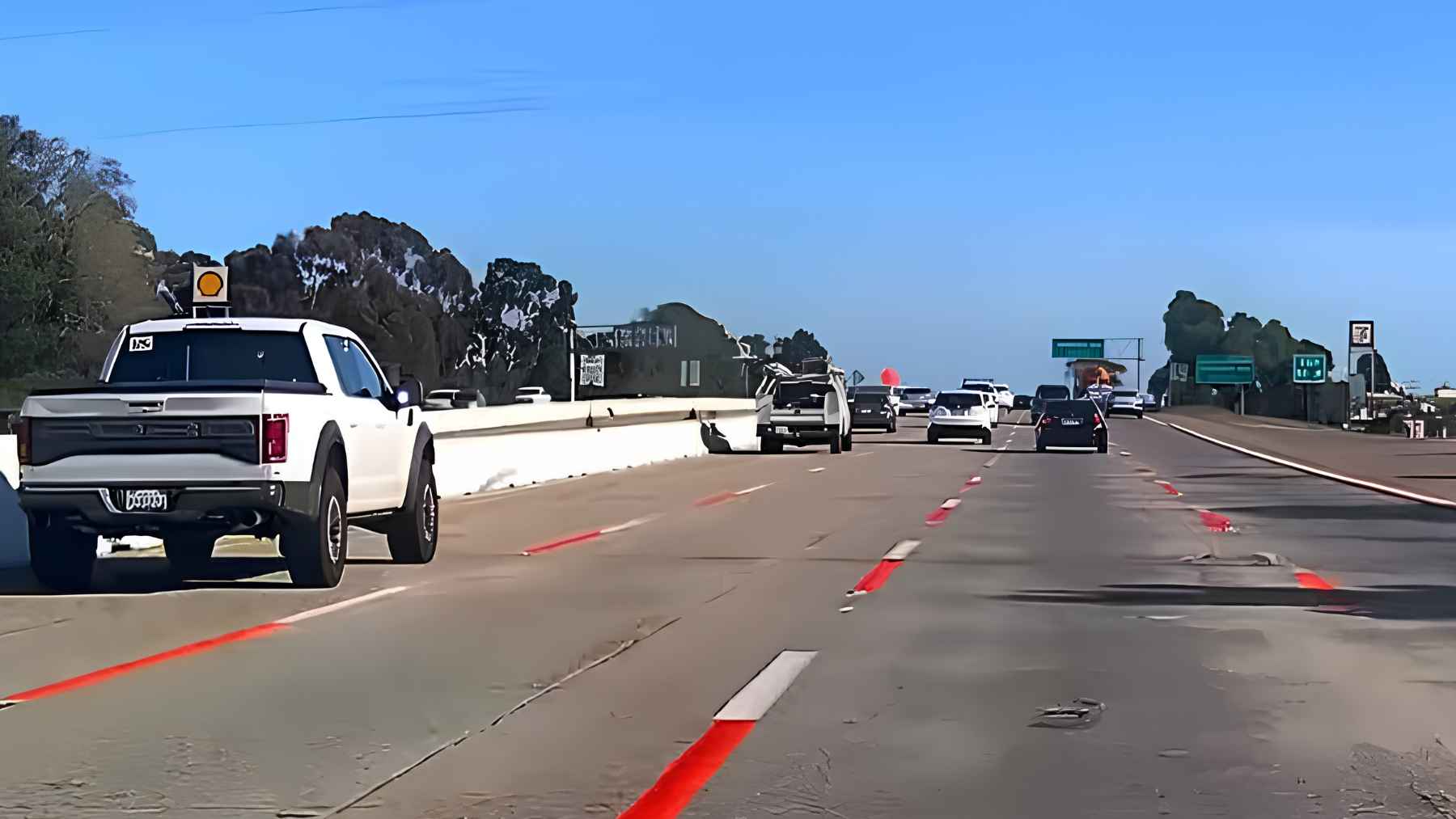
Have you seen the orange stripes on the freeway yet? If you drive on Interstate 5 in northern San Diego County, you may have spotted lane lines that look like they were traced with an orange highlighter. Caltrans and SANDAG are piloting temporary orange contrast striping so drivers instantly register that a construction zone has different rules.
The stakes are not abstract. In 2023, work-zone crashes killed 899 people in the United States, including 40 pedestrians listed as “at work,” and that toll has stayed high for years. A few inches of bright color will not fix everything, but it can still save lives.
The California pilot that drivers are noticing
The test is on I-5 between Palomar Airport Road in Carlsbad and State Route 78 in Oceanside, roughly 4.1 miles in each direction where lanes shift during construction. The orange is paired with the standard white striping so the lane path stands out even when the pavement is scarred or old markings are still faintly visible. (sandag.org)
California is treating this as an experiment for a reason. Caltrans has said orange is not an approved pavement delineation color under the national Manual on Uniform Traffic Control Devices, so it sought federal permission to test whether the contrast actually improves safety and driver behavior.
The safety numbers behind the paint
Most work-zone danger looks ordinary right up until it is not. Narrow shoulders, temporary lane drops, and late-night glare can turn a small drift into a barrier strike, or worse, into a vehicle entering a work area where crews are only a few feet away.
National crash reporting compiled by the Work Zone Safety Information Clearinghouse counts 818 fatal work-zone crashes and 899 total deaths in 2023, with trucks involved in hundreds of fatalities. When 40 of the people killed are “at work” pedestrians, it is a reminder that the person behind the cones is not just part of the scenery.
What the research says so far
A 2023 Purdue University-led report found that orange pavement markings in work zones were associated with a 74% reduction in lane departure crashes at the tested sites, along with an average speed reduction of about 4 miles per hour.
The same research reported that contrast markings on regular roadways were linked to a 42 to 44% reduction in lane departure crashes, which can mean fewer sirens and fewer road closures.
California’s own results are now coming into focus through a Caltrans funded multi-year project. A 2025 final report archived by the U.S. Department of Transportation’s National Transportation Library describes two driver surveys with 1,185 and 531 responses that favored the orange striping, notes slightly reduced average speeds in one stage, and reports that lane keeping did not appear to be negatively affected.
Why orange beats white in messy work zones
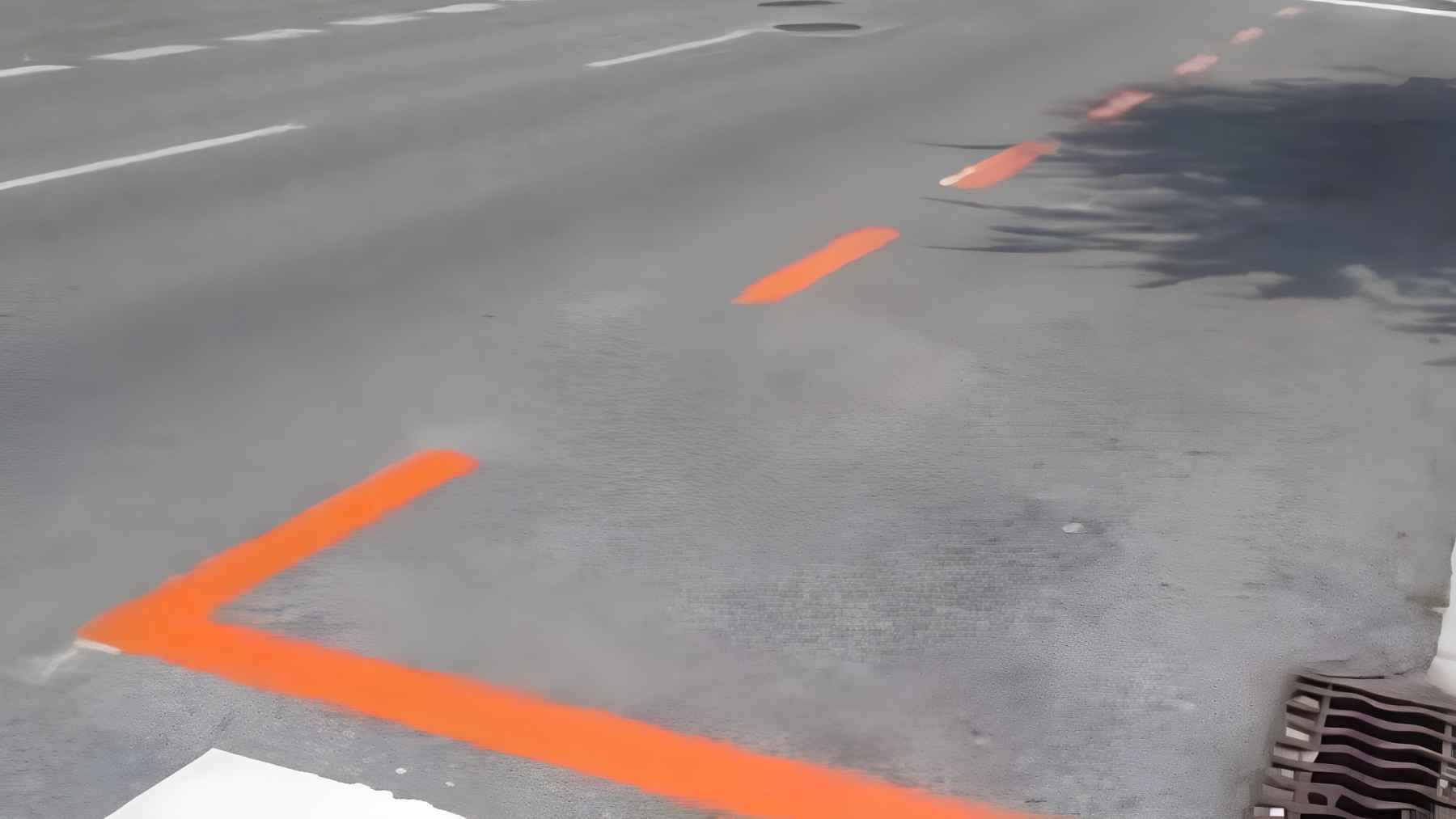
Work zones can leave “ghost lines,” faint remnants of old striping that still catch your eyes and headlights. Caltrans has argued that orange contrast helps cut through that visual clutter by matching the color language of work zones, the same orange used on signs, cones, and drums, so the message lands fast.
There is also a practical point that anyone who has driven through a lane shift in the rain understands. Agencies track durability, color, and retroreflectivity because if the paint fades too quickly, the safety benefit can fade with it, especially after dark when visibility is already working against you.
Humans today and software tomorrow
These stripes are aimed at human attention, but they are arriving as cars become more automated. The Purdue report tested detection of orange markings using a small sample of vehicles with Level 1 and 2 automation features and reported a 100% detection rate in that sample, while also examining how “ghost markings” can complicate the road scene.
Caltrans is studying that machine vision angle directly on I-5, using cameras and algorithms to measure lane position, speed, and lane departures before and after installation. In plain terms, the goal is to make the road readable for the person at the wheel and for the software quietly helping them stay centered.
The hidden air pollution angle
Work zones are also a congestion problem, and congestion is an emissions problem. The Federal Highway Administration has estimated that work zones account for nearly 24% of nonrecurring congestion, about 482 million vehicle-hours of delay, which means millions of hours of extra fuel burned and extra battery charge used in stop-and-go traffic.
Environmental modeling summarized by the Work Zone Safety Information Clearinghouse found that under heavily congested work-zone conditions, fuel consumption and greenhouse gas emissions can rise by roughly 85% compared with free flow.
Add in the U.S. Department of Energy estimate that personal-vehicle idling wastes about 3 billion gallons of fuel per year and creates around 30 million tons of carbon dioxide, and even small improvements in traffic flow start to look like climate action hiding in plain sight.
How to drive when you see orange stripes
If you are unsure what the markings mean, assume the safest interpretation. Slow down, follow the current lane path, avoid last-second lane changes, and give extra space to the vehicles in front of you, because lane shifts are where mistakes tend to happen.
Caltrans and SANDAG have used the pilot to reinforce reduced speeds in the work zone, including reminders to drive 55 mph through the I-5 segment. And when the work ends, the stripes are meant to go with it, leaving behind a lesson that sometimes the simplest fixes, like a brighter line, can do a lot of good.
The report was published on ROSA P from the U.S. Department of Transportation National Transportation Library.
What's Your Reaction?
 Like
0
Like
0
 Dislike
0
Dislike
0
 Love
0
Love
0
 Funny
0
Funny
0
 Angry
0
Angry
0
 Sad
0
Sad
0
 Wow
0
Wow
0