

























Buried for 2 Billion Years, Miners Pulled a Rare 158-Carat Yellow Diamond From the Arctic Worth Tens of Millions


In March 2025, workers at one of North America’s most remote mining operations pulled a rough yellow diamond from the frozen ground of Canada’s Northwest Territories. It weighed 158.20 carats and dated back roughly two billion years. Rio Tinto announced the find on April 1, confirming it as one of the largest gem-quality yellow diamonds ever recovered in Canada.
The mine is called Diavik. It sits on a small island in Lac de Gras, about 200 kilometers south of the Arctic Circle, reachable only by ice road in winter and floatplane in summer. It runs entirely off the public power grid. That a diamond of this quality came out of such a place gives the find its particular weight.
Less Than One Percent: The Odds Behind a Yellow Diamond
Diavik does not produce many yellow diamonds. Less than one percent of the mine’s total output carries any yellow coloration, with the overwhelming majority being white gem-quality stones. The 158.20-carat diamond is only the fifth yellow diamond weighing more than 100 carats recovered at Diavik in 22 years of operation.
The color itself comes down to chemistry. Yellow diamonds form when nitrogen atoms become trapped inside the crystal lattice during growth. When those atoms cluster together rather than scatter individually, they absorb blue light and the stone appears yellow. A diamond carrying that signature formed under conditions that no longer exist anywhere on Earth.
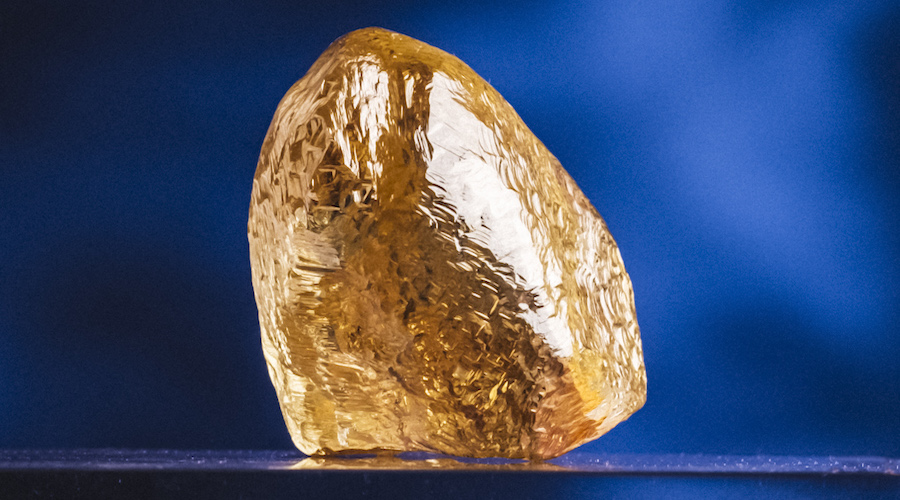
Matt Breen, Chief Operating Officer of Diavik Diamond Mines, called the stone “a miracle of nature and testament to the skill and fortitude of all the men and women who work in Diavik’s challenging sub-Arctic environment.”
How It Compares to the Biggest Diamonds Ever Found in Canada
It is not the largest stone Diavik has ever produced. That record belongs to a 552.74-carat yellow diamond recovered at the same mine in 2018, described at the time as roughly the size of a chicken egg and confirmed as the largest diamond found in North America. Before that, the record-holder was Diavik’s own 187.7-carat “Foxfire,” unearthed in 2015.

The new stone fits into a short list of the most significant diamonds the continent has produced. Diavik’s output is marketed in part on traceable Canadian origin, a distinction buyers increasingly care about. Patrick Coppens, General Manager of Sales and Marketing for Rio Tinto’s diamonds business, said the company looks forward to “following the onward journey of this very special diamond,” meaning evaluation, cutting, and eventual sale.
The Last Great Find From a Mine That Was Already Closing
Diavik’s original plan called for closure in 2025. Rio Tinto extended it by investing in underground production at one of the mine’s four kimberlite pipes, known as A21. Commercial production there began in late 2024 and is expected to carry operations into early 2026. The 158.20-carat yellow diamond was recovered during that final run.
One detail worth noting: Rio Tinto described the stone as “two billion years old,” but a geologist who commented in Mining.com’s coverage pointed out that the kimberlite pipe itself is far younger, roughly 50 million years old, and that the two-billion-year figure refers to the surrounding Precambrian bedrock.
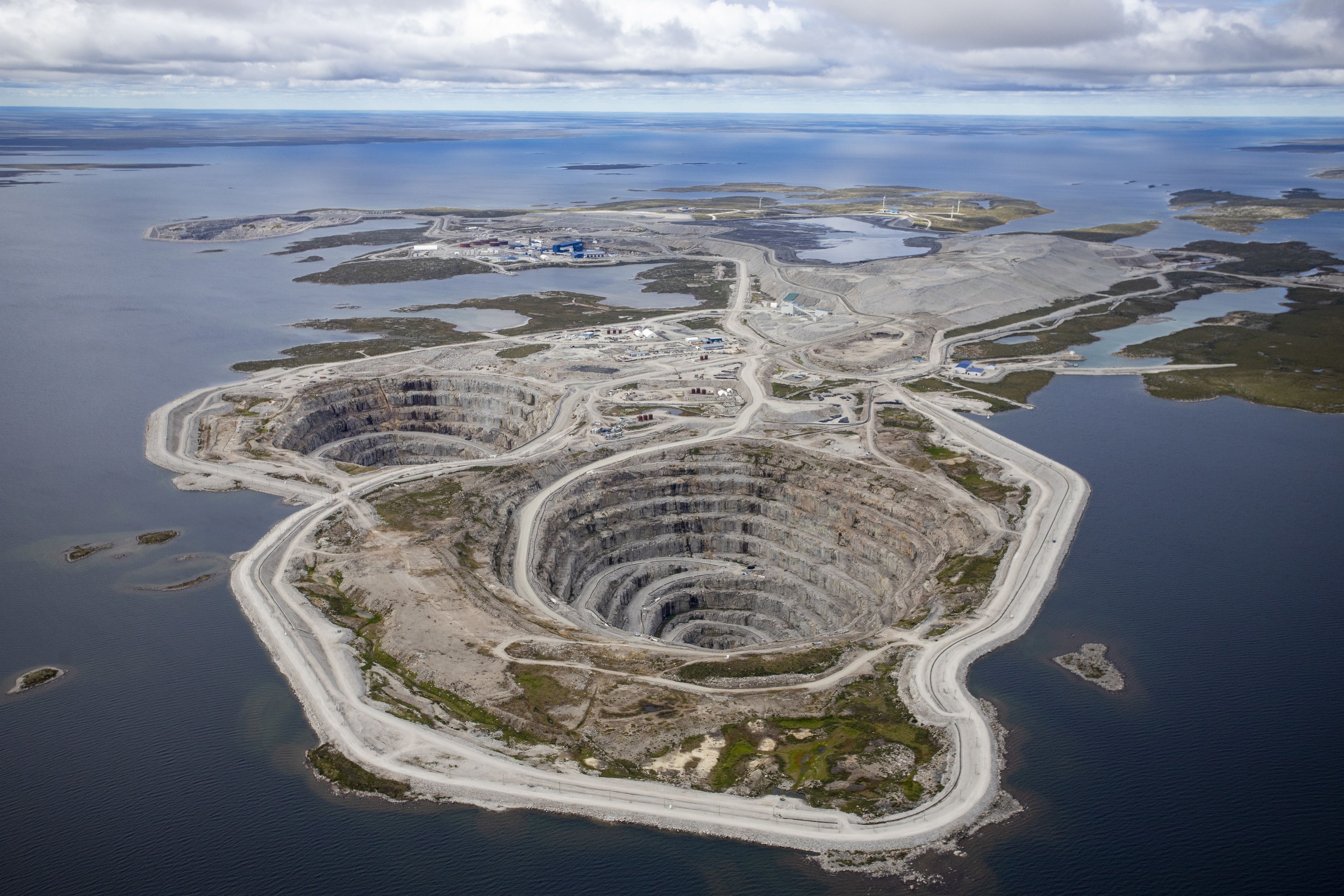
Published estimates for the Diavik kimberlites range as old as 1.27 billion years. Rio Tinto’s description reflects the geological formation the diamond originates from, not the pipe that carried it to the surface.
No Price, No Buyer, and a Cut That Will Cost Half the Stone
Diavik has run off-grid since it opened. Since 2012 the site has used a hybrid wind-diesel power system; in 2024 it completed a solar power plant on site, reducing diesel dependence in one of Canada’s most environmentally sensitive regions.
No valuation for the 158.20-carat yellow diamond has been made public, and Rio Tinto has named no buyer. Cutting a rough stone of this size is itself a long process. Typically more than half the original weight is lost as craftspeople work to maximize both the size and depth of color in the finished gem.
Diavik formally closed on March 24, 2026, making the 158-carat yellow diamond the last major find of the mine’s 22-year run.
Enjoyed this article? Subscribe to our free newsletter for engaging stories, exclusive content, and the latest news.
What's Your Reaction?
 Like
0
Like
0
 Dislike
0
Dislike
0
 Love
0
Love
0
 Funny
0
Funny
0
 Angry
0
Angry
0
 Sad
0
Sad
0
 Wow
0
Wow
0