




























Before Cities Existed, Mosquitoes Were Already Feeding on Humans More Than a Million Years Ago

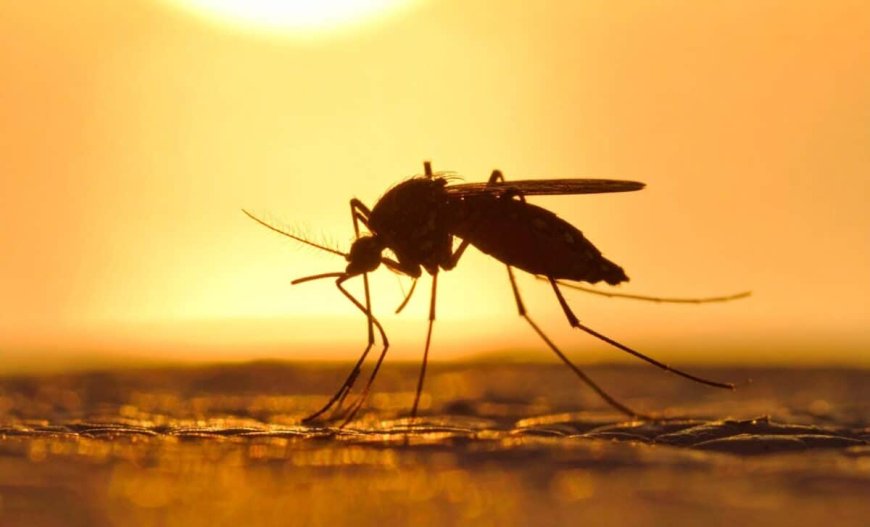
Mosquitoes may have started biting early humans between 2.9 and 1.6 million years ago, according to new genetic evidence published February 26 in Scientific Reports. The findings suggest that our long and uneasy relationship with these insects began deep in prehistory, far earlier than previously assumed.
By analyzing the DNA of 38 modern mosquitoes, researchers traced the evolutionary moment when a group of rainforest insects shifted from feeding only on nonhuman primates to targeting early members of the human lineage.
When Mosquitoes Chose Humans
As stated in the study, the team examined 11 species within the Anopheles leucosphyrus group, chosen because together they represent the group’s broader genetic diversity. Some of these species are “anthropophilic,” meaning they prefer feeding on humans, while others feed exclusively on nonhuman primates, mostly monkeys, or switch between the two.
Among the human-biting species are Anopheles dirus and Anopheles baimaii, both known vectors of malaria. By comparing mutation rates across their genomes, the researchers reconstructed an evolutionary family tree, allowing them to estimate when the shift toward humans first occurred.

Sundaland: The Birthplace Of A Biting Adaptation
The genetic data also point to a location: Sundaland, a now-submerged landmass whose remnants include the Malay Peninsula, Borneo, Sumatra, and Java. This region likely served as the setting for the first adaptation to human blood.
The leucosphyrus group appears to have been the earliest mosquito lineage to specialize in biting humans. Other mosquito groups developed this preference much later, within the last 10,000 years.
“We were not expecting this group to have originated so long ago,” said evolutionary biologist Catherine Walton of the University of Manchester in England. “The most parsimonious explanation is that it was in response to these early hominins arriving.”
From Jungle Hosts to Human Lineage
Before encountering humans, these mosquitoes fed exclusively on nonhuman primates high in the rainforest canopy. This feeding pattern was their “ancestral behavior,” and previous studies suggest that biting nonhuman primates began more than 3.6 million years ago.
Archaeologists continue to debate when the first human ancestors left Africa and spread into Asia. The mosquito genetics provide an independent line of evidence, pointing to a migration around 1.8 million years ago. That timeline aligns with recent research dating the oldest Homo erectus skulls in China to roughly the same period.
Walton noted that H. erectus would have needed to live in Southeast Asia in large numbers to drive such a lasting evolutionary shift in mosquitoes, which seems to have been based on early humans’ distinct odor.
“You need an abundance of Homo erectus to really get an evolutionary change taking place,” Walton said.
Today, only about 100 of the estimated 3,600 modern mosquito species regularly bite humans. Even so, their evolutionary turn toward our ancestors more than a million years ago has shaped the course of human history ever since.
Enjoyed this article? Subscribe to our free newsletter for engaging stories, exclusive content, and the latest news.
What's Your Reaction?
 Like
0
Like
0
 Dislike
0
Dislike
0
 Love
0
Love
0
 Funny
0
Funny
0
 Angry
0
Angry
0
 Sad
0
Sad
0
 Wow
0
Wow
0