





























A Team in China Just Redated the Oldest Human Skulls, And Discovered a New Identity

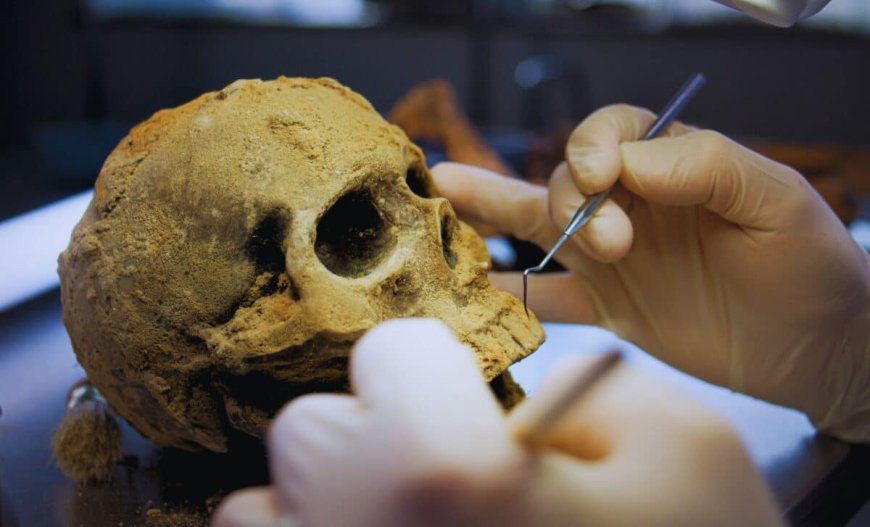
Two fossil skulls discovered in Yunxian, northern China, are now dated to approximately 1.77 million years ago, making them the oldest known hominin remains in eastern Asia. The new findings overturn recent claims linking the skulls to Denisovans and instead identify them as early Homo erectus.
The revised age significantly alters the timeline of human dispersal across Eurasia. If correct, it shows that Homo erectus reached East Asia far earlier. and possibly faster than previously thought.
The new dating, published in Science Advances in 2026, provides what researchers describe as a firmer chronological anchor for understanding early hominin presence in China.
Yunxian Found to Be 1.77 Million Years Old After New Dating
The updated age comes from isotopic analysis of sediment surrounding the skulls. Led by paleoanthropologist Hua Tu of Shantou University, researchers measured the ratio of aluminum-26 to beryllium-10 in quartz grains from the fossil-bearing layer.
According to the study in Science Advances, the data indicate that the individuals lived around 1.77 million years ago. That places them only about 130,000 years after Homo erectus first appeared in Africa roughly 1.9 million years ago.

Until now, the oldest widely accepted hominin fossils outside Africa came from Dmanisi Cave in Georgia, dated between 1.85 and 1.77 million years. The Yunxian fossils now appear nearly contemporaneous with those Georgian remains, suggesting that hominins occupied both western Eurasia and central China within a relatively narrow time frame.
Previously, the next-oldest Homo erectus fossils in China were the 1.63-million-year-old remains from Gongwangling, located north of Yunxian. That gap had implied a slower eastward expansion. The new date compresses that timeline.
The Denisovan Hypothesis Takes a Hit
The revised age directly challenges a September 2025 study that proposed the Yunxian skulls were close ancestors of Denisovans, also known as Homo longi.
That earlier research digitally reconstructed one of the Yunxian skulls and concluded it resembled a 146,000-year-old cranium from Harbin, which a recent DNA study identified as Denisovan. Based on paleomagnetic dates then available, the authors argued that the Yunxian individuals lived not long after the Denisovan branch split from our lineage. They even proposed a family tree in which modern humans and Denisovans were more closely related to each other than either was to Neanderthals.

The new date makes that scenario unlikely. According to paleoanthropologist John Hawks of the University of Wisconsin, who was not involved in the recent study but spoke to Ars Technica:
“1.77 million years is just too old to be a credible connection to the Denisovan group, which DNA tells us got started after around 700,000 years ago.”
With this earlier age, the Yunxian skulls are now interpreted as Homo erectus rather than early Denisovans.
Early Migrations Revisited After Tool Discoveries
At Shangchen on the southern edge of the Loess Plateau, archaeologists uncovered stone tools dated to 2.1 million years ago. At Xihoudu in northern China, tools have been dated to 2.43 million years. These sites have yielded artifacts but no hominin fossils.

According to Christopher Bae of the University of Hawai‘i at Mānoa, a coauthor of the new study:
“If you have a site in China that’s 2.43 million years, and the origin of Homo erectus is 1.9 million years ago, either you need to push the origin of Homo erectus back to 2.5 or 2.6 million years or we need to accept that we need to be looking at other hominins that may have actually moved out of Africa.”
Possible candidates include Homo habilis or Homo rudolfensis. Since no hominin fossils have been found at Shangchen or Xihoudu, it’s hard to say for sure who made those tools.
Enjoyed this article? Subscribe to our free newsletter for engaging stories, exclusive content, and the latest news.
What's Your Reaction?
 Like
0
Like
0
 Dislike
0
Dislike
0
 Love
0
Love
0
 Funny
0
Funny
0
 Angry
0
Angry
0
 Sad
0
Sad
0
 Wow
0
Wow
0