






























A Legendary Red Predator Has Been Filmed Alive for the First Time After 20 Years Presumed Gone

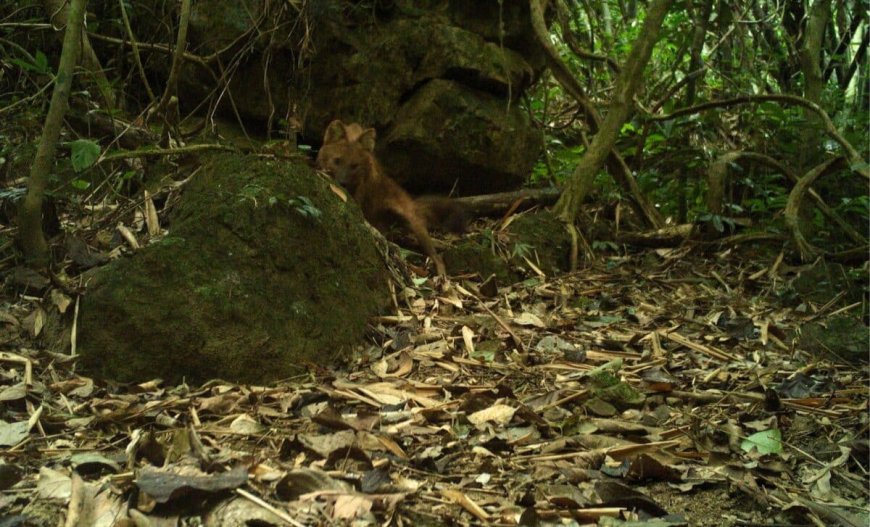
For the first time in over two decades, a camera trap in Vietnam has photographed a dhole, an endangered Asian wild dog also known as the red wolf. The image, captured on December 31, 2023, in Pu Hoat Nature Reserve, ended a 20 year dry spell with no confirmed wild sightings of the species in the country.
But here is what the researchers who published the finding in the journal Oryx want you to understand: that single photograph is not evidence of a recovery. It is more likely evidence of an extinction already in progress.
Between 2014 and 2024, scientists deployed 3,231 camera traps at 1,657 stations across 31 sites within the dhole’s historical range in Vietnam. The total survey effort reached 269,524 camera trap nights. Seven of those sites were surveyed multiple times. Not a single other dhole was recorded. The authors conclude the species is “likely extirpated across most protected areas in Vietnam.”
A single photograph after years of silence
The lone image came from Pu Hoat Nature Reserve in Nghe An Province, north central Vietnam. The reserve covers roughly 35,000 hectares with elevations ranging from 200 to 2,450 meters. The camera was stationed at 1,590 meters altitude in wet evergreen forest, approximately 4.3 kilometers from the border with Laos.
The research team, led by Anh Tuan Nguyen of Vietnam National University, had set camera stations in a grid pattern spaced roughly 2.5 kilometers apart. Each station used two camera traps facing different directions. Of 45 stations originally set, 37 were retrieved, generating 6,084 camera trap nights.

To rule out confusion with a domestic hunting dog, commonly used for hunting in Vietnam, the team sent the photo to four independent biologists familiar with the species. All four confirmed the identification. The individual appears to be a mature adult.
According to the study, the last verified dhole records in Vietnam came from Pu Mat National Park in 1999 and Yok Don National Park in 2003. An unconfirmed sighting was reported in Ninh Thuan Province in 2014, but no photographic evidence existed. The IUCN Red List had previously noted the species is possibly extinct in Vietnam.
A vagrant or a remnant population?
The researchers offer two possibilities for the Pu Hoat individual, and neither points to a healthy population.
First, a small remnant population could theoretically still exist inside the reserve. But the fact that only one animal appeared on camera, despite systematic sampling, suggests any surviving population would be very small.

Second, and more likely according to the authors, the animal may be a vagrant, a solitary individual that dispersed from a nearby forest in Laos. Based on body size, dholes can likely disperse at least 30 kilometers, possibly farther. The nearest confirmed dhole population sits roughly 120 kilometers away in Laos’ Nam Et Phou Loey protected area, where dholes were documented in a 2019 study.
During the camera installation at the Pu Hoat location, the team had observed canid prints at the site but initially presumed they belonged to a domestic dog. An earlier news report from Izvestia described the sighting as the first in 20 years, highlighting public interest in the rare discovery.
The snaring crisis
Vietnam sits at the epicenter of what conservationists call the Southeast Asian snaring crisis. Commercial scale wire snares blanket protected areas across the country. The study cites a 2020 WWF report documenting that commercial snaring occurs across Vietnam’s entire protected area network.
The snares kill indiscriminately. Dholes get caught directly. Their prey gets caught too. The study notes that snaring has already driven down populations of ground-dwelling mammals across Vietnam, leaving large carnivores with a depleted food base even if they avoid the traps themselves.
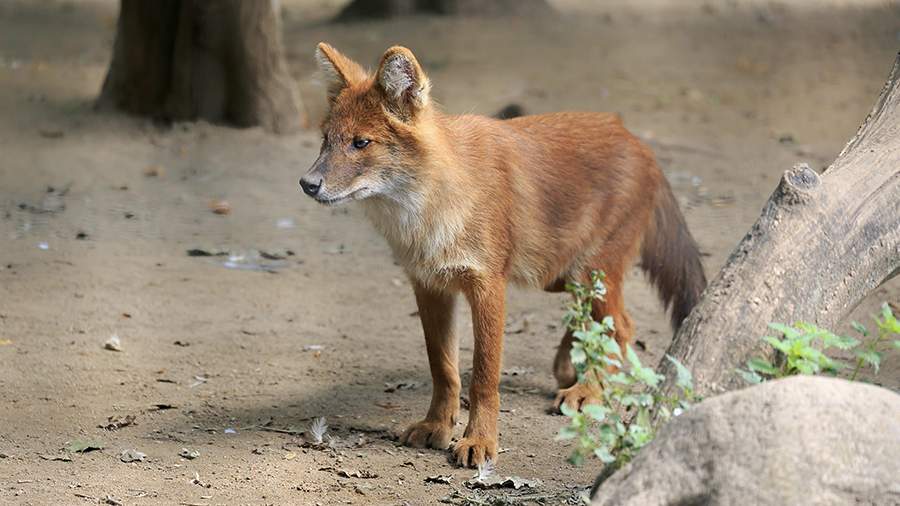
The authors write: “Large, wide-ranging carnivores that live at naturally low densities are especially susceptible to snaring, and it is unlikely the dhole could persist despite the high poaching levels in Vietnam.”
The decline has long term implications beyond the species itself. The study warns that the removal of top predators can unbalance complex food webs and lead to altered ecosystem states, a process known as a trophic cascade. Although these effects in Vietnam may not be seen for decades, the authors write, “it is likely that without one of its apex predators, these forests will transition to a more impoverished ecological state.”
No easy path back
Natural recovery looks unlikely. Dholes could theoretically recolonize Vietnam from Laos, Cambodia, or China. But those countries have also seen severe dhole declines. One possible source population exists in northeastern Cambodia’s Virachey National Park, where dholes have been confirmed. That park has been identified as a regional stronghold for the species. But any dhole dispersing from there into Vietnam would still face high snaring levels and a low prey base.
Reintroduction is theoretically possible, the authors note. The return of gray wolves to Europe shows canid populations can recover when hunting pressure decreases. But in Vietnam, that would require a massive reduction in snaring and a recovery of prey populations first, demanding better patrolling, reduced demand for wildlife products, education, and stronger community guardianship.
Enjoyed this article? Subscribe to our free newsletter for engaging stories, exclusive content, and the latest news.
What's Your Reaction?
 Like
0
Like
0
 Dislike
0
Dislike
0
 Love
0
Love
0
 Funny
0
Funny
0
 Angry
0
Angry
0
 Sad
0
Sad
0
 Wow
0
Wow
0