






























A Giant Tortoise Thought Extinct for 113 Years Was Found Alive on a Volcanic Island Against All Expectations

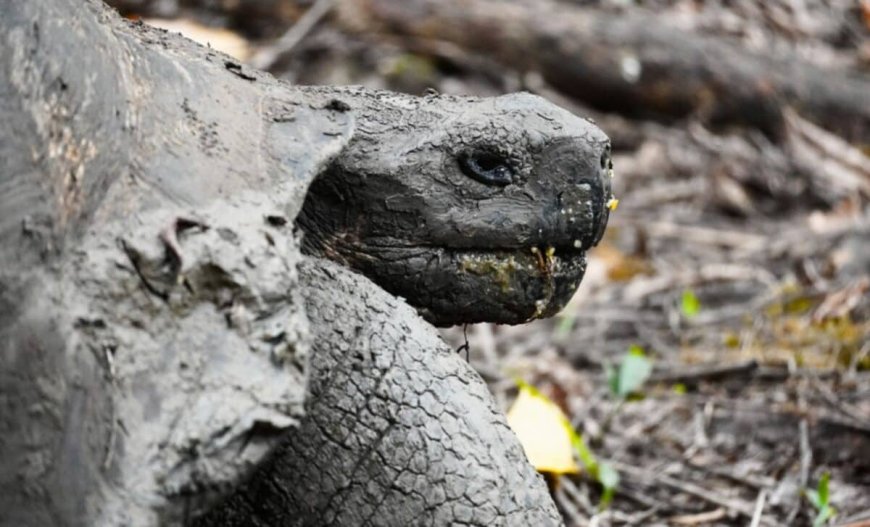
A giant tortoise species believed extinct for more than a century has been formally confirmed alive. Genetic analysis published in 2022 established that a female tortoise found on Fernandina Island in 2019 belongs to Chelonoidis phantasticus, the Fernandina giant tortoise, a species last recorded in 1906.
The confirmation, detailed in peer-reviewed research and institutional releases, resolves one of the longest-standing extinction cases in vertebrate conservation biology. It also reopens active field searches on one of the most geologically inhospitable islands in the Galápagos archipelago.
Fernandina Island’s volcanic terrain, shaped by eruptions from La Cumbre volcano, has long hindered systematic biological surveys. That isolation likely contributed to the species’ disappearance from scientific records for 113 years.
Genetic Evidence Links Fernanda to the 1906 Specimen
The breakthrough stems from genome sequencing conducted by researchers from Princeton University, Yale University, and Ecuadorian conservation authorities. Their findings were published in Communications Biology in May 2022 and summarized in a Princeton University report on the confirmation.
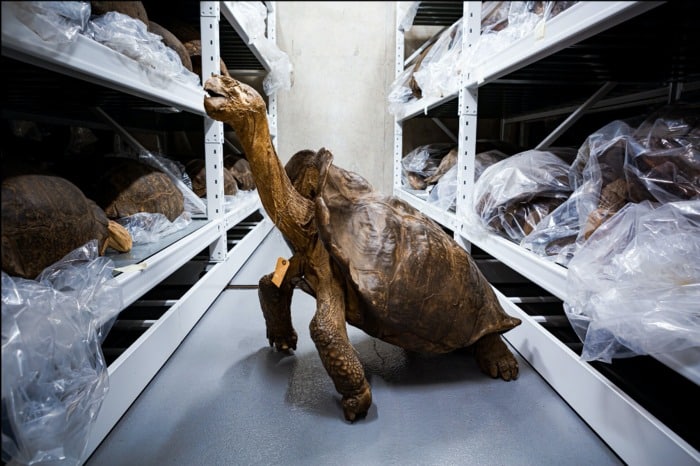
The study concluded that Fernanda is genetically and morphologically distinct from all other Galápagos giant tortoise species and closely related to the male specimen collected on Fernandina Island in 1906. That historical specimen is housed at the California Academy of Sciences and served as the reference for comparison.
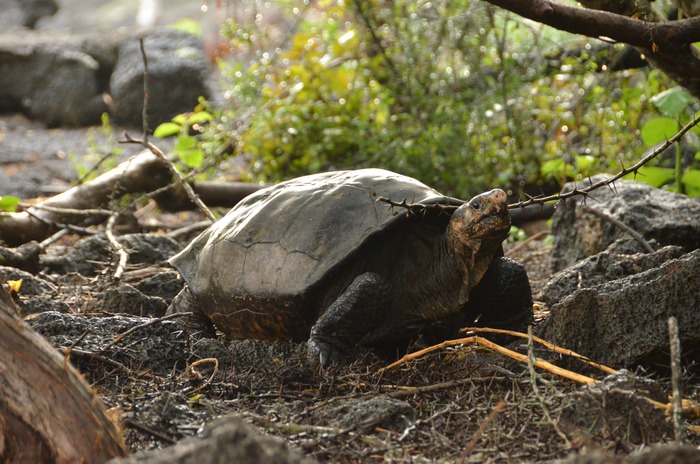
In the university’s public release, co-author Stephen Gaughran stated, “We saw—honestly, to my surprise—that Fernanda was very similar to the one that they found on that island more than 100 years ago, and both of them are clearly different from all of the other species of Galápagos tortoises.”
The genetic match eliminated the possibility that Fernanda was a hybrid or a misidentified individual from a neighboring island. A detailed overview of the confirmation and its conservation significance was also published by the Galápagos Conservancy in its official announcement, which affirmed that Fernanda is “undoubtedly a native species from Fernandina Island.”
The rediscovery had first drawn international attention when it was announced in 2019. A summary of the scientific confirmation process later appeared in a EurekAlert release detailing the peer-reviewed findings, highlighting the role of genomic analysis in resolving long-standing taxonomic uncertainty.
Fernandina Island’s Terrain Delayed Detection
Fernandina Island spans roughly 640 square kilometers and is the most volcanically active island in the Galápagos. Much of its surface consists of relatively recent lava flows, jagged basalt formations, and limited vegetation.
These conditions significantly complicate wildlife surveys. The Galápagos Conservancy noted in its field description that the location where Fernanda was found was “one of the most remote and difficult areas to access on Fernandina, and it took our team hours of difficult hiking across recent lava flows.”
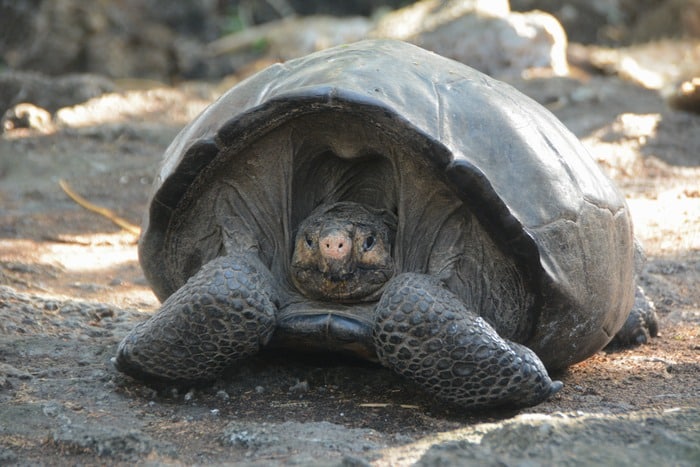
Previous expeditions over several decades had failed to locate any living members of the species. The 2019 search combined aerial reconnaissance with ground surveys across newly formed lava fields. During that expedition, researchers documented tortoise tracks and scat in addition to locating Fernanda, suggesting the possibility of additional individuals. However, no second tortoise has been confirmed.
Fernanda was subsequently transported to the Fausto Llerena Breeding Center on Santa Cruz Island for monitoring and care under the Galápagos National Park Directorate.
No Confirmed Population, No Active Breeding Program
Despite the genetic confirmation, the species’ status remains precarious. Fernanda is the only known living Chelonoidis phantasticus. No male has been identified, and no breeding program specific to this lineage is underway.
Conservation authorities have indicated that further expeditions are planned to search for additional individuals on Fernandina Island. These missions are expected to incorporate satellite mapping, drone surveys, and environmental DNA sampling to detect biological traces in soil and water.
There is no public evidence that assisted reproductive technologies are being pursued. No formal IUCN Red List update reflecting a change in extinction classification has been announced, though institutional databases maintained by Galápagos authorities recognize the species as extant based on the peer-reviewed findings.
A Rare Reversal in Conservation Records
Rediscoveries of species long considered extinct are uncommon, particularly when the gap exceeds a century. In this case, the interval between the 1906 specimen and Fernanda’s discovery is 113 years.
The case highlights the value of preserved museum specimens, which enabled direct genomic comparison across generations. Without the archived 1906 type specimen, definitive confirmation would not have been possible.
The Fernandina giant tortoise now occupies a unique position in conservation science: confirmed alive, yet represented by a single known individual. Field teams continue to prepare for renewed searches on Fernandina Island.
As of January 2026, Fernanda remains the only confirmed living member of Chelonoidis phantasticus.
Enjoyed this article? Subscribe to our free newsletter for engaging stories, exclusive content, and the latest news.
What's Your Reaction?
 Like
0
Like
0
 Dislike
0
Dislike
0
 Love
0
Love
0
 Funny
0
Funny
0
 Angry
0
Angry
0
 Sad
0
Sad
0
 Wow
0
Wow
0